Continuous AI Improvement from Outcomes: A Practical Framework
Continuous AI Improvement from Outcomes: A Practical Framework
Most AI systems are judged by how well they perform in a lab, not by what happens after they touch the real world. A model can score impressively on accuracy benchmarks yet fail to change the outcome that actually matters: a resolved customer issue, a faster decision, a better clinical result. Continuous AI improvement from outcomes flips that logic. It starts with the result you want to achieve and builds the learning loop backward from there.
This article explains what outcome-driven AI improvement means, why static models drift, and how to build a feedback loop that turns real-world results into better AI behavior over time.
Why Model Metrics Are Not the Same as Outcomes
Continuous AI Improvement from Outcomes: A Practical Framework - Why Model Metrics Are Not the Same as Outcomes.
AI development has traditionally focused on technical performance. Researchers optimize for metrics like accuracy, precision, or AUROC, then declare success when the numbers look good. The problem is that these metrics describe how well a model matches a test dataset, not whether the model changes anything meaningful in practice.
A healthcare study in the Journal of the American Medical Informatics Association makes this point directly: good performance on retrospective benchmarks does not automatically translate into improved clinical outcomes. The authors argue that healthcare AI should be "actionable," meaning the change in actions induced by AI should improve results for patients. The same principle applies far beyond medicine.
In customer service, an AI agent might answer 90% of questions with technically correct responses. But if customers still escalate to a human because the answers feel generic or miss context, the outcome—resolution—has not improved. The metric looked good; the result did not.
What a Continuous Improvement Loop Actually Looks Like
Continuous AI Improvement from Outcomes: A Practical Framework - What a Continuous Improvement Loop Actually Looks Like.
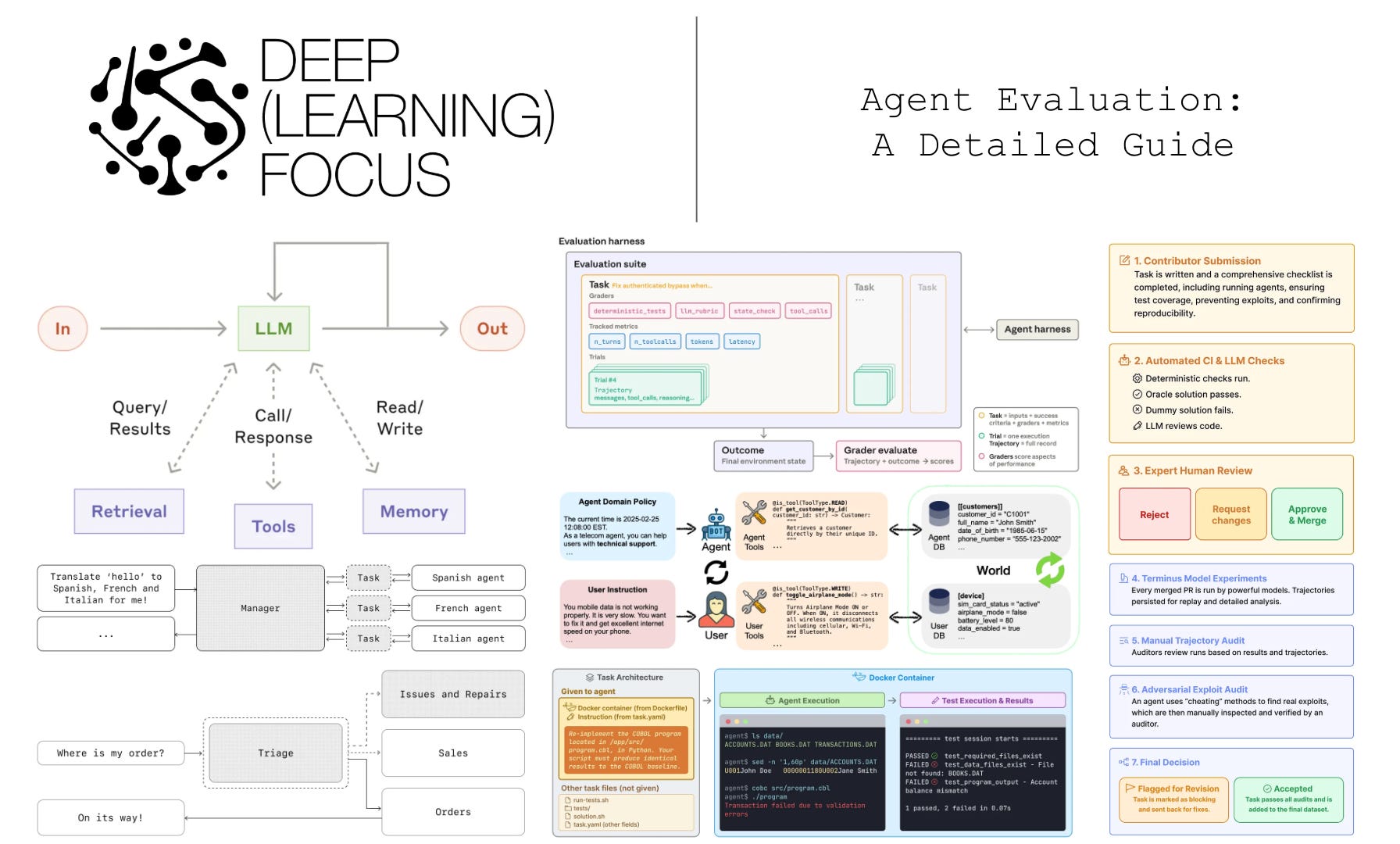
A continuous learning loop is a system design pattern where models are regularly updated based on new data, feedback, and real-world outcomes. It has four connected stages:
1. Outcome Definition
Before any model work begins, define the outcome you want to influence. This could be:
- Customer issue resolution rate
- Time to first response
- Escalation rate to human agents
- Customer satisfaction after an automated interaction
- Revenue recovered through proactive outreach
The outcome must be measurable and tied to business value. If you cannot measure it, you cannot improve against it.
2. Data Collection and Enrichment
The system needs to capture what happens after the AI acts. Did the customer accept the suggested answer? Did they reply with frustration? Did a human agent need to step in? Each interaction becomes a labeled signal about whether the AI's action produced the desired result.
High-quality data collection includes:
- Conversation transcripts with resolution flags
- Human agent corrections and overrides
- Customer feedback signals, both explicit and implicit
- Metadata about channel, issue type, and customer segment
3. Model Updating and Refinement
New data feeds back into the model through retraining or fine-tuning. The goal is not just to add more examples, but to correct systematic errors. If the AI consistently fails on refund requests, that pattern should surface in the data and drive targeted improvement.
A key discipline here is drift detection. Not every data shift warrants retraining. Updating too often creates instability; waiting too long risks decay. Smart systems monitor for meaningful divergence between expected and actual outcomes, then trigger updates when the gap crosses a threshold.
4. Evaluation and Governance
Updated models need validation before deployment. This includes:
- Regression testing against known edge cases
- Fairness and bias checks
- Explainability review for high-stakes decisions
- Audit trails that document what changed and why
For regulated industries, this stage is non-negotiable. For everyone else, it is still the difference between controlled improvement and chaotic drift.
The Drift Problem: Why Static AI Fails

Continuous AI Improvement from Outcomes: A Practical Framework - The Drift Problem: Why Static AI Fails.
Static models assume the world stays the same. It never does. Customer language evolves, product features change, seasonal patterns shift, and new issues emerge that did not exist when the model was trained.
In financial services, for example, regulatory requirements, risk policies, and customer behavior all change constantly. A compliance model trained once will quickly fall behind new rules and miss emerging risk signals. The same dynamic applies to support AI: a model trained on last quarter's product catalog will confidently give wrong answers about this quarter's features.
Drift manifests in several ways:
- Concept drift: The relationship between inputs and outcomes changes. A phrase that once signaled satisfaction now signals frustration.
- Data drift: The distribution of incoming data shifts. New customer segments arrive with different vocabulary and expectations.
- Label drift: What counts as a "good" outcome evolves. A resolution that satisfied customers last year may no longer meet expectations.
Continuous improvement loops address all three by keeping the model aligned with current reality.
From Reactive to Proactive: The Outcome-First Mindset
Continuous AI Improvement from Outcomes: A Practical Framework - From Reactive to Proactive: The Outcome-First Mindset.
Traditional AI deployment is reactive. You build a model, ship it, and fix problems when users complain. Outcome-driven improvement is proactive. You design the system to learn from every interaction and get better before problems become visible.
This shift has practical implications for how teams work:
- Define success before launch. What outcome will you measure? What baseline exists today?
- Instrument everything. Every AI action should generate data about its result.
- Review outcomes, not just outputs. Weekly reviews should focus on resolution rates and satisfaction, not just answer accuracy.
- Close the loop quickly. The faster insights flow back into model updates, the less value is lost to drift.
Practical Implementation for Support Teams
Customer support is one of the clearest environments for outcome-driven AI improvement because the outcome—resolution—is measurable and immediate.
Start with Resolution Rate
Resolution rate is the percentage of conversations where the AI fully resolves the issue without human intervention. It is a direct outcome metric, not a proxy. If resolution rate goes up, support costs go down and customer satisfaction typically improves.
Capture Human Overrides as Training Signal
Every time a human agent takes over from an AI, that is a labeled example of an outcome the AI failed to achieve. Systematically categorizing these overrides—wrong answer, missing context, tone problem, policy exception—creates a prioritized improvement backlog.
Use Customer Feedback as a Quality Signal
Explicit feedback like thumbs up or down is useful but incomplete. Many customers never provide explicit feedback. Implicit signals matter more: did the customer rephrase the question? Did they ask for a human? Did they abandon the conversation? These behavioral signals reveal outcomes that surveys miss.
Build a Review Cadence
Continuous improvement requires continuous review. A practical cadence includes:
- Daily: Monitor resolution rate and escalation spikes
- Weekly: Review categorized overrides and identify top failure patterns
- Monthly: Retrain or fine-tune based on accumulated outcome data
- Quarterly: Evaluate whether the outcome definition itself still matches business goals
How AI-First Platforms Support This Loop
AI-first customer service platforms are built with this loop in mind. Rather than bolting an AI model onto a traditional helpdesk, these platforms treat the AI agent as the primary resolver and design the surrounding system to capture outcomes and feed them back.
Intercom, for example, positions its Fin AI Agent as the first line of resolution within a helpdesk that natively captures conversation outcomes. When Fin resolves an issue, that resolution is recorded. When it escalates to a human agent, the handoff context is preserved. This creates a natural data stream for continuous improvement: every conversation becomes a training signal about what worked and what did not.
The platform's AI Insights layer then surfaces patterns from those outcomes—which topics drive the most escalations, where resolution rates are dropping, which customer segments need different approaches. Teams can use those insights to update help center content, refine AI behavior, and adjust workflows without building custom ML infrastructure.
For teams evaluating support AI, the key question is not just "how accurate is the AI out of the box?" but "how does the system learn from outcomes after deployment?" A platform that captures resolution data and makes it actionable will compound in value over time. One that treats the AI as a static component will decay.
Common Pitfalls to Avoid
Optimizing the Wrong Metric
If you optimize for answer accuracy but ignore resolution, you may build an AI that gives correct but unhelpful answers. Always tie model improvements to the outcome metric that matters.
Ignoring Human Feedback
Human agents are the richest source of improvement signal. Their overrides, edits, and escalations reveal exactly where the AI falls short. Systems that do not capture this feedback waste their most valuable training data.
Updating Without Governance
Continuous improvement does not mean uncontrolled change. Every update should be tested, documented, and reversible. Without governance, you trade drift for chaos.
Treating All Data Equally
Not all feedback is equally valuable. A single escalation from a high-value enterprise customer may matter more than ten routine interactions. Weight your outcome signals by business impact.
Measuring the Impact of Continuous Improvement
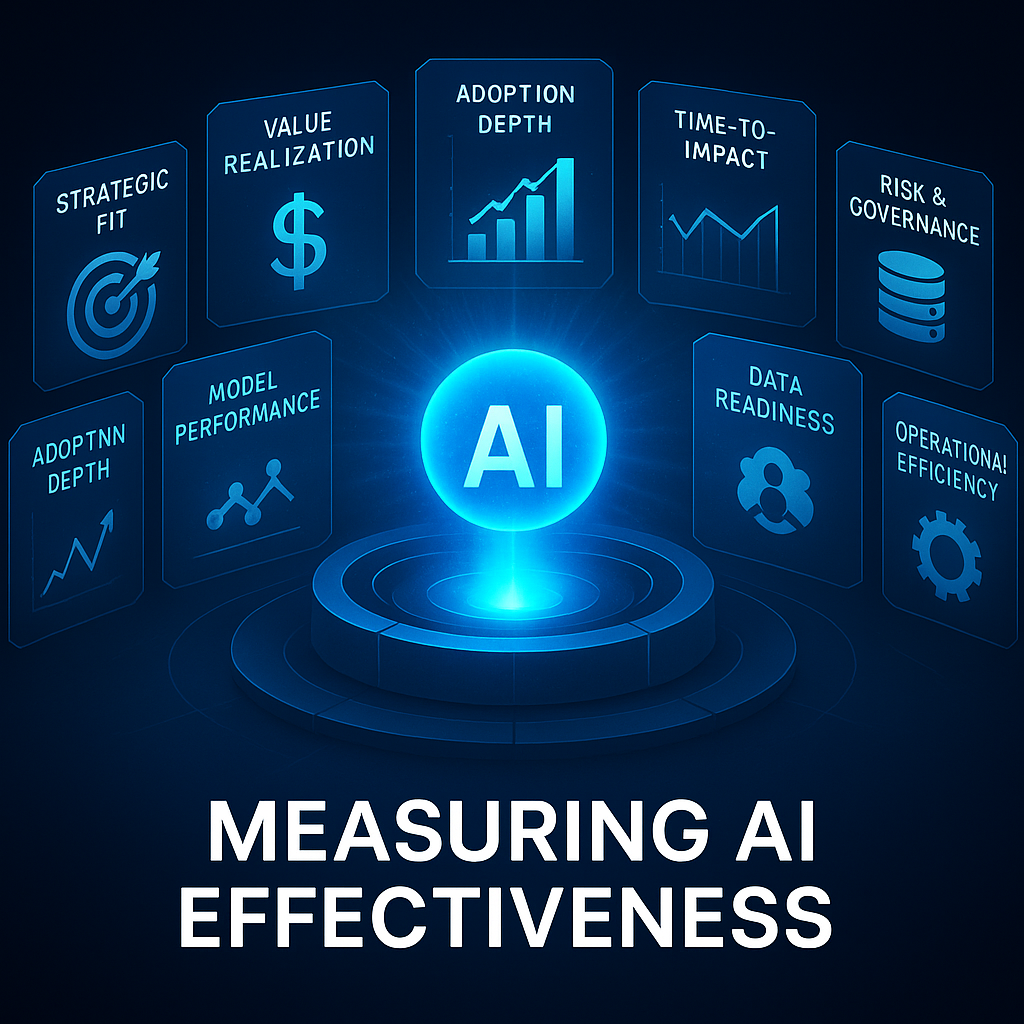
How do you know the loop is working? Track these indicators over time:
- Resolution rate trend: Is the AI resolving a higher percentage of conversations each quarter?
- Escalation rate trend: Are fewer conversations requiring human intervention?
- Time to resolution: Are resolved issues being handled faster?
- Customer satisfaction after AI interaction: Are customers happier with automated outcomes?
- Human agent workload: Are agents spending less time on repetitive issues and more on complex ones?
If these metrics improve steadily, the loop is functioning. If they plateau, the system may need better data collection or more targeted model updates.
Related reading
- Intercom vs Gladly vs eesel AI: 2026 Comparison - Compare Intercom, Gladly, and eesel AI on AI resolution, pricing models, channels, and ideal use cases. Find the right customer service platform for 2026.
- Intercom vs eesel AI: Which Support AI Wins in 2026? - Compare Intercom and eesel AI on AI resolution, pricing, helpdesk integration, setup speed, and scalability. See which customer service platform fits your team.
- Richpanel Review 2026: AI Helpdesk for Ecommerce, Tested - In-depth Richpanel review covering AI resolution, Shopify integration, pricing signals, setup time, limitations, and who should buy it in 2026.
Sources and further reading
- AI as an intervention: improving clinical outcomes relies on a causal ... - The primary practice of healthcare artificial intelligence (AI) starts with model development, often using state-of-the-art AI, retrospectively evaluated using metrics lifted from the AI literature like AUROC and DICE score. However, good ...
- Continuous Learning Loops: the Key to Keeping AI Current in Dynamic Environments - Artificial intelligence is transforming a broad range of industries, from healthcare to defence, but the volume and diversity of data managed by the financial services sector make it especially well positioned to benefit from AI’s rapid advance. However, in a sector defined by constant change in regulatory requirements, risk policies, and customer behaviour; static AI models can quickly fall behind.
- How AI Is Improving Patient Outcomes and Transforming Quality Initiatives - Discover how the use of AI in population health can foster improved patient care through predictive analytics and quality monitoring. Learn how AUC prepares physicians for this future.
FAQ
What is continuous AI improvement from outcomes?
It is an approach to AI development where models are regularly updated based on real-world results rather than static benchmarks. The system defines a desired outcome, measures whether AI actions achieve it, and feeds that information back into model refinement.
How is outcome-driven AI different from traditional AI development?
Traditional development optimizes for technical metrics like accuracy on a test dataset. Outcome-driven development starts with the business result—such as resolution rate or customer satisfaction—and works backward to design the model, data collection, and evaluation around that result.
What is model drift?
Model drift occurs when an AI system's performance degrades because the real-world environment has changed. Customer language, product features, regulations, and expectations all evolve, and a static model becomes less accurate over time.
How often should AI models be updated?
There is no universal answer. The right cadence depends on how fast your environment changes and how much outcome data you collect. Some systems benefit from weekly fine-tuning; others need monthly or quarterly updates. The key is monitoring for drift and updating when outcome metrics show meaningful decline.
What metrics should support teams track for AI improvement?
Resolution rate, escalation rate, time to resolution, customer satisfaction after automated interactions, and human agent workload are the core outcome metrics. These reveal whether the AI is actually changing results, not just producing plausible answers.
Does continuous improvement require a data science team?
Not necessarily. AI-first platforms increasingly handle the underlying model updates automatically. What teams need is a clear outcome definition, good data capture, and a regular review process to act on the insights the system surfaces.
Conclusion
Continuous AI improvement from outcomes is not a technical luxury—it is the difference between AI that works on day one and AI that works better every month. Static models drift. Outcome-driven systems learn.
The framework is straightforward: define the result you want, capture data about whether AI actions achieve it, feed that data back into model refinement, and govern the process with testing and documentation. The challenge is discipline, not complexity.
For support teams, the practical path is clear. Start with resolution rate as your north star. Capture every human override as a training signal. Review outcomes weekly, not just outputs. And choose platforms that treat outcome data as a core part of the product, not an afterthought. The teams that build these loops now will compound their advantage as their AI gets smarter with every real-world interaction.