Multi-Channel Customer Support: 2026 Strategy & Tools

Multi-Channel Customer Support: The Complete 2026 Strategy Guide
Your customers no longer queue up in one place. They email when an issue is complex, chat when they want speed, call when they're frustrated, and post publicly when they want to be heard. Multi-channel customer support is how you meet all of them without losing the thread.
This guide explains what multi-channel support really means, how it differs from omnichannel service, which channels deserve your investment, and how AI changes the economics of supporting customers everywhere.
What Is Multi-Channel Customer Support?
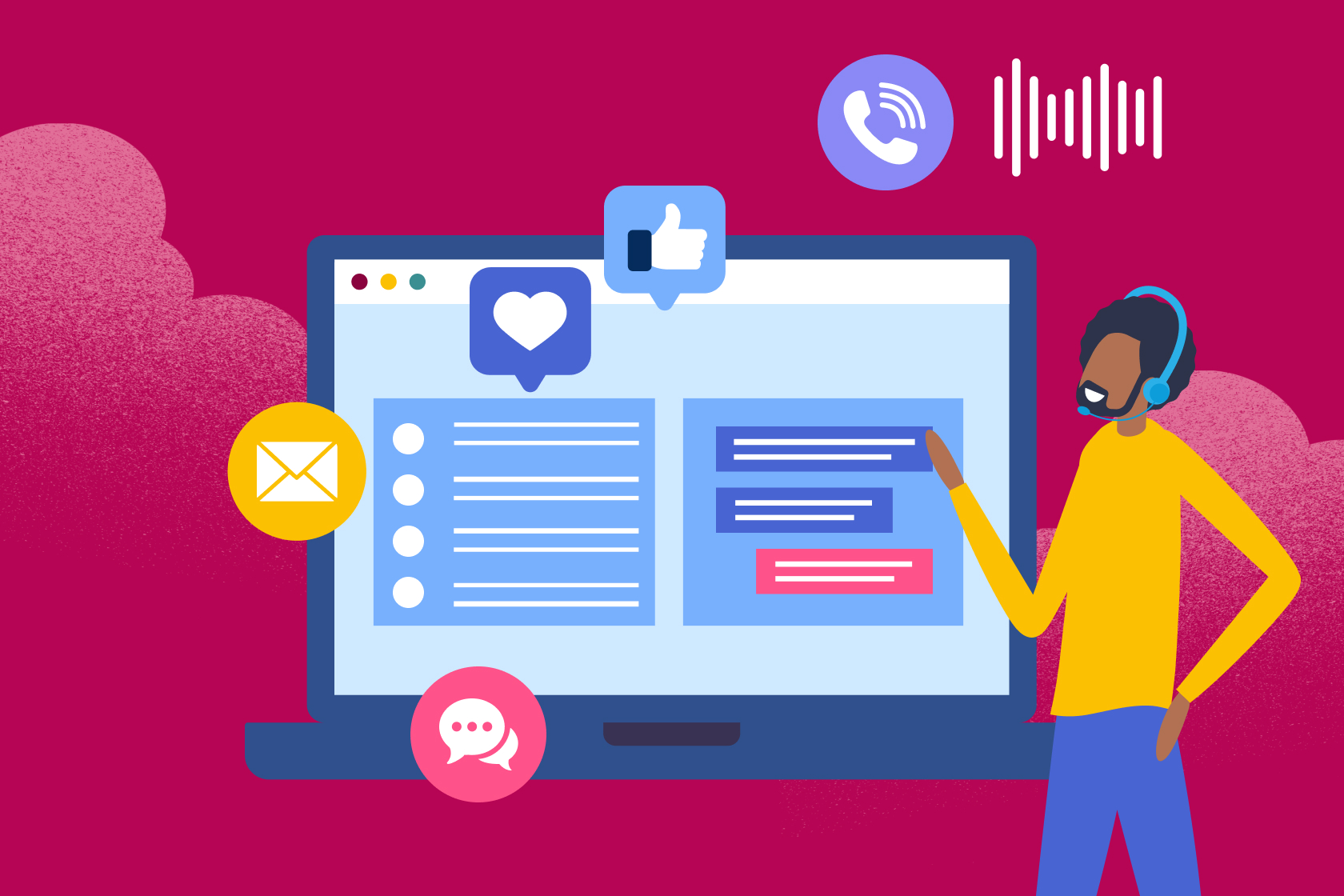
Multi-Channel Customer Support: 2026 Strategy & Tools - What Is Multi-Channel Customer Support?.
Multi-channel customer support means giving customers several distinct ways to reach you — email, live chat, phone, social media, SMS, messaging apps, and self-service portals — and staffing each one so requests actually get answered.
The defining trait is choice. A customer picks the channel that fits their context: a parent running errands may send an SMS, an enterprise buyer may want email and a scheduled call, a younger shopper may comment on social media.
The common failure mode is fragmentation. When each channel lives in its own tool, agents lose context, customers repeat themselves, and nobody can see the full picture of demand. That's why the platform decision matters as much as the channel list.
Multi-Channel vs Omnichannel Support: What's the Difference?

Multi-Channel Customer Support: 2026 Strategy & Tools - Multi-Channel vs Omnichannel Support: What's the Difference?.
These terms get used interchangeably, but they describe different maturity levels.
| Dimension | Multi-channel | Omnichannel |
|---|---|---|
| Channel connection | Channels operate independently | One continuous conversation across channels |
| Customer record | Data stored per channel | Single unified customer profile |
| Handoffs | Customer may repeat context | Context travels with the customer |
| Setup complexity | Lower | Higher, requires integration work |
| Best for | Teams adding coverage incrementally | Teams optimizing end-to-end journeys |
Multi-channel is the foundation: you're reachable everywhere. Omnichannel is the goal: a customer who starts on chat and finishes on email never has to explain the problem twice.
In practice, most teams don't need to choose one label forever. They start multi-channel, then unify data and routing until the experience becomes omnichannel. The mistake is stopping at "we have five channels" while agents still copy-paste between tabs.
Why Multi-Channel Support Matters in 2026

Multi-Channel Customer Support: 2026 Strategy & Tools - Why Multi-Channel Support Matters in 2026.
Customers expect channel choice
Support preferences vary by urgency, device, and comfort. Offering only one or two channels quietly excludes segments of your audience — and excluded customers churn without complaining.
Channel mix controls cost
Not every issue deserves a phone call. A well-designed mix routes simple questions to self-service and chat, keeps detailed troubleshooting in email, and reserves voice for complex or emotional cases. That's how support scales without headcount growing at the same rate as ticket volume.
Every channel generates signal
Contact reasons, sentiment, timing, and resolution rates differ by channel. Aggregated properly, this data tells you which features confuse customers, when volume spikes, and where documentation is failing.
The Core Support Channels (and What Each Is Good For)
Multi-Channel Customer Support: 2026 Strategy & Tools - The Core Support Channels (and What Each Is Good For).
Email support
Best for complex issues, attachments, and anything needing a paper trail. The challenge is response-time expectations — automated acknowledgments, prioritization, and clear SLAs keep email from becoming a backlog.
Live chat and in-app messaging
Best for real-time questions during the buying or onboarding journey. Modern chat isn't just a widget: in-app messaging keeps conversations alive inside your product, and AI agents can resolve common questions instantly before a human ever gets involved.
Phone and voice support
Still the strongest channel for high-stakes, emotional, or genuinely complicated problems. Voice conveys nuance that text misses. Smart routing, callbacks, and follow-up summaries prevent phone support from becoming a cost center with no memory.
Social media and messaging apps
Public and immediate. A fast, helpful reply builds trust in front of an audience; a slow one does the opposite. Tone and response speed should be tuned per platform rather than copied from your email macros.
Self-service and help centers
Many customers prefer solving problems themselves. A well-structured help center with natural-language search deflects repetitive tickets and improves satisfaction — but only if articles stay current with product changes.
Choosing your starting set
Don't launch every channel at once. Start with the two or three where your customers already are, prove the workflow, then expand. A useful sequence for many teams:
- Email and a help center (coverage and deflection)
- Live chat or in-app messaging (speed for common questions)
- Social and messaging apps (reach and reputation)
- Phone (complexity and escalation)
How AI Changes Multi-Channel Support
AI shifts multi-channel support from "more queues to manage" to "more requests resolved without a queue at all."
Three patterns matter most:
- AI agents that resolve, not just deflect. An AI agent integrated with your helpdesk can answer questions across chat, email, and messaging using your own content, then hand off to a human with full context when needed. Intercom's Fin is an example of this approach — an AI Agent natively built into the helpdesk rather than bolted onto it.
- Assistance for human agents. Copilot-style tools summarize conversations, draft replies, and surface relevant articles, which shortens handling time on the complex tickets that reach people.
- Analytics that explain demand. AI insights can cluster contact reasons and flag emerging issues across channels, turning raw conversation volume into product and documentation decisions.
The practical test for any AI feature: does it improve resolution rate and customer satisfaction, or does it just move the frustration earlier in the journey?
Building Your Multi-Channel Strategy: A Practical Sequence
- Map the customer journey. Identify where questions arise — pre-purchase, onboarding, billing, outages — and which channel each moment calls for.
- Centralize conversations. A shared inbox that pulls chat, email, social, and messaging into one workspace gives agents full history instead of isolated threads. If you're comparing options, this Intercom vs Front comparison covers how shared inbox design and AI resolution differ between platforms.
- Define routing rules. Route by intent, priority, and language. Billing goes to finance-trained agents; technical issues go to specialists; urgent outages bypass the queue.
- Invest in self-service. Publish help center content for your top contact reasons, then keep it updated as the product changes.
- Add automation deliberately. Start with acknowledgments, intent detection, and AI resolution for high-confidence questions. Expand only when quality holds.
- Train for channel fluency. Agents should know what good looks like on chat versus email versus voice — and should always read history before replying.
- Review and refine monthly. Multi-channel support is never set-and-forget.
Metrics That Actually Matter
Track these across channels, not just per channel:
- First response time — by channel, since expectations differ
- Resolution time and first-contact resolution — the clearest efficiency signal
- AI resolution rate — the share of conversations closed without a human
- Customer satisfaction (CSAT) — segmented by channel and by AI vs human handling
- Repeat contact rate — a spike often means a channel resolved nothing
- Channel cost per resolution — the number that justifies your channel mix
A dashboard that only shows ticket counts hides the interesting story: which channels resolve, which channels escalate, and where customers give up.
Common Pitfalls (and How to Avoid Them)
- Siloed tools. If agents juggle five tabs, you have five single-channel operations, not multi-channel support. Unify or integrate.
- Inconsistent tone. Customers should feel like they're talking to one company. Define a communication style and build templates that still allow personalization.
- Automation without escape hatches. Every bot and AI agent needs a fast, obvious path to a human.
- Ignoring channel economics. Phone-first strategies are expensive. Match channel to issue complexity.
- Launching channels you can't staff. An unanswered channel damages trust more than an absent one.
Choosing a Multi-Channel Support Platform
When evaluating platforms, weigh these factors:
- Channel coverage — live chat, email, in-app messaging, phone, social, and help center in one system
- AI depth — does the AI agent resolve conversations end-to-end, and how is it priced?
- Unified customer history — can an agent see every prior interaction regardless of channel?
- Automation and routing — rules, workflows, and intent-based assignment
- Reporting — cross-channel analytics, not per-channel vanity metrics
- Pricing model — per-seat versus outcome-based pricing changes your scaling math significantly
AI-first platforms such as Intercom bundle a helpdesk, an AI Agent, and a help center so multi-channel conversations share one context layer. Other tools specialize differently — contact-center depth, open-source flexibility, or workflow management — so the right answer depends on your support maturity and volume. Comparisons like Intercom vs HappyFox vs Genesys Cloud CX are useful when contact-center depth is the deciding factor, while Chatwoot's open-source approach appeals to teams that want self-hosting.
Related reading
- Decagon Review 2026: AI Customer Service Platform Tested - Evidence-based Decagon review for 2026: AI agents, resolution-based pricing, setup effort, strengths, limitations, and who should buy it.
- Marketing Automation Specialist: Role, Skills & Salary 2026 - What a marketing automation specialist does, the tools and skills employers want, salary benchmarks, and how the role is evolving with AI in 2026.
Sources and further reading
- What is Multi Channel Customer Support? Freshdesk - Freshworks - Discover the power of multichannel Customer Support with Freshdesk. Learn the definition and unlock the benefits of streamlined customer interactions.
- Multi-channel customer support: a complete strategy guide for 2026 - Master multi-channel support in 2026. Learn the best channels, avoid common pitfalls, and scale customer support efficiently. Explore now.
- What is Multichannel Customer Service and Why is it Important - Learn the ways that multichannel customer service can improve your contact center KPIs and drive exceptional customer satisfaction
FAQ
What is multi-channel customer support?
It's the practice of supporting customers across multiple communication channels — email, live chat, phone, social media, SMS, messaging apps, and self-service — so customers can choose whichever is most convenient.
What's the difference between multi-channel and omnichannel support?
Multi-channel means offering several channels that operate independently. Omnichannel means those channels share data and context, so a conversation can move from chat to email to phone without the customer repeating themselves.
Which channels should a small team start with?
Usually email plus a help center first, then live chat or in-app messaging. Add social and phone as volume and complexity justify them. Starting narrow and doing it well beats launching five channels badly.
How does AI fit into multi-channel support?
AI handles three jobs: resolving common questions instantly across channels, assisting human agents with summaries and drafts, and analyzing conversation data to reveal contact drivers. The best implementations resolve issues rather than just deflect them.
How do you measure multi-channel support performance?
Track first response time, resolution time, first-contact resolution, AI resolution rate, CSAT, repeat contact rate, and cost per resolution — segmented by channel so you can see where the experience breaks down.
Do you need a single platform for all channels?
Not strictly, but fragmentation has a cost. A unified platform or tightly integrated stack preserves customer context, simplifies routing, and makes cross-channel reporting possible.
Conclusion
Multi-channel customer support is no longer optional — customers decide where the conversation happens, and they expect a fast, coherent answer wherever they show up. The winning approach in 2026 is not simply adding channels, but connecting them: one shared context, intelligent routing, self-service that actually deflects, and AI that resolves the routine so your team can focus on the complex.
Start with the channels your customers already use, unify the data behind them, and measure resolution rather than volume. Do that, and multi-channel support stops being an operational burden and becomes a genuine competitive advantage.