Ensure Compliance in AI Customer Service: A Practical Guide
Ensure Compliance in AI Customer Service: A Practical Guide
Customer service teams are adopting AI agents and helpdesk automation faster than most compliance programs can keep up. The result is a new risk surface: AI-generated answers, automated data handling, and cross-channel conversations that regulators, auditors, and customers now scrutinize. This guide explains how to ensure compliance in an AI-first support operation without slowing down service.
What "Ensure Compliance" Means for Customer Service Teams
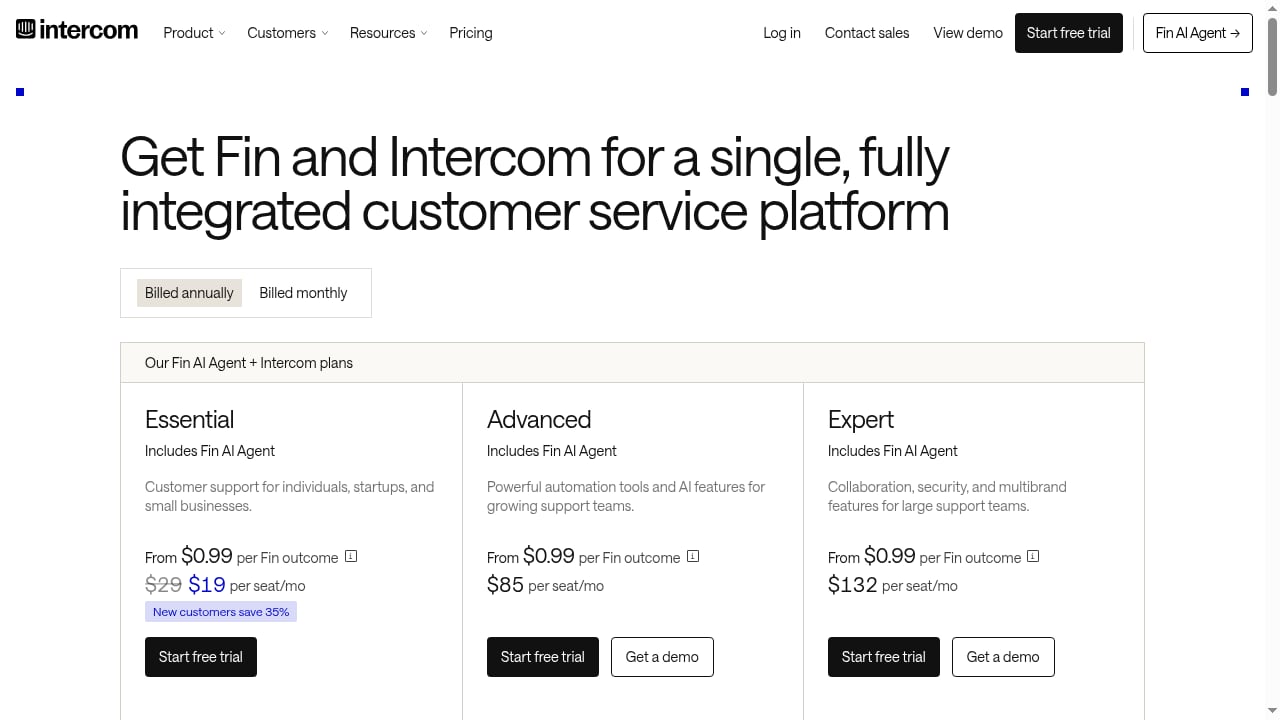
First viewport screenshot of Intercom Pricing | Plans for every team size.
In a support context, ensuring compliance means making certain that every customer interaction, automated response, and data-handling step meets your legal, regulatory, and internal policy obligations. That covers data privacy laws such as GDPR and CCPA, industry rules, accessibility requirements, and your own brand and security policies.
The word "ensure" matters. It is not enough to hope an AI agent behaves correctly. You need documented controls, monitoring, and evidence that the controls work. That is the difference between a compliance intention and a compliance program.
Why AI Agents Raise the Compliance Stakes
First viewport screenshot of Intercom-Preise | Pläne für jede Teamgröße.
AI agents change the compliance equation in three ways:
- Scale. A single misconfigured answer can reach thousands of customers before anyone notices.
- Autonomy. Agents resolve conversations without a human reviewing each response.
- Data exposure. Conversations often contain personal, financial, or health information that must be handled under strict rules.
Traditional helpdesk compliance focused on agent training and ticket audits. AI-first support adds model behavior, knowledge source quality, and automated decision-making to the scope.
A Practical Framework to Ensure Compliance
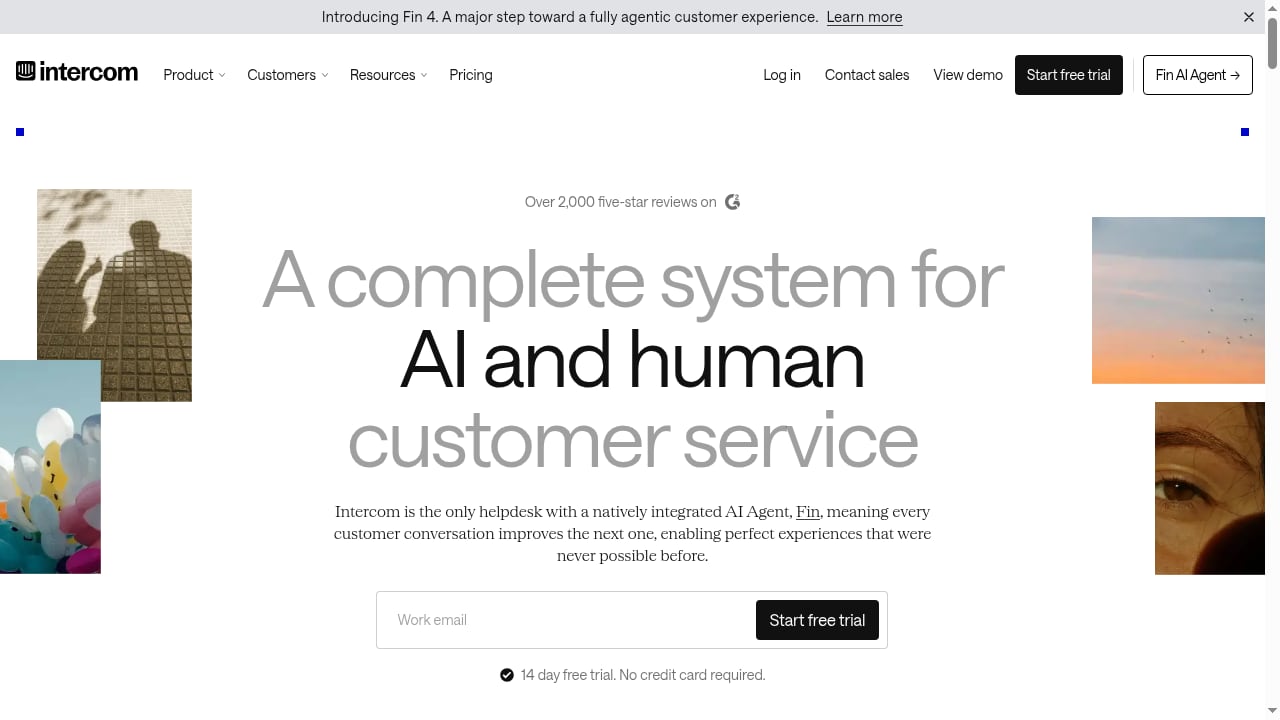
First viewport screenshot of Intercom | A complete system for human and AI customer service.
1. Map Obligations to Customer Journeys
Start with the regulations and policies that apply to your business, then map them to real support scenarios: refunds, account access, billing disputes, cancellations, and data deletion requests. For each scenario, document what the AI agent may say, what it must escalate, and what evidence must be retained.
2. Control the Knowledge Sources
An AI agent is only as compliant as the content it draws from. Restrict knowledge sources to approved, version-controlled articles. Remove outdated policy pages. Assign an owner who reviews high-risk topics on a fixed schedule. If your agent can cite a stale refund policy, you have a compliance gap, not just a content problem.
3. Set Guardrails and Escalation Rules
Define topics the AI agent must never handle alone, such as legal threats, medical advice, or regulated financial guidance. Build escalation paths into the helpdesk so these conversations reach a trained human quickly. Test the guardrails with adversarial prompts before launch and after every major knowledge update.
4. Keep Humans in the Loop Where It Counts
Full automation is not the goal; controlled automation is. Use human review for high-risk intents and sample AI-resolved conversations regularly. Platforms such as Intercom combine a helpdesk with a natively integrated AI agent, which makes it easier to review AI-handled conversations alongside human ones in the same workspace.
5. Document and Audit
Compliance depends on evidence. Log AI decisions, escalation events, knowledge changes, and human overrides. Retain records according to your legal schedule. When an auditor asks how you ensure compliance, you should be able to show the control, the test, and the result.
6. Train and Reinforce
Support agents and content owners need regular training on data handling, escalation rules, and AI limitations. Reinforce compliance with short refreshers and real examples from your own conversation data. ATD's workplace compliance guidance emphasizes documenting processes and reinforcing them continuously, which applies directly to AI support operations.
7. Monitor Continuously
Compliance is not a one-time launch checklist. Monitor AI resolution quality, sentiment, escalation rates, and policy exceptions on a dashboard. Set alerts for anomalies, such as a spike in refund-related conversations or a drop in escalation accuracy.
8. Review and Improve
Schedule quarterly reviews of your compliance controls. Update them when regulations change, when you add channels, or when you change AI models. Treat every customer complaint about an AI answer as a signal to investigate.
Compliance Considerations by Platform Type
| Platform approach | Compliance strengths | Watch-outs |
|---|---|---|
| Native AI agent + helpdesk | Unified audit trail, consistent data handling, easier human review | Requires disciplined knowledge governance |
| AI agent bolted onto legacy helpdesk | Familiar ticketing workflows | Data may be split across systems; harder to audit end to end |
| Standalone chatbot | Fast to deploy | Limited visibility into resolution quality and escalation |
When comparing options, ask vendors how they handle data retention, model training on customer data, audit logs, and access controls. Our comparison of Intercom, Zendesk, and Front covers how AI customer service platforms differ on these points.
How Intercom Supports Compliance Workflows

First viewport screenshot of Precios de Intercom | Planes para equipos de todos los tamaños.
Intercom's AI-first platform brings the helpdesk and the Fin AI Agent into one system, which simplifies several compliance tasks:
- Single source of truth. Conversations, AI resolutions, and human handoffs live in one workspace, making audits more straightforward.
- Knowledge control. Teams manage the content Fin draws from, so policy updates propagate to AI answers.
- AI Insights. Support leaders can review how the AI agent performs and where it escalates, which supports continuous compliance monitoring.
- Outcome-based pricing. Plans include the Fin AI Agent, so compliance review can be built into the standard support workflow rather than treated as an add-on.
Intercom is used by more than 30,000 brands, and customer stories from companies such as Anthropic and Kalshi show how AI-first support operates at scale. For a broader view of platform options, see our top 10 help desk and ticketing software ranking.
Common Compliance Mistakes to Avoid
- Treating AI compliance as an IT project instead of a support operations responsibility.
- Letting knowledge base articles go stale without an owner.
- Skipping adversarial testing of AI guardrails.
- Failing to log escalations and human overrides.
- Assuming a vendor's certification covers your own regulatory obligations.
Related reading
- Intercom vs Wonderchat vs CM.com: 2026 Comparison - Compare Intercom, Wonderchat, and CM.com on AI customer service, channels, pricing, and fit. See which platform suits your support and engagement needs.
- Intercom vs Help Scout: AI Helpdesk Comparison for 2026 - Intercom vs Help Scout compared: Fin AI Agent resolution depth, pricing, channels, reporting, and which support platform fits your team in 2026.
- Tidio Review 2026: AI Customer Service That Turns Chats Into Revenue - Evidence-based Tidio review for 2026: how Lyro AI resolves questions and converts chats into sales, plus pricing signals, setup, limits, and ideal users.
Sources and further reading
- ENSURE COMPLIANCE definition and meaning | Collins English Dictionary - ENSURE COMPLIANCE definition | Meaning, pronunciation, translations and examples
- 3 ways to ensure compliance across your business - 3 ways you can mitigate regulatory risks proactively and ensure compliance across your organisation by digitising and automating compliance management.
FAQ
What does it mean to ensure compliance in customer service?
It means putting controls in place so every customer interaction, automated response, and data-handling step meets applicable laws, regulations, and internal policies, and being able to prove those controls work.
How do AI agents affect compliance?
AI agents increase scale and autonomy, so a single configuration error can affect many customers. They also introduce new areas to govern, such as knowledge source quality, model behavior, and automated decision-making.
Can AI customer service be compliant with GDPR?
Yes, if you control data processing, retention, access, and vendor agreements. Document how customer data flows through your AI agent and helpdesk, and confirm your vendor's data processing terms.
How often should compliance controls be reviewed?
At least quarterly, and whenever regulations change, you add a channel, or you update your AI agent's knowledge or model.
What should we log for an audit?
AI decisions, escalation events, knowledge changes, human overrides, and customer consent records, retained according to your legal schedule.
Conclusion
Ensuring compliance in AI-first customer service is not about slowing automation down. It is about building guardrails, controlling knowledge, keeping humans in the loop for high-risk cases, and documenting evidence. Platforms that combine a helpdesk with a native AI agent, such as Intercom, make those controls easier to operate in one place. Start with a scenario map, test your guardrails, and review continuously. That is how you ensure compliance without compromising the service experience.