Fathom Customer Service Story: Inside a 97% CSAT Support Team

Fathom Customer Service Story: Inside a 97% CSAT Support Team
Most customer service stories focus on the tools. The more useful ones focus on what changed for the customer. Fathom, a financial reporting, insights, and forecasting platform based in Brisbane, Australia, has a support story worth studying because the numbers are specific and the reasoning behind them is practical: a customer satisfaction score consistently above 95% (97% at the time of the interview), response times more than 60% faster than before, and a "Customer Service Organization of the Year" award at the 2022 Australian Service Excellence Awards.
This article breaks down what Fathom's support team actually changed, why it worked, and how to decide whether the same approach fits your team.
The starting point: capable team, clumsy stack
First viewport screenshot of www.intercom.com.
Before the rebuild, Fathom ran support on Zendesk. The problem wasn't the people. According to Adam Wilson, Fathom's Global Head of Customer Support, the interface was hard to navigate for most of the team, and support was spread across tools rather than consolidated under one roof.
That created a familiar tension. Fathom serves customers who work inside reports and forecasts, and their needs split into two modes:
- Urgent, in-the-moment questions from customers mid-task who need an instant answer.
- Deferred questions sent by email that customers want to return to later.
Serving both modes without creating divergent processes is hard. Every extra tool or handoff is a failure point, and failure points show up as slower replies and inconsistent answers.
What Fathom changed
First viewport screenshot of www.intercom.com.
Fathom moved its support operation onto Intercom and deliberately consolidated rather than layered. The team's stated goal was to stop thinking about the mechanics of support and start thinking about the customer's specific issue.
Several concrete decisions stand out.
1. One platform instead of a patchwork
Instead of stitching together separate tools for conversations, help content, and reporting, Fathom brought them together. Support articles live in the same system the team uses to talk to customers, and those articles can be shared directly through the Messenger. For the customer, the experience feels linked rather than handed off.
2. Integrations that remove manual steps
Fathom connected the tools its team already relied on so escalations and follow-ups didn't require copy-paste work:
- Calendly to schedule escalation calls directly from a conversation.
- Zoom for customer support escalations.
- Loom to record product walkthroughs for customer education.
- Jira for development and support escalations.
- Productboard for feature requests and product enhancement tracking.
- Guru for internal product knowledge.
The pattern here matters more than the specific list: each integration removes a context switch. Context switches are where response times quietly die.
3. Visibility for a small team
Fathom describes itself as a small team at a small company, but leadership still needed a bird's-eye view. A real-time dashboard gave the team a snapshot of support activity and performance across teams, and that snapshot could be shared with leadership. For lean support organizations, this is often the difference between guessing and managing.
The results, and what they actually mean
| Metric | Before | After |
|---|---|---|
| Customer satisfaction (CSAT) | Not disclosed | Consistently above 95%, at 97% at time of interview |
| Response time | Baseline | More than 60% faster |
| Recognition | — | "Customer Service Organization of the Year," 2022 Australian Service Excellence Awards |
A 60%+ reduction in response time is impressive on its own, but the CSAT number is the more instructive one. Faster replies only improve satisfaction when they're also accurate. Fathom's framing is that the platform freed the team to focus on the customer's needs and specific issues, which is what actually drives satisfaction across every region.
That distinction is worth internalizing: speed is a byproduct of removing friction, not a target you hit by pressuring agents to type faster.
Why this story matters beyond Fathom
Fathom's situation is common. A growing company has a support tool that technically works, a team that cares, and a stack that forces manual work. The fix wasn't a bigger team or a longer macro library. It was consolidation plus integrations plus visibility.
If you're evaluating whether a similar move makes sense, the decision usually comes down to a few questions:
- How many tools does an agent touch to resolve one ticket? If the answer is more than two, you're paying a context-switch tax.
- Can customers self-serve inside the same experience they use to ask for help? Linked help content reduces repeat contacts.
- Can leadership see performance without asking for a report? If not, you're managing blind.
- Does your current platform fit the whole team, or just your power users? Fathom's original complaint was navigability, not capability.
For a broader view of how AI agents and helpdesk depth compare across vendors, see our ranking of AI customer service agent platforms for 2026. If you're weighing specific alternatives, the Intercom vs Jitbit Helpdesk vs Tidio comparison and the Intercom vs Chatbase breakdown go deeper on fit and pricing.
Where AI fits into a story like this
First viewport screenshot of www.intercom.com.
Fathom's published story centers on human support quality. That's a useful anchor, because AI in customer service works best when it extends a well-run human operation rather than replacing an unstructured one.
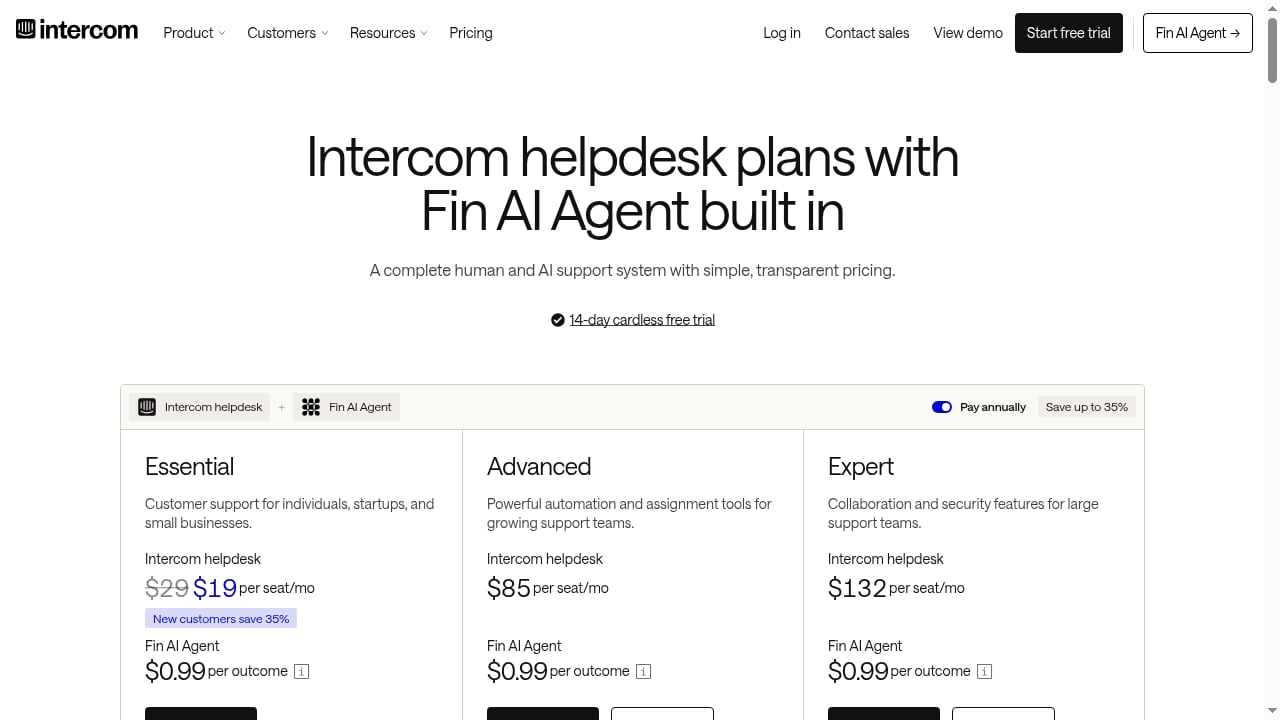
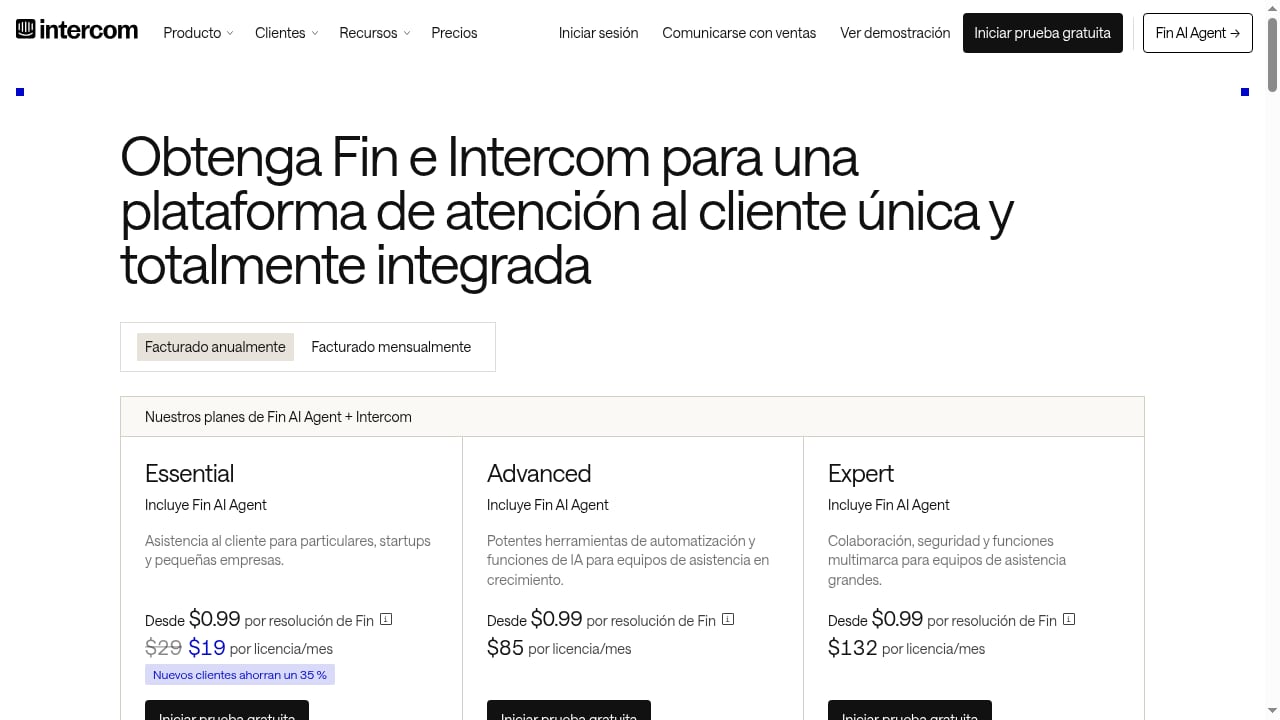
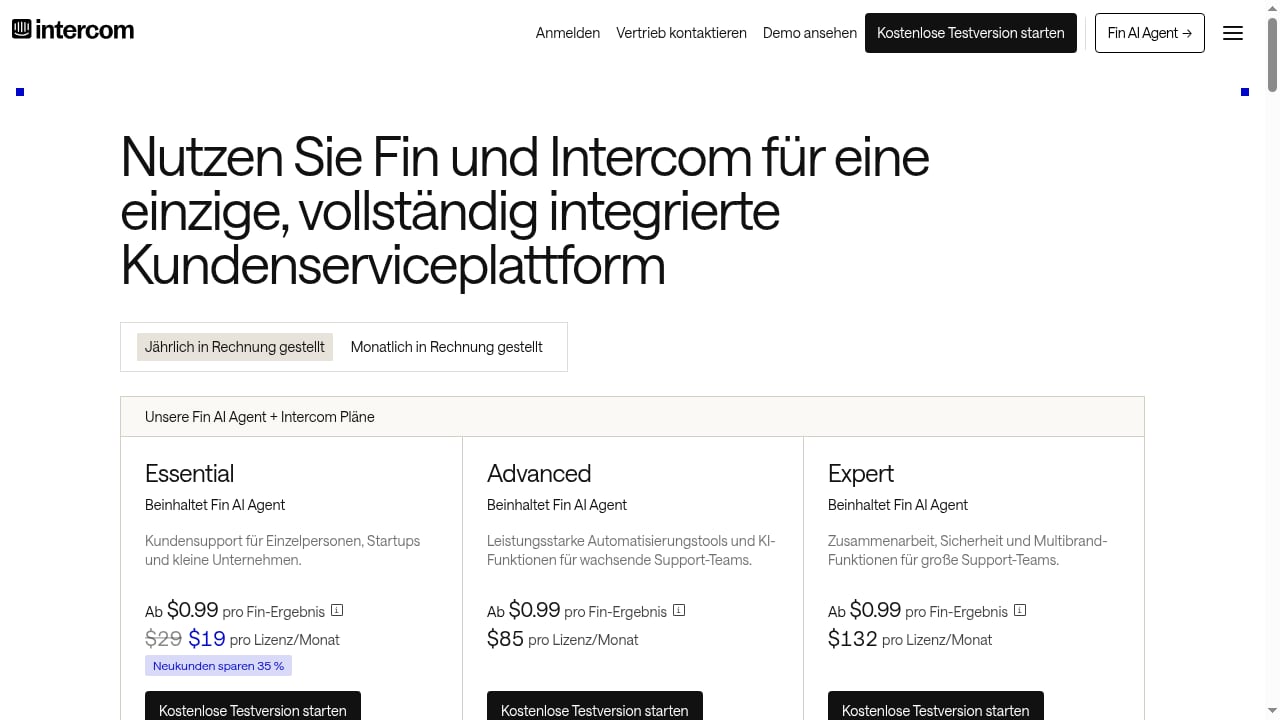
Intercom's platform pairs a helpdesk with Fin, an AI Agent that handles customer conversations across channels and is priced per outcome ($0.99 per resolution), while helpdesk plans are priced per seat per month. For teams inspired by Fathom's consolidation approach, the practical sequence is usually: unify the inbox, connect the tools, publish help content, then layer AI on the highest-volume, most repeatable conversations.
You can read the original interview with Fathom's support lead on Intercom's customer stories page. For a different angle on the same company, Fathom's own customer stories hub shows how its customers describe the product side of the relationship.
A note on two companies named Fathom
First viewport screenshot of www.intercom.com.
Search results for "Fathom customer service" mix two unrelated organizations: Fathom (fathomhq.com), the financial analysis and reporting platform featured in the Intercom story, and other companies that share the name. If you're researching a specific vendor, confirm the domain before acting on a case study. The metrics in this article refer to the financial reporting platform based in Brisbane.
Related reading
- How to Use Intercom with Slack: AI Support Meets Team Chat - Connect Intercom with Slack to route alerts, collaborate on tickets, and let AI handle support. Setup steps, workflows, and practical examples.
Sources and further reading
- Fathom Reviews & Stories: Shorts - They needed to deliver frequent and engaging management reporting services that helped firms understand their finances, spot dangers, and unlock their potential ...
FAQ
What is the Fathom customer service story about?
It's the account of how Fathom, a financial reporting and forecasting platform, rebuilt its support operation on Intercom after finding its previous helpdesk hard to navigate and fragmented. The team reported a 97% CSAT, response times more than 60% faster, and a national customer service award in 2022.
What tools did Fathom integrate with its helpdesk?
Fathom connected Calendly, Zoom, Loom, Jira, Productboard, and Guru to its support workflow, mainly to streamline escalations, scheduling, product education, and internal knowledge access.
Did Fathom replace its support team with AI?
The published story focuses on human support quality and platform consolidation, not AI replacement. It describes a small team gaining speed and visibility through better tooling.
What can smaller support teams learn from this?
The biggest levers were consolidation and integration. Reducing the number of tools an agent touches, linking help content to conversations, and giving leadership a real-time performance view are all achievable without scaling headcount.
Is a 97% CSAT realistic for most teams?
It's an outlier, and it reflects a specific product, customer base, and team. A more portable goal is the direction of travel: fewer handoffs, faster accurate replies, and a measurable feedback loop.
Conclusion
The Fathom customer service story is less about a tool swap and more about removing friction from a team that already cared about customers. Consolidating the stack, integrating the tools agents actually use, and giving leadership visibility produced measurable gains in speed and satisfaction.
If your support operation feels like it's fighting its own tooling, start by counting the handoffs in a single ticket. That number tells you more about your customer experience than any dashboard will.