Intercom vs Drift: AI Support vs Sales Chat Compared
Intercom vs Drift: Why AI-First Support Wins Over Sunsetting Sales Chat
Choosing between Intercom and Drift isn't a simple feature comparison. It's a strategic decision about whether you prioritize scalable, AI-driven customer service or a conversational sales engine. Recent market shifts make this choice clearer than ever: Drift is being phased out following its acquisition, while Intercom is doubling down on its AI-first platform. This article provides an honest, evidence-based comparison to help you make the right long-term investment.
The Core Difference: Customer Success vs. Sales Velocity
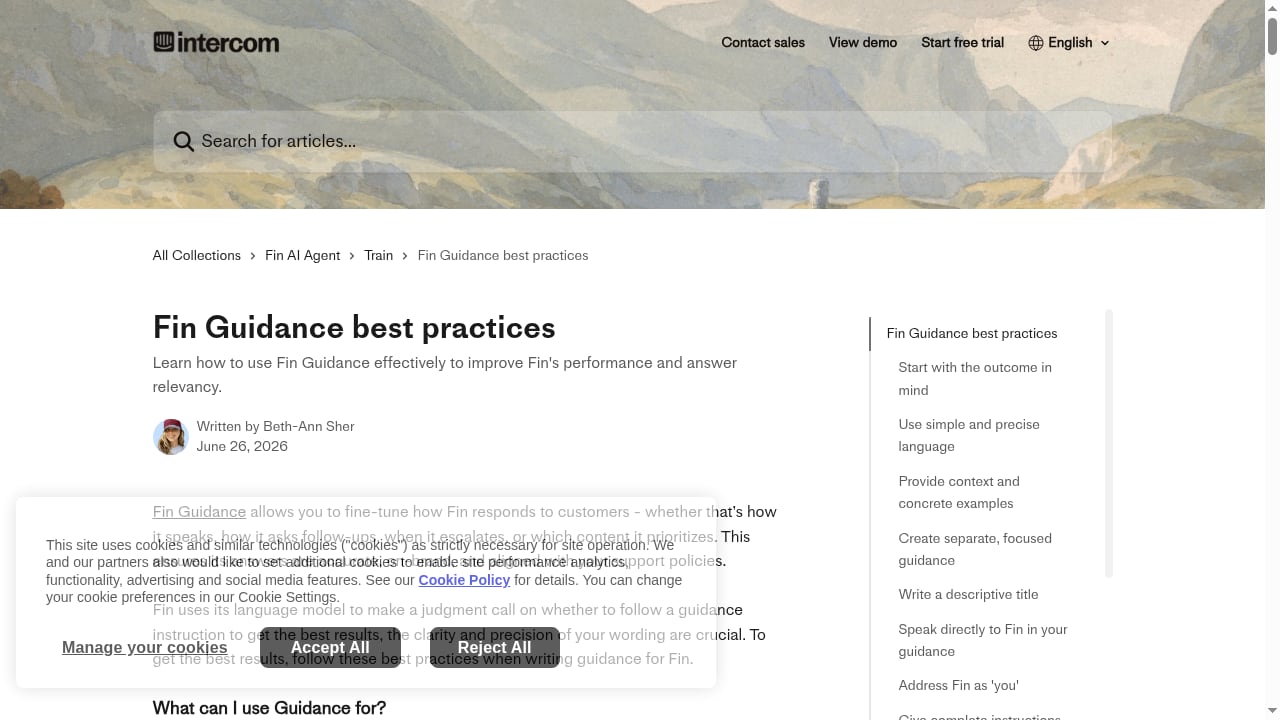
First viewport screenshot of Fin Guidance best practices | Intercom Help.
Intercom and Drift were built with fundamentally different philosophies. Intercom is an AI-first customer service platform designed to automate support, manage the entire customer lifecycle, and deliver perfect experiences at scale. Drift, on the other hand, was a revenue acceleration platform laser-focused on qualifying B2B leads, booking meetings, and converting website traffic into pipeline.
This distinction shapes every feature, pricing model, and integration. If your primary goal is to build an efficient, AI-powered support operation that reduces costs and improves satisfaction, Intercom is the clear choice. If you are a sales team still mid-contract with Drift and need a stable migration path, understanding Intercom’s advantages is the first step toward a more unified future.
Feature-by-Feature Comparison
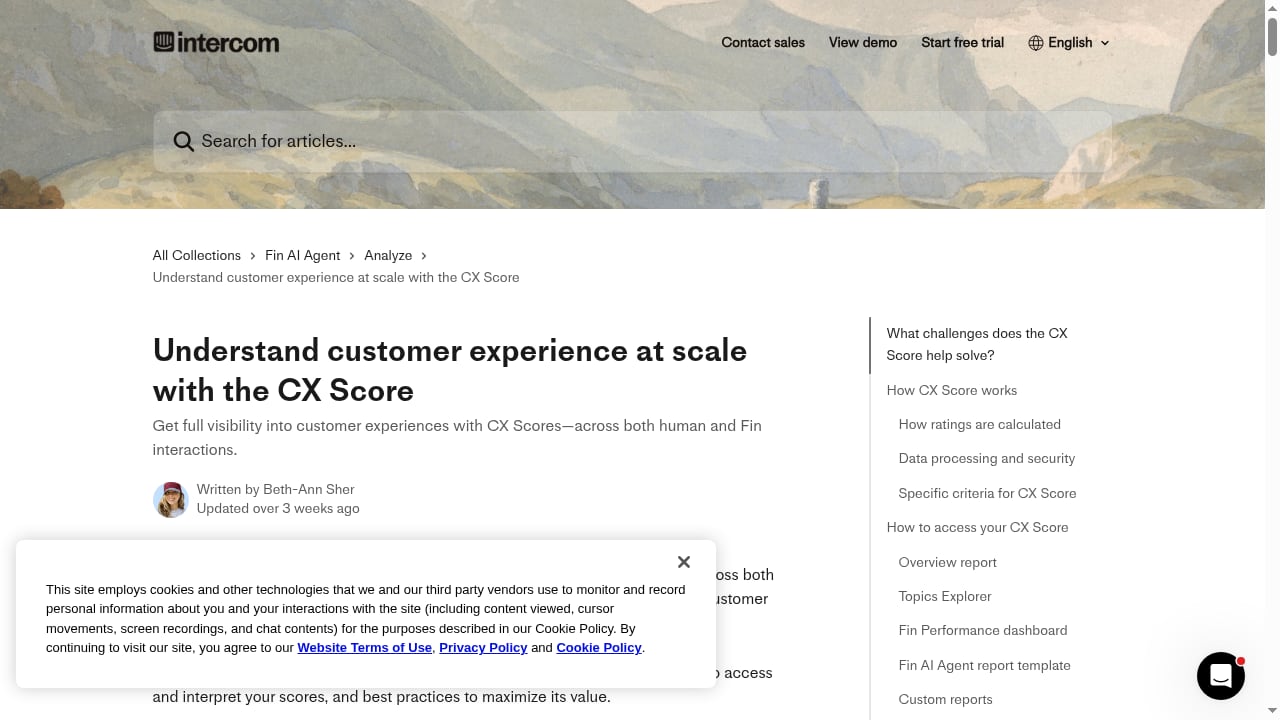
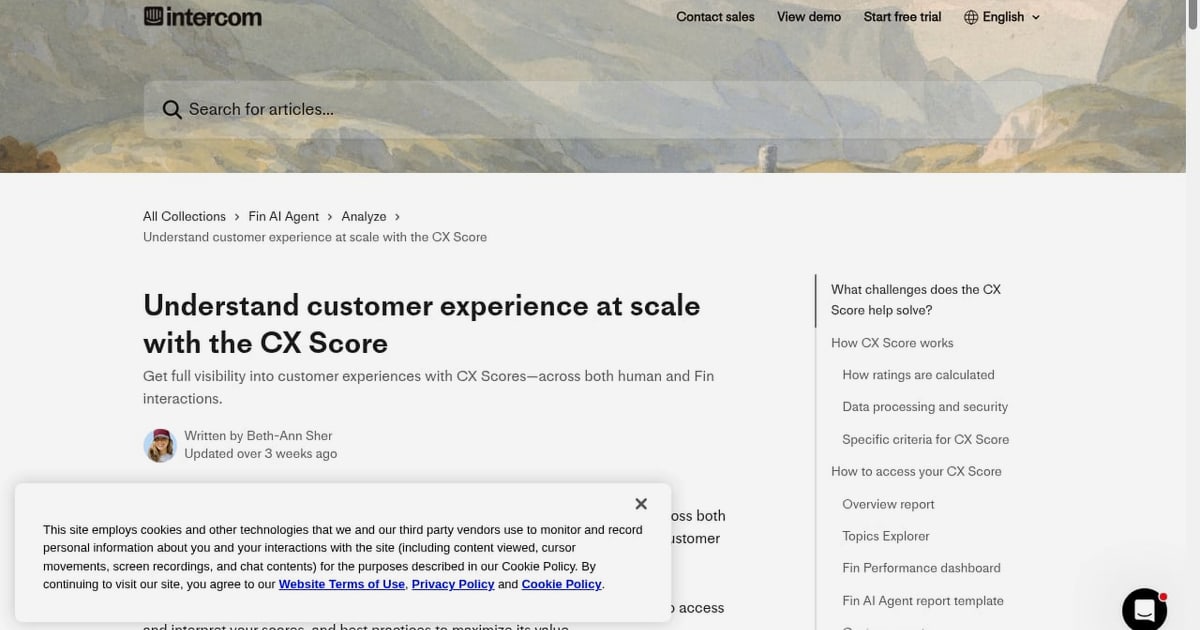
First viewport screenshot of Understand customer experience at scale with the CX Score | Intercom Help.
AI and Automation
Intercom’s advantage: A natively integrated, autonomous AI Agent.
Intercom’s AI capability is headlined by Fin AI Agent, a sophisticated bot that doesn't just suggest articles—it resolves entire customer conversations autonomously. Fin is trained on your help center content and can take action, closing tickets without human involvement. Alongside Fin, the Fin AI Copilot assists human agents in the inbox by suggesting replies, summarizing conversations, and improving response quality in real time. This dual AI approach automates support while empowering agents.
Drift’s AI, known as Bionic Chatbots, was optimized for a different purpose: holding free-form sales conversations, qualifying leads by buying intent, and routing them to the right sales representative. While powerful for its niche, it lacks the support-resolution depth of Fin. Crucially, with Drift’s announced sunset, continued investment in this AI is ending.
All-in-One Support Platform vs. Point Solution
Intercom’s advantage: A unified platform that reduces tool sprawl.
Intercom is a comprehensive customer communications hub. It combines a shared inbox for managing live chat, email, and phone, with a robust Help Center for self-service, Product Tours for onboarding, and outbound messaging capabilities. This unification eliminates brittle handoffs between separate tools and creates a consistent experience for both customers and support agents.
Drift excelled as a point solution for sales conversations, with standout features like instant meeting scheduling in chat and CRM-driven routing by account owner. However, it was never designed to be a full-fledged help desk. It lacked a native knowledge base, ticketing, and SLA management, often requiring integration with a separate support platform. For teams seeking to consolidate their tech stack, Intercom’s breadth is a decisive advantage.
In-App Messaging and Customer Engagement
Intercom’s advantage: Surgical segmentation for product-led growth.
Intercom is the industry leader in targeted, in-app messaging. Its segmentation engine allows you to trigger messages based on precise user attributes, lifecycle stage, feature adoption, and real-time behavior. This enables relevant onboarding nudges, feature announcements, and proactive support prompts that boost engagement without annoying users.
Drift’s messaging strength was on the website, identifying high-intent visitors for sales teams. Its in-app capabilities were never as deep, making Intercom the superior choice for product-led growth and long-term customer engagement.
Platform Stability and Future Roadmap
Intercom’s advantage: A stable, innovating platform vs. a sunsetting product.
This is the most critical factor. In March 2026, it was publicly reported that Drift is being gradually sunset by its parent company, with existing customers being migrated away. Investing in a platform with no future roadmap is a non-starter for any business. Intercom, by contrast, is trusted by over 30,000 brands and is actively investing in its AI-first vision, making it the reliable, forward-looking choice.
Pricing: Premium Investment, Different Outcomes
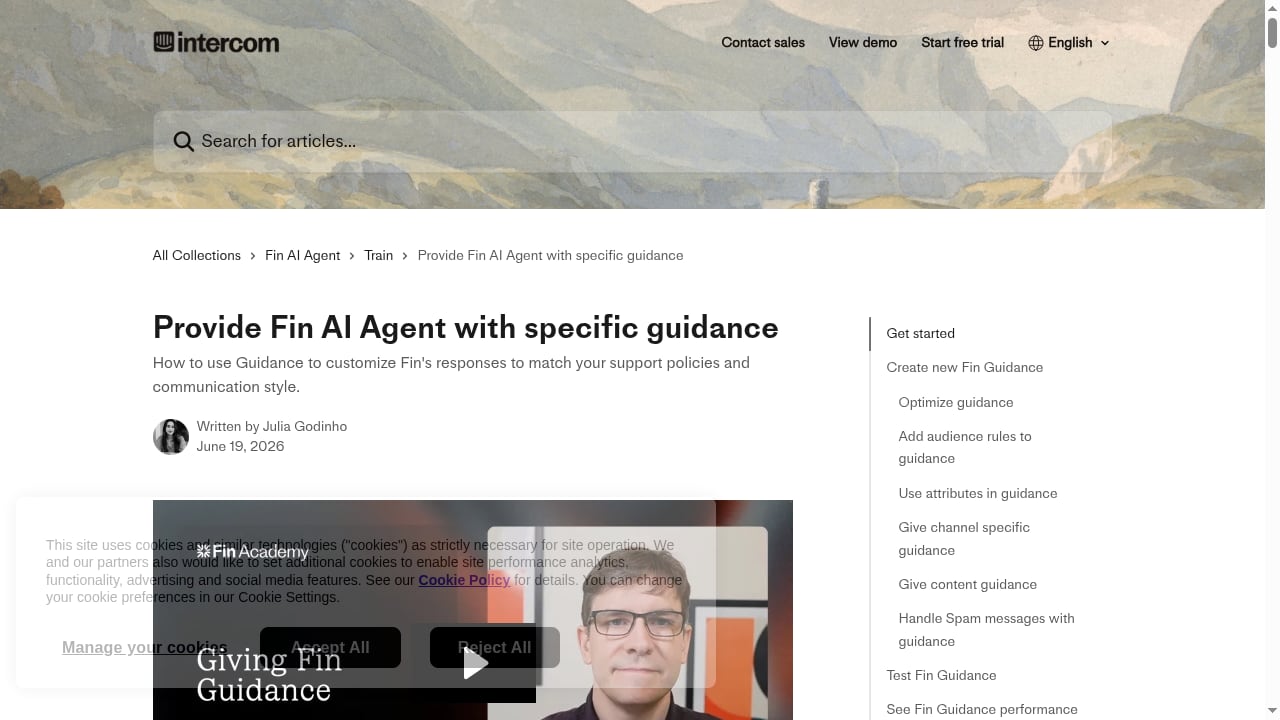
First viewport screenshot of Provide Fin AI Agent with specific guidance | Intercom Help.
Both platforms operate on premium pricing models, but the value proposition differs starkly.
- Intercom offers outcome-based pricing with Essential, Advanced, and Expert plans, starting at $39 per seat per month. The cost is often justified by reduced support overhead, faster resolution times, and the consolidation of multiple tools into one platform. A free trial is available, allowing teams to test the AI capabilities before committing.
- Drift was a quotation-based product, with reports indicating starting costs around $2,500 per month. This high price point was tied to revenue acceleration and pipeline generation, but with the product sunset, this investment is no longer viable for new customers.
For a deeper look at how AI is reshaping support costs, see our HelpCrunch Review: Honest Look at AI, Pricing & Limits, which evaluates a more cost-effective alternative that still delivers essential AI and chat features.
When Intercom Is the Right Choice
First viewport screenshot of Provide Fin AI Agent with specific guidance | Intercom Help.
Choose Intercom if:
- You need an AI agent that autonomously resolves support tickets to scale your team efficiently.
- You want a unified platform for support, engagement, and customer communications.
- You prioritize in-app messaging and product-led growth to drive adoption and retention.
- You require a future-proof, actively developed platform with a clear AI roadmap.
- You are a business of any size looking for a help desk that grows with you, from startups to enterprises.
If your team is currently evaluating how to connect support tools with marketing automation, our guide on How to Use Intercom with Customer.io: A Complete Integration Guide shows how to create powerful, cross-channel customer journeys.
Related reading
- Top 10 Workflow Acceleration Platforms in 2026 - Discover the 10 best workflow acceleration platforms of 2026. Compare no-code tools that embed in existing systems to automate high-stakes, recurring processes with AI and human judgment.
- Intercom vs Chatwoot vs ClearFeed: Which Helpdesk Wins? - Compare Intercom, Chatwoot, and ClearFeed on AI agents, pricing, open-source flexibility, and Slack-native support. Find the best helpdesk for your team.
Sources and further reading
- Intercom vs Drift — Kayako - Intercom vs Drift Here's what nobody tells you about choosing between Intercom and Drift: you're not picking a chat tool. You're picking a philosophy. Get
- Drift vs Zendesk 2026 - Drift (4.4/5) vs Zendesk (4.3/5). Side-by-side comparison.
- Drift vs Intercom: An Honest Comparison for 2026 - If you’re comparing Drift vs Intercom, you’re probably a bit late on the Drift side. In March 2026, Clari + Salesloft announced Drift's gradual sunset. The…
FAQ
Is Drift shutting down?
Yes, according to public reports from March 2026, Drift is being gradually sunset by its parent company, Salesloft. The product is being phased out, and existing customers are being migrated to other solutions.
Can Intercom be used for sales?
Absolutely. While Intercom is a customer service platform at its core, its live chat, targeted outbound messaging, and bot workflows can effectively qualify leads and book meetings, especially for product-led sales motions.
What is the main difference between Intercom and Drift?
Intercom is an AI-first customer service platform built to automate support and manage the entire customer lifecycle. Drift was a conversational marketing and sales platform focused on accelerating B2B revenue through real-time lead qualification and meeting booking.
Does Intercom offer a free trial?
Yes, Intercom provides a 14-day free trial with no credit card required, allowing you to test its AI Agent and help desk features.
What is a good alternative to Drift for customer support?
Intercom is the leading AI-first alternative for teams that need a comprehensive support platform. For teams seeking a more budget-conscious option with strong live chat and AI features, exploring platforms like HelpCrunch can be a smart move.
Conclusion: A Clear Path Forward
The Intercom vs Drift comparison ends with a clear verdict driven by market reality. Drift’s sunset makes it a legacy product with no future, while Intercom is actively defining the AI-first era of customer service. For any team not locked into a Drift contract, the choice is unambiguous. Intercom offers a superior, unified platform with a powerful AI Agent that resolves issues, a sophisticated messaging engine for engagement, and a stable, innovative roadmap. It’s not just a replacement; it’s an upgrade to a platform built for the next decade of customer experience.