Intercom vs Gorgias vs Tidio: AI Customer Service Compared
Intercom vs Gorgias vs Tidio: AI Customer Service Compared
Choosing an AI customer service platform in 2026 is less about which tool has a chatbot and more about where the AI sits in your stack, what it can actually do without a human, and how you pay for it once it starts working. Intercom, Gorgias, and Tidio all answer that question differently.
Intercom is an AI-first customer service platform built around Fin, a natively integrated AI Agent inside its helpdesk. Gorgias is an ecommerce helpdesk with an AI Agent wired into your store stack. Tidio pairs its Lyro AI agent with a helpdesk and proactive sales flows. This comparison looks at where each one is strong, where the trade-offs land, and which type of team each fits.
How the three platforms differ at a glance
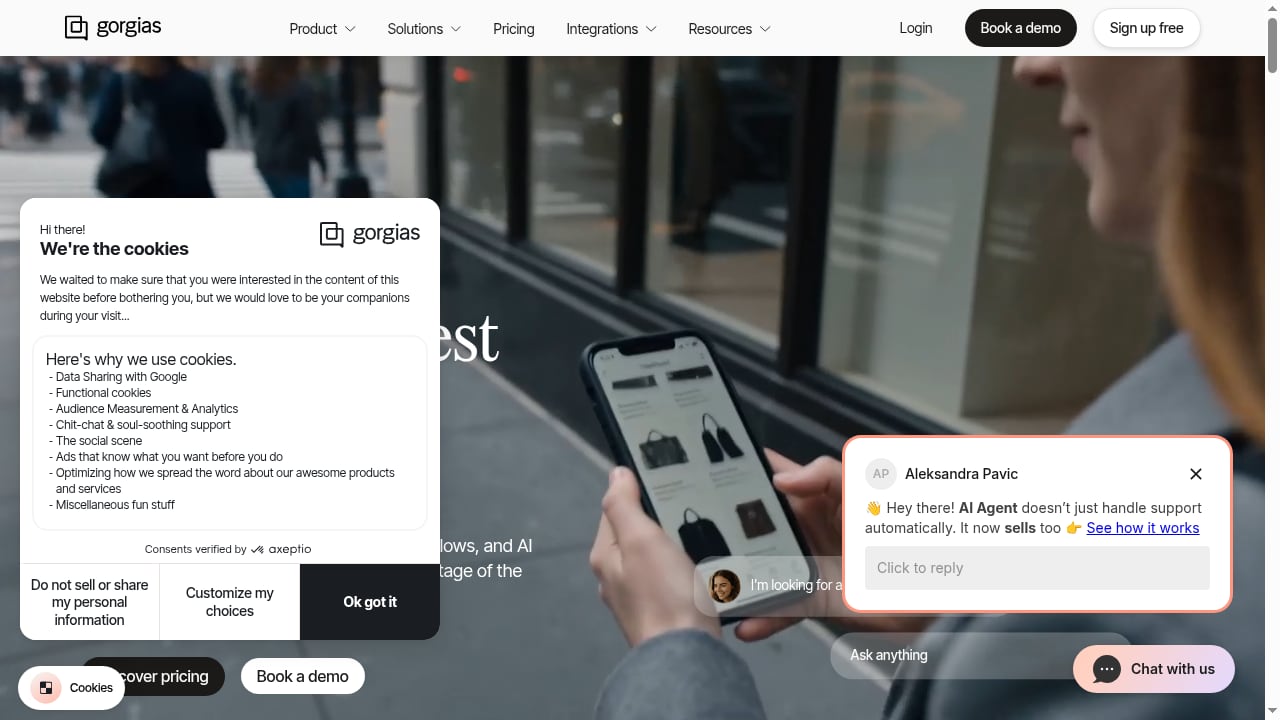
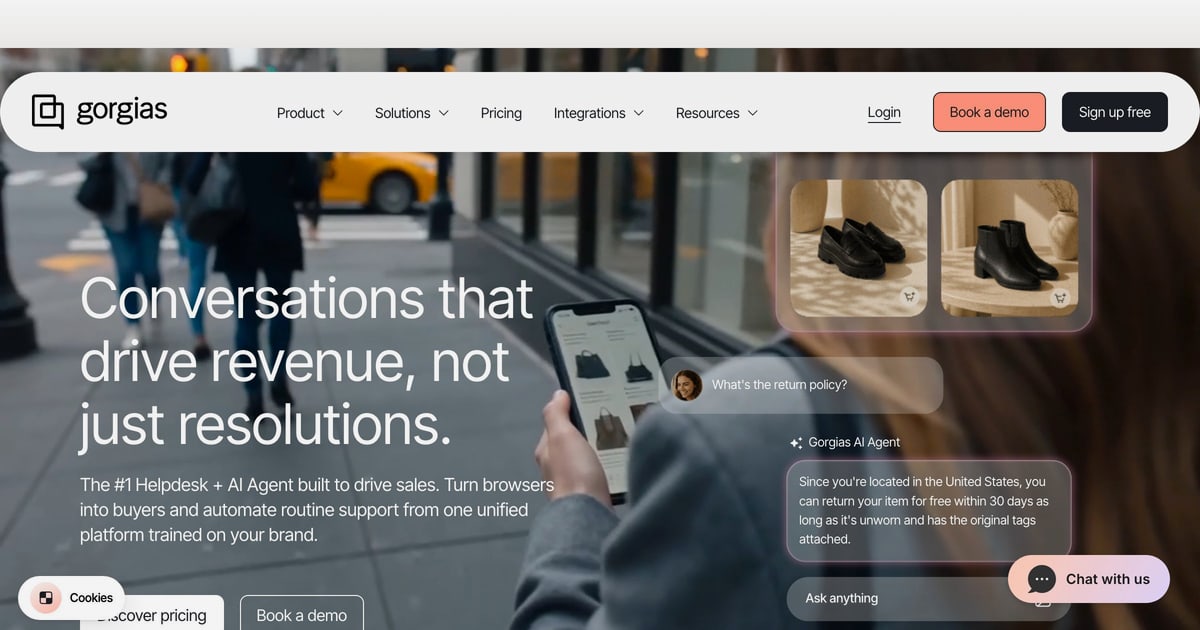
First viewport screenshot of The Conversational AI platform for Ecommerce | Gorgias.
| Criterion | Intercom | Gorgias | Tidio |
|---|---|---|---|
| Core positioning | AI-first customer service platform with a natively integrated AI Agent (Fin) | Ecommerce customer experience platform with an AI Agent and store-connected helpdesk | AI customer service software that turns chats into revenue |
| AI agent | Fin, integrated into the helpdesk | AI Agent inside the ticket workflow | Lyro, trained on your help center and store data |
| Ecommerce depth | Product cards and checkout capabilities documented; broad support platform | Deep Shopify order actions inside the ticket | Live Shopify and WooCommerce order and product data |
| Proactive selling | Not the primary focus | Support-first, thin on pre-sale selling | Sales Flows, product cards, purchase attribution |
| Pricing model | Per seat plus per AI outcome | Helpdesk plus AI bundle, then per AI interaction above allowance | Base plan plus separately metered AI conversations |
| Best fit | Support teams wanting one system for human and AI service | Shopify brands running a support team | Small stores wanting cheap live chat plus AI |
What Intercom does well
Intercom's main argument is architectural: Fin is not bolted onto a helpdesk, it is part of one. That matters when you want AI and human agents working from the same conversation history, the same routing rules, and the same reporting.
Key strengths supported by the product context:
- A natively integrated AI Agent. Intercom positions itself as the only helpdesk with a natively integrated AI Agent, and describes the platform as a complete system for human and AI customer service.
- Automation at scale. Customer stories include AgriWebb reducing support costs by 80% and AI21 Labs automating 82% of support.
- Breadth beyond ecommerce. The platform serves support teams, CX leaders, and businesses from startups to large enterprises, with multilingual support and AI-driven insights.
- A pricing calculator. Intercom offers a calculator to estimate costs based on team size and expected outcomes, which helps when AI resolution volume is hard to predict.
- Low-friction evaluation. A 14-day free trial with no credit card required, and more than 30,000 brands reportedly using the platform.
Where Intercom is not the obvious pick: if your entire operation is a Shopify store and you want pre-sale selling inside the chat, the ecommerce-native tools below go further on that specific job. That is a scope difference, not a quality difference.
What Gorgias does well
Gorgias is the ecommerce helpdesk incumbent for a reason. It is built for stores that already run a support team and need AI to deflect the repetitive tickets without ripping out their existing workflow.
Credible strengths:
- Deep Shopify order actions inside the ticket. Agents and the AI Agent can act on order, return, and delivery questions from within the ticket rather than switching tools.
- A mature helpdesk. Macros, SLAs, and agent seats are established features, and social channels land in the same inbox.
- Scale with ecommerce brands. Gorgias reports being trusted by top 17,000 brands and counting.
- A clear bundle. The helpdesk plus AI Agent bundle is straightforward to understand, with per-interaction fees above the plan's allowance.
Trade-offs to plan for: Gorgias is support-first and thinner on pre-sale selling, per-interaction fees can climb well above the entry price at volume, and phone and SMS are billed separately. If your goal is turning browsing sessions into purchases, that is not Gorgias's center of gravity.
What Tidio does well
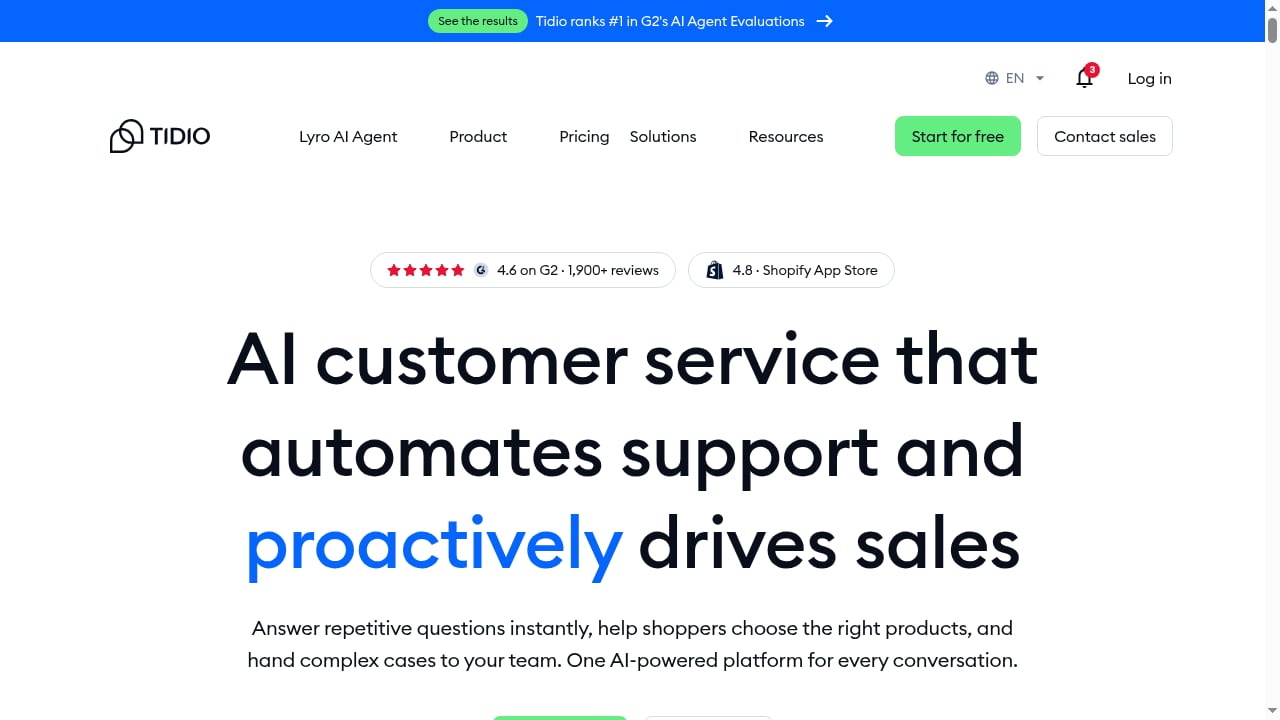
First viewport screenshot of AI Customer Service That Turns Chats Into Revenue | Tidio.
Tidio's pitch is the opposite of Gorgias's: start from the conversation, not the ticket. Its Lyro agent answers from your help center, policies, and store data, and the platform layers proactive sales on top.
Credible strengths:
- Revenue attribution. Tidio shows revenue attributed to AI conversations, with a published example of $184,210 monthly revenue attributed to Lyro conversations and a 75% average resolution rate across customers.
- Proactive sales flows. Behavioral triggers, category events, cart nudges, and exit intent open the chat at high-intent moments instead of waiting for the shopper.
- Product recommendations in chat. Lyro uses your live catalog to suggest products and shows them as product cards with prices and links.
- Easy start. No credit card required, setup in minutes, and a free plan that makes it genuinely easy to test.
- Scale among smaller stores. Tidio reports 300K+ businesses running their customer service on the platform.
Trade-offs to plan for: Lyro is billed separately per AI conversation on top of the base plan, and AI conversations do not count toward the plan's own conversation limit. Allowances are capped per tier, and on Free and Starter plans the Lyro allowance is 50 conversations in total, not per month. Tidio supports more than it sells, so if you need photo product search, agentic checkout inside the chat, or marketplace inboxes, those are not advertised capabilities.
Pricing models compared
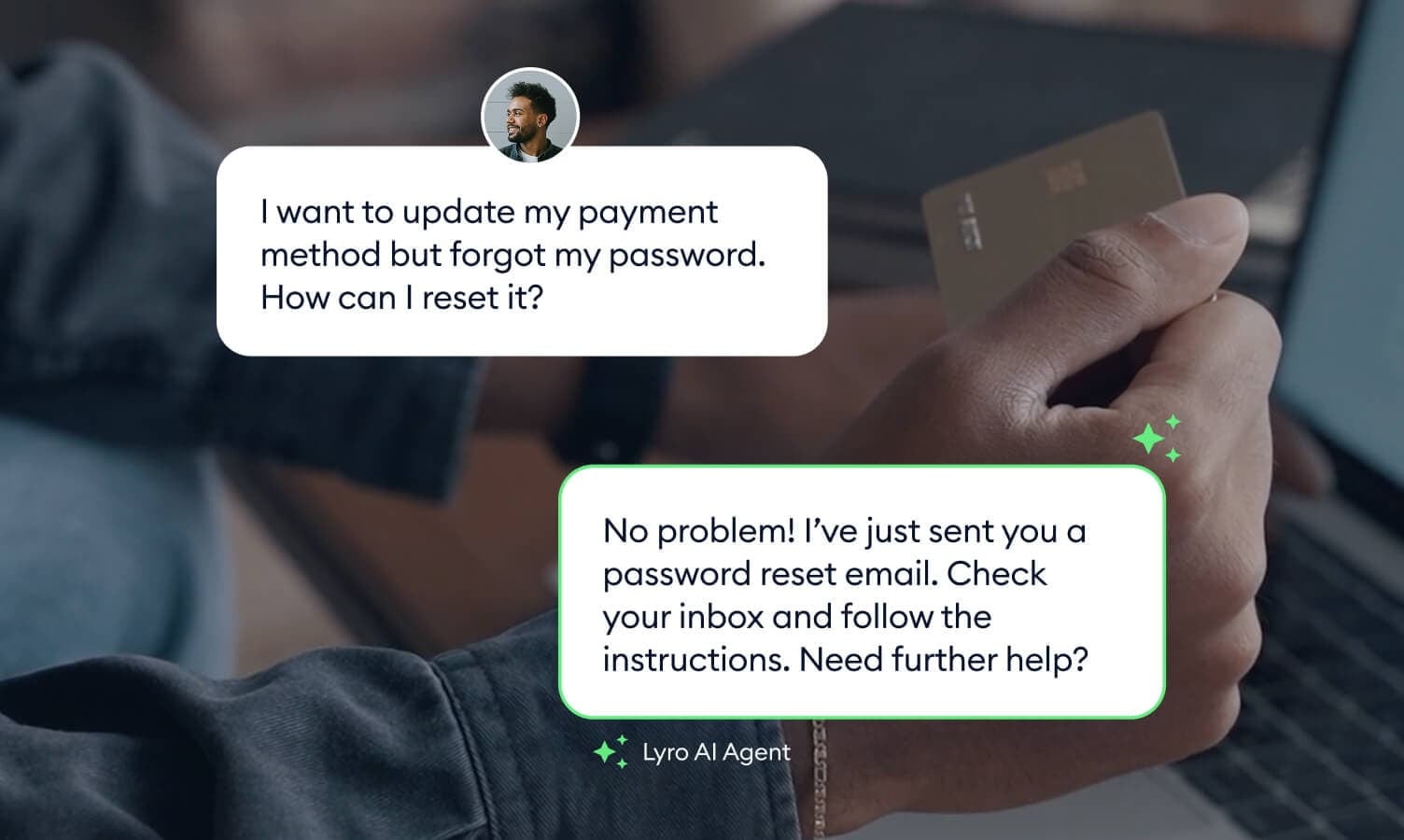
AI Customer Service That Turns Chats Into Revenue | Tidio product interface.
This is where the three platforms diverge most, and where sticker prices mislead.
- Intercom charges per seat plus per AI outcome, with a calculator to model costs against expected outcomes. That structure rewards teams that can forecast AI resolution volume.
- Gorgias bundles the helpdesk and AI Agent, then charges per AI interaction above the plan's allowance. At roughly 1,000 AI resolutions a month, third-party analysis puts the all-in cost near €1,635 ($1,765), with phone and SMS billed separately.
- Tidio charges a base plan plus metered AI conversations. The same analysis estimates about €760 ($820) a month at 1,000 AI conversations, with Lyro billed on a second meter.
A useful rule: compare all-in cost at the same AI volume, not the entry price. Per seat, per outcome, per interaction, and per conversation models are not comparable at face value. If you are still mapping the category, our ranked review of agentic customer service platforms for ecommerce scores options on order-aware actions, autonomy, channels, pricing, and governance.
Which platform fits your team
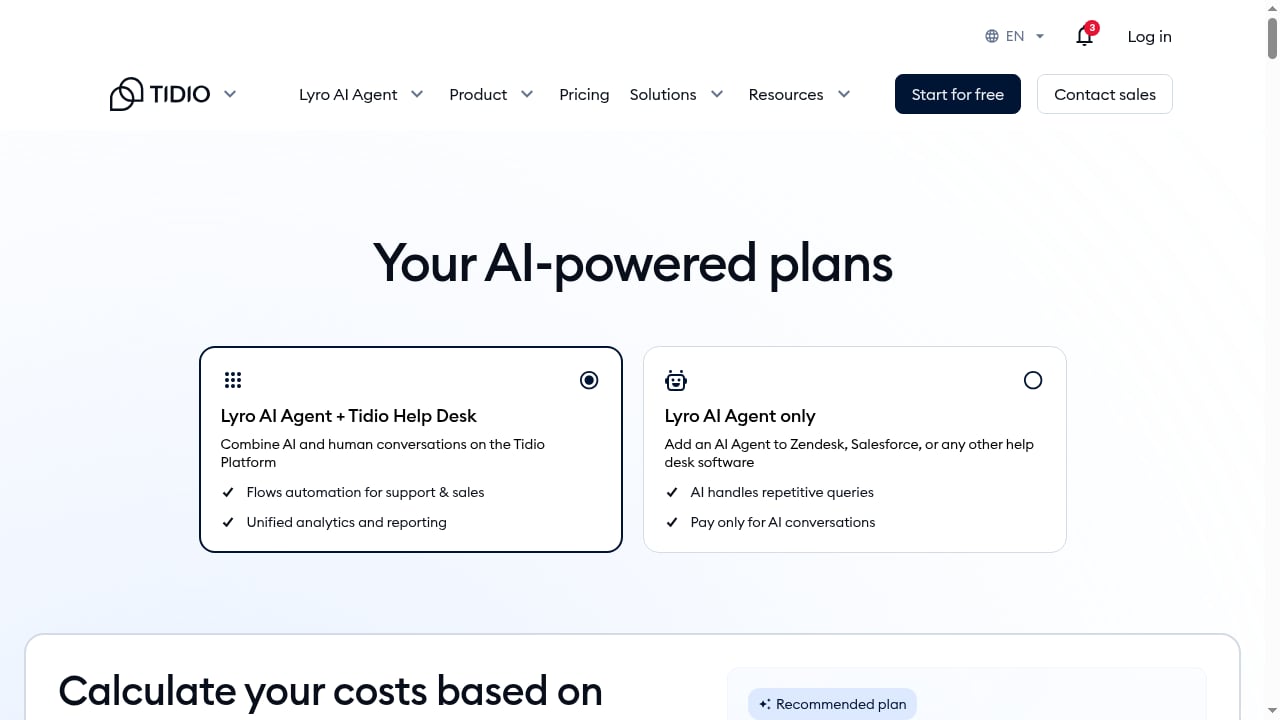
First viewport screenshot of Tidio Pricing—Find the Best Plan for Your Business Needs.
Use these decision paths rather than a single winner.
Choose Intercom if: you want one system for human and AI customer service, your support spans more than ecommerce, you need multilingual support and AI-driven insights, and you want to estimate costs with a pricing calculator before committing. It is also the natural fit when AI resolution volume is expected to grow and you want the AI agent to be part of the helpdesk rather than an add-on.
Choose Gorgias if: you run a Shopify store with a real support team, your ticket volume is dominated by order, return, and delivery questions, and you want the AI Agent to act on store data inside the ticket. The mature helpdesk features, macros, SLAs, and social channels in one inbox are the draw.
Choose Tidio if: you are a smaller store, you want to start cheaply or free, and proactive selling matters as much as support. Sales Flows, product cards, and revenue attribution are the differentiators, and the metered AI model is manageable while volumes are low.
If you are weighing Intercom against other AI-first platforms, our Intercom vs Sierra comparison covers deployment and fit, and Intercom vs Genesys Cloud CX covers AI resolution, voice, and time to value.
Practical evaluation checklist
Before you commit to any of the three, run the same test on each:
- Feed the AI your real content. Upload your help center, policies, and product data, then ask the ten questions your team answers most often.
- Count the handoffs. Track how often the AI escalates and whether the human agent receives full context.
- Model 1,000 AI conversations. Apply each vendor's pricing model to that volume, including seats, interactions, and separate AI meters.
- Test the ecommerce actions you need. Order status, returns, product recommendations, and any checkout behavior inside the chat.
- Check channel coverage. Email, live chat, WhatsApp, Instagram, and social inboxes should match where your customers actually are.
- Review reporting. You want visibility into what the AI resolved, where it failed, and what it earned or saved.
Related reading
- WotNot Review 2026: No-Code AI Agent Platform Tested - Evidence-based WotNot review: no-code AI agents, multi-LLM AI Studio, flat pricing, WhatsApp support, setup steps, limitations, and who should buy.
- Customer Support Login: Secure Access for AI-First Support Teams - Learn how customer support login works for AI-first platforms like Intercom, including SSO, MFA, and permission models that keep support data secure.
Sources and further reading
- AI Customer Service That Turns Chats Into Revenue | Tidio - See what your customer conversations earn. Lyro resolves questions instantly and turns the rest into sales, leads, and bookings you can attribute.
- Best Tidio alternatives for e-commerce (2026) | AskSpot - Six Tidio alternatives for online stores – scored on one 17-point rubric, with what each really costs at 1,000 AI conversations a month.
- Best Conversational AI Platforms in 2026: 19 Compared With Real Prices - At 3,000 chats a month, published conversational AI prices run from $12 on Retell AI to $1,500 on Botpress Team. 19 platforms, six types compared.
FAQ
Is Intercom or Gorgias better for Shopify stores? Gorgias is built specifically around ecommerce helpdesk workflows, with deep Shopify order actions inside the ticket. Intercom is a broader AI-first customer service platform with a natively integrated AI Agent. If your support is almost entirely store operations, Gorgias is the more specialized fit; if you need one system across multiple channels and business lines, Intercom's breadth is the advantage.
Is Tidio cheaper than Intercom and Gorgias? Tidio has the lowest entry point, including a free plan, but Lyro is billed separately per AI conversation. At roughly 1,000 AI conversations a month, third-party estimates put Tidio near €760 ($820), Gorgias near €1,635 ($1,765), and Intercom Fin near €950 ($1,019) on one seat. Your actual cost depends on volume and seats, so model it rather than comparing stickers.
Can Tidio's Lyro handle order status questions? Yes. With Shopify or WooCommerce connected, Lyro checks order status, shares tracking details, and explains return or shipping policies using your live store data.
Does Intercom's Fin work outside ecommerce? Yes. Intercom serves support teams and businesses of various sizes, from startups to large enterprises, with use cases including automating customer support, reducing support costs, and enabling multilingual support.
What is the biggest pricing trap across these platforms? Metered AI. Gorgias charges per AI interaction above the plan allowance, Tidio bills Lyro per AI conversation on a separate meter, and Intercom charges per AI outcome plus seats. In every case, the entry price tells you very little about the cost once the AI is doing real work.
Conclusion
There is no single winner across Intercom, Gorgias, and Tidio, because they are optimized for different jobs. Intercom is the strongest fit when you want a complete system for human and AI customer service with a natively integrated AI Agent and the flexibility to serve more than an ecommerce storefront. Gorgias wins when your world is Shopify tickets and you need a mature helpdesk with AI acting on order data. Tidio wins when you are a smaller store that wants to start cheaply and turn conversations into attributed revenue.
Pick the platform whose center of gravity matches your biggest problem, then pressure-test it on your own content, your own top questions, and your own AI volume before you sign.