Intercom vs HelpDesk vs Dixa: Which AI Support Platform Wins?
Intercom vs HelpDesk vs Dixa: Which AI Support Platform Fits Your Team?
Choosing a customer support platform in 2026 means weighing three very different philosophies. Intercom is an AI-first helpdesk with a natively integrated AI Agent called Fin. HelpDesk.com is a straightforward ticketing system you can start using for free. Dixa is an agentic customer service platform built specifically for mid-market ecommerce and consumer brands.
This comparison looks at where each platform genuinely excels, so you can match the tool to your team's channel mix, customer type, and growth stage.
Quick comparison: what each platform is built for
First viewport screenshot of Dixa Roadmap Update Q1 2025.
| Platform | Core identity | Best-fit team | Standout strength |
|---|---|---|---|
| Intercom | AI-first customer service platform with native Fin AI Agent | Support teams from startups to large enterprises | Natively integrated AI Agent plus helpdesk, AI insights, and omnichannel automation |
| HelpDesk.com | AI help desk and ticketing system | Small teams that want a simple, free starting point | Zero-cost entry with no credit card required |
| Dixa | Agentic CS platform for ecommerce | Mid-market ecommerce and consumer brands (roughly 50–1,000 employees) | Native voice and every channel unified from day one, with AI priced per conversation |
Intercom: native AI agent plus a complete helpdesk
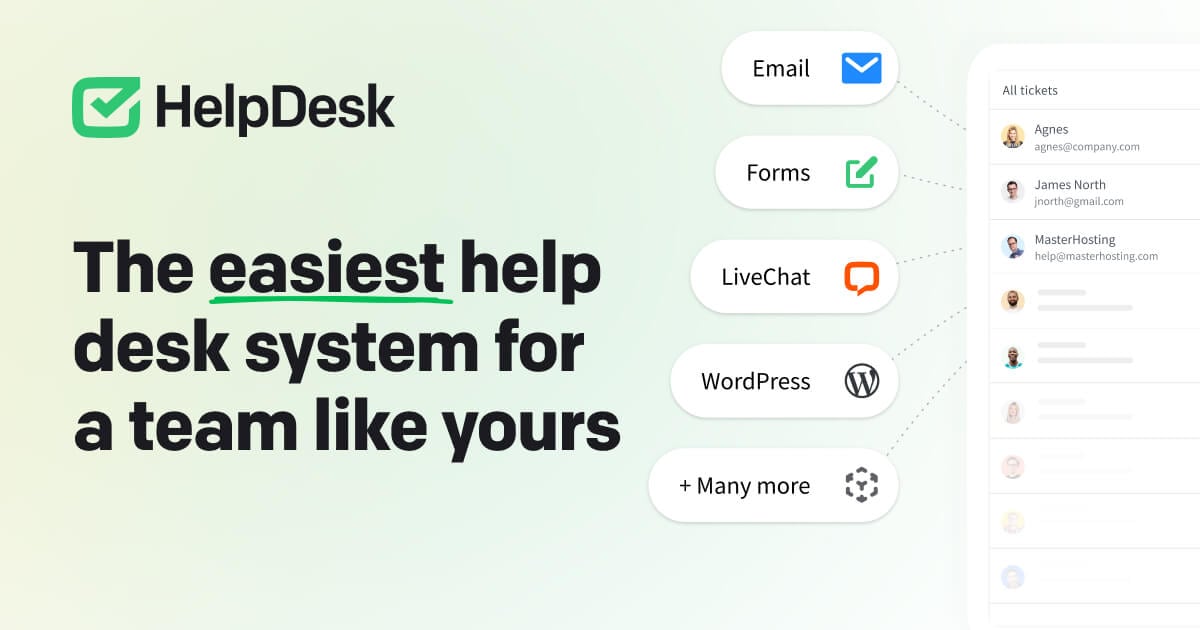
HelpDesk | AI Help Desk Software & Ticketing System for Support Teams product interface.
Intercom positions itself as the only helpdesk with a natively integrated AI Agent. That integration matters because Fin isn't bolted on as a separate product with its own login, data model, or billing system. It runs inside the same platform as the helpdesk, so AI-resolved conversations and human-handled conversations share the same customer history, routing rules, and reporting.
Key capabilities include:
- Fin AI Agent for automated conversation resolution
- Helpdesk for human agent workflows
- AI insights for spotting trends and coaching opportunities
- Bots and automation for routing and self-service
- Multilingual support for global customer bases
Intercom reports more than 30,000 brands using the platform. Published customer stories include AgriWebb reducing support costs by 80% and AI21 Labs automating 82% of support. A 14-day free trial is available with no credit card required.
This makes Intercom a strong fit when you want AI and human support to operate as one system rather than two disconnected tools. If your team is evaluating how native AI agents compare with other approaches, see our breakdown of Intercom vs Zendesk vs ClickDesk AI agents.
HelpDesk.com: a free, focused ticketing system
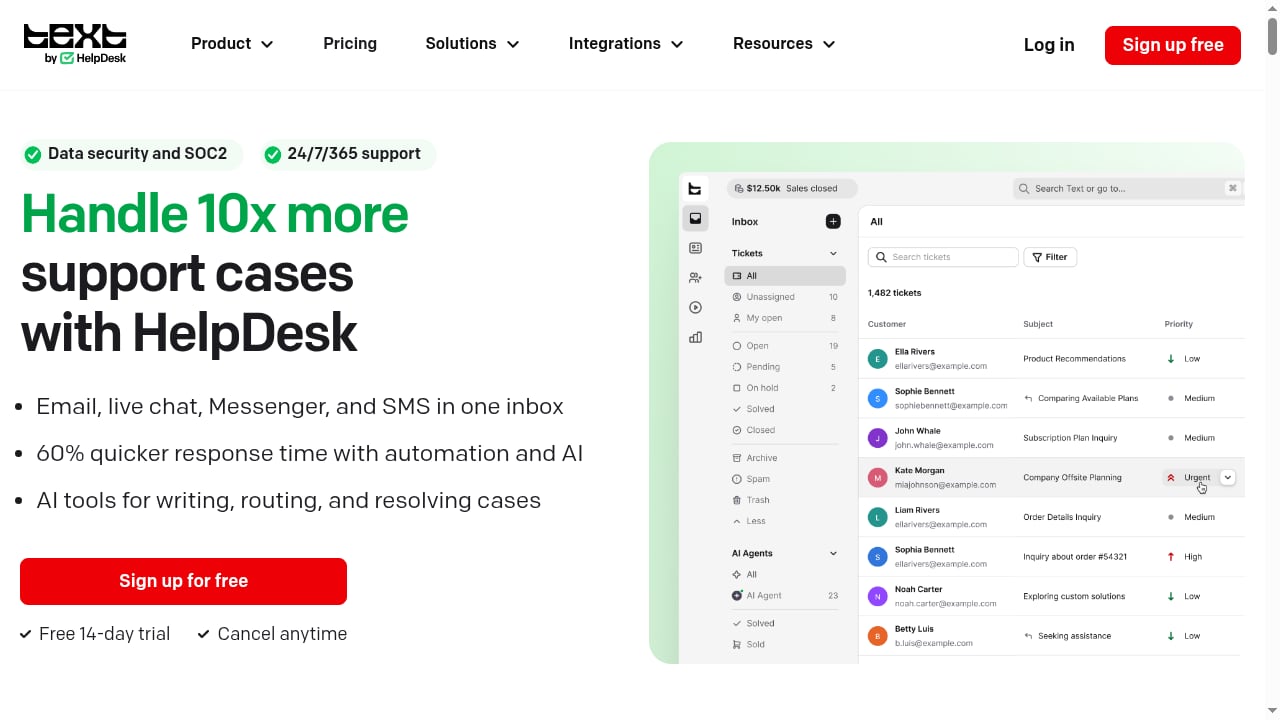
First viewport screenshot of HelpDesk | AI Help Desk Software & Ticketing System for Support Teams.
HelpDesk.com takes the opposite approach to complexity. It is a ticketing system for managing customer communication in one place, and you can start for free without a credit card. For small teams that mainly need to organize email and chat inquiries, that simplicity is a real advantage: less setup, less training, and no procurement friction.
The trade-off is depth. A free ticketing system typically won't match the AI resolution capabilities, omnichannel unification, or analytics depth of platforms built for larger support operations. If your volume is low and your channel mix is simple, that trade-off may not matter at all.
Dixa: agentic customer service for ecommerce
First viewport screenshot of The Agentic CS Platform Behind Exceptional Ecommerce Brands | Dixa.
Dixa was built for ecommerce and consumer brands, and its architecture reflects that. Every channel, including native voice, is unified from day one rather than added later as separate modules. That means routing, reporting, and AI work consistently across chat, email, phone, WhatsApp, and social.
Dixa's AI agent, Mim, resolves routine inquiries such as refunds, order tracking, and order changes directly from live order data, and hands off complex issues to human agents with full context. Dixa states Mim can resolve up to 80% of inquiries without human intervention. Native integrations include Shopify, Magento, and WooCommerce.
Dixa's pricing philosophy also differs: AI is priced per conversation at a flat contracted rate rather than per resolution. For brands with seasonal peaks, that predictability can be valuable. Dixa also provides a dedicated success manager on every plan and guided onboarding rather than self-serve signup.
Where Dixa is less suited: if your customers are software users inside your product rather than shoppers, Intercom's in-app messaging and product tours are the stronger fit. Dixa is explicit that it targets mid-market ecommerce, not universal use.
Where Intercom has a supported advantage
The comparison criteria below are ones where Intercom's product context and public positioning give it a clear, defensible edge:
1. Native AI agent integrated with the helpdesk
Intercom's core claim is that Fin is natively integrated, not a separate AI product layered on top. This means AI-resolved and human-resolved conversations share the same data, routing, and reporting infrastructure. For teams that want one system for both AI and human service, that integration reduces the friction of managing two platforms.
2. Breadth of use cases beyond ecommerce
Intercom serves support teams, customer experience leaders, and businesses from startups to large enterprises. Its use cases span automating customer support, reducing support costs, unifying digital and in-store experiences, and enabling multilingual support. Dixa is deliberately narrower, focused on ecommerce and consumer brands. HelpDesk.com is narrower still, focused on ticketing.
3. Documented outcomes at scale
Intercom publishes specific customer results, including AgriWebb's 80% support cost reduction and AI21 Labs automating 82% of support. Combined with a 30,000+ brand customer base, that gives buyers concrete evidence to evaluate.
4. Self-serve trial with no credit card
Intercom offers a 14-day free trial with no credit card required. Dixa, by contrast, uses a guided rollout without a self-serve trial. For teams that want to test before committing to a sales conversation, Intercom's trial lowers the barrier.
Decision guide: which platform fits your team?
Choose Intercom if:
- You want a natively integrated AI Agent and helpdesk in one platform
- Your customers include software users who need in-app messaging and product tours
- You serve a mix of B2C and B2B audiences across multiple channels
- You want to trial the platform self-serve before buying
Choose HelpDesk.com if:
- You run a small team with a simple channel mix
- You want to start free and avoid procurement complexity
- Ticketing and shared inboxes cover most of your needs
Choose Dixa if:
- You are a mid-market ecommerce or consumer brand
- Native voice and unified channels from day one are non-negotiable
- You want AI priced per conversation for predictable seasonal costs
- You need native Shopify, Magento, or WooCommerce order actions
Practical example: a seasonal ecommerce brand
Imagine a brand doing 5,000 support conversations per month, spiking to 15,000 during peak season. Most inquiries are order tracking, returns, and refunds.
- HelpDesk.com would organize those tickets, but your team still handles every refund and order change manually.
- Dixa would let Mim resolve routine refunds and tracking questions from live order data, with per-conversation pricing that stays flat through peak.
- Intercom would let Fin resolve routine inquiries and hand off complex ones to agents in the same system, with AI insights showing which issues drive volume.
The right choice depends on whether your priority is cost predictability (Dixa), free simplicity (HelpDesk.com), or a unified AI-plus-human system with broad use-case coverage (Intercom).
How to evaluate AI resolution quality
Whichever platform you shortlist, test the AI on your actual conversations, not demo data. If you are comparing AI agents more broadly, our guide to Fin alternatives and how to evaluate AI customer service platforms covers resolution depth, action execution, handoff quality, and cost per resolution.
For teams connecting Intercom to SMS, email, and voice channels, see our walkthrough on using Intercom with conversational AI and APIs.
Related reading
- Intercom vs NiCE CXone: AI Helpdesk or Contact Center? - Intercom vs NiCE CXone compared: native Fin AI Agent and helpdesk vs CCaaS contact center suites. Pricing, strengths, limits, and who should pick each.
- CM.com Review 2026: Conversational Commerce Platform Pros & Cons - Evidence-based CM.com review covering messaging, payments, HALO AI agents, pricing signals, setup effort, limitations, and who should buy it in 2026.
- Top 10 Agentic B2B Support Platforms 2026: Ranked & Tested - Independent 2026 ranking of the 10 best agentic B2B support platforms, scored on real write actions, pre-launch testing, governance, and pricing transparency.
Sources and further reading
- Compare Dixa to Other Customer Service Platforms - See how Dixa compares to Zendesk, Freshdesk, Intercom, Kustomer, Gladly, and Gorgias, so you can pick the right platform for your team.
- Intercom Alternative for Ecommerce. Native Phone, Agentic AI | Dixa - Looking for an Intercom alternative? Dixa gives ecommerce brands every channel in every plan and flat AI pricing at $0.40 per conversation. Fin bills $0.99 per resolution, even unconfirmed ones.
- The Agentic CS Platform Behind Exceptional Ecommerce Brands | Dixa - The customer service platform for ecommerce brands. AI that resolves inquiries, agents that close the loop, and every channel in one place.
FAQ
Is Intercom better than HelpDesk.com?
They serve different needs. Intercom is an AI-first platform with a natively integrated AI Agent, omnichannel support, and enterprise-scale capabilities. HelpDesk.com is a free ticketing system for teams that mainly need to organize customer communication. If you need AI resolution and omnichannel depth, Intercom is the stronger fit. If you need simple, free ticketing, HelpDesk.com is sufficient.
Is Dixa a good alternative to Intercom for ecommerce?
Yes, for mid-market ecommerce and consumer brands. Dixa offers native voice, unified channels from day one, native Shopify, Magento, and WooCommerce integrations, and AI priced per conversation. Intercom remains the stronger choice if your customers are software users who need in-app messaging and product tours.
What does "natively integrated AI Agent" mean for Intercom?
It means Fin runs inside the same platform as the helpdesk, sharing customer history, routing rules, and reporting with human agent workflows. You are not managing a separate AI product alongside your helpdesk.
Can I try Intercom before buying?
Yes. Intercom offers a 14-day free trial with no credit card required. Dixa uses a guided rollout with a dedicated success manager rather than a self-serve trial.
Which platform is best for a small support team?
HelpDesk.com is the lightest starting point because it is free and focused on ticketing. Intercom is a better fit if you expect to grow into AI automation and omnichannel support. Dixa is designed for larger ecommerce operations, typically 50 to 1,000 employees.
Conclusion
Intercom, HelpDesk.com, and Dixa are not interchangeable. HelpDesk.com wins on simplicity and cost of entry. Dixa wins on ecommerce-specific channel unification and predictable AI pricing. Intercom wins on native AI-agent integration, breadth of use cases, documented outcomes at scale, and self-serve trial access.
The most useful next step is to map your own channel mix, customer type, and expected conversation volume against the decision guide above. If you want to see how Intercom's native Fin AI Agent and helpdesk work together, start a 14-day free trial and test it against your real support conversations.