Talkdesk Features: A Complete 2026 Breakdown

Talkdesk Features: A Complete 2026 Breakdown
Talkdesk is a cloud-native contact center platform built for mid-market and enterprise teams that need more than a basic phone system. Its feature set spans voice and digital channels, AI-powered assistance, workforce management, and industry-specific configurations. But the platform is not one-size-fits-all, and understanding which features actually matter for your operation can save you from paying for capabilities you will never use.
This guide breaks down the core Talkdesk features, how they work in practice, where the platform excels, and where you may want to look elsewhere.
What Is Talkdesk?
Talkdesk is a Contact Center as a Service (CCaaS) platform that consolidates inbound and outbound customer interactions across voice, email, chat, SMS, and social messaging into a single agent workspace. It is designed primarily for organizations with 50 or more agents, particularly those in regulated industries such as healthcare, financial services, retail, and government.
The platform differentiates itself through Industry Experience Clouds, pre-built configurations that include workflows, compliance controls, and integrations tailored to specific verticals. On the AI side, Talkdesk offers three core products: Copilot for real-time agent assistance, Autopilot for virtual agent self-service, and Navigator for AI-powered call routing.
Core Talkdesk Features
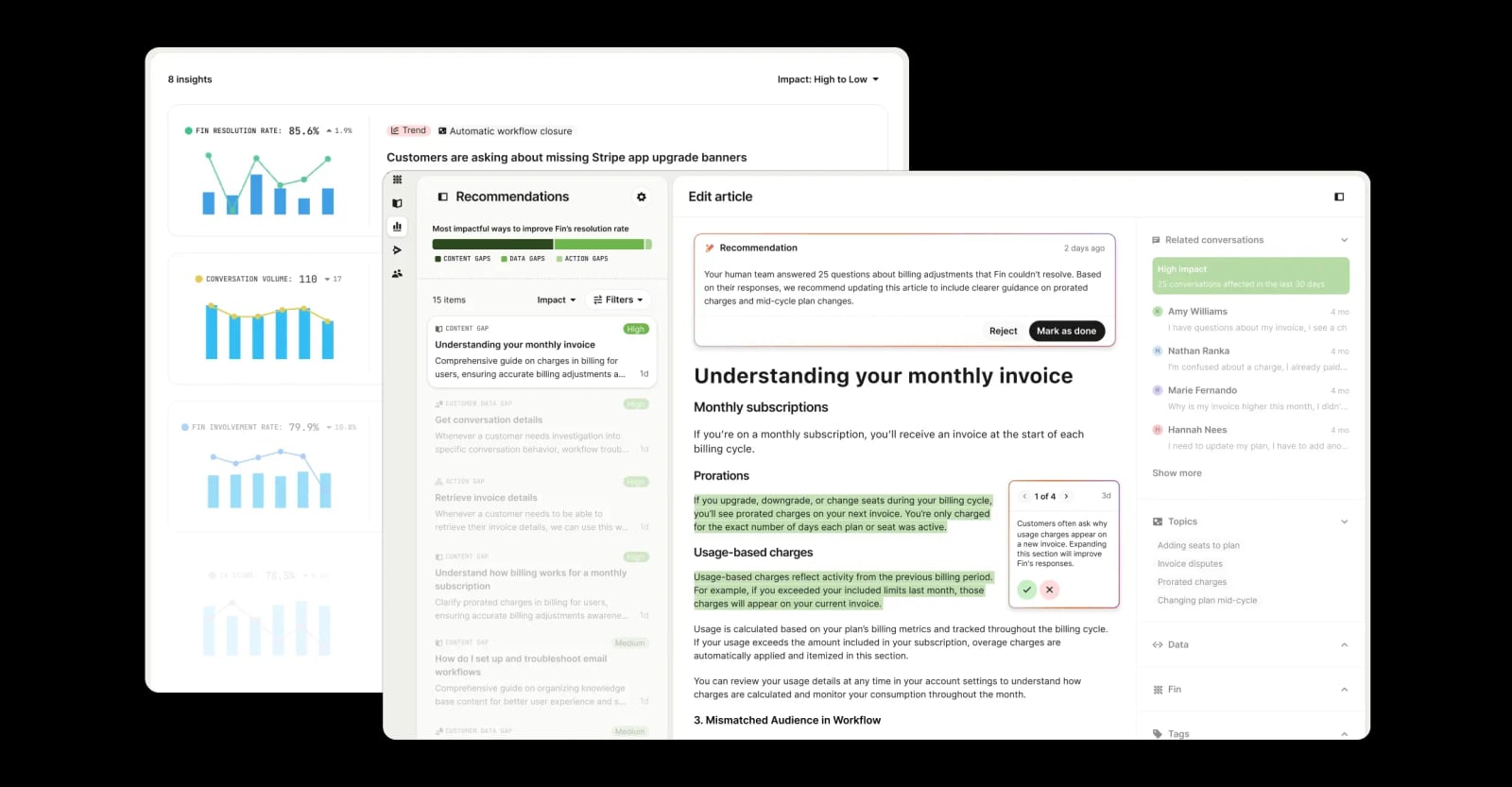
Product UI.
Voice and Call Management
Talkdesk's voice capabilities form the foundation of the platform. Click-to-call lets agents place calls directly from a helpdesk, CRM, e-commerce platform, or website, reducing the friction of manual dialing. Voicemail features include transcription, notifications, metrics, and assignment, so missed calls become trackable work items rather than lost opportunities.
Forward-to-phone keeps agents reachable by routing calls to mobile phones, SIP phones, or landlines. No answer call forwarding sends overflow calls to a backup number when all agents are busy, which helps prevent abandoned calls during peak periods.
Advanced Routing
Routing determines whether customers reach the right person on the first attempt, and Talkdesk offers several layers of control here.
The automatic call distributor (ACD) routes inbound calls based on caller data, IVR selections, business hours, and agent skills. The interactive voice response (IVR) system supports multi-level menus that direct callers to the correct agent, team, or department. For more complex scenarios, Talkdesk Studio provides a visual routing designer that lets non-technical users build call flows with clicks rather than code.
Talkdesk Navigator adds an AI layer to routing. Instead of pressing 1 for sales or 2 for support, callers describe their issue in natural language, and the system routes them to the most qualified agent. This reduces misroutes and transfers, which directly impacts customer satisfaction scores.
Agent Workspace
Talkdesk Agent Workspace unifies all customer experience applications and information into a single pane of glass. Agents can manage conversations across voice, SMS, and social channels without switching tools. Contact management allows quick search, edit, delete, and creation of contact records. Activity history provides cross-channel interaction context, including abandoned and transferred calls, so agents always know what happened before the current conversation.
The workspace is consistently praised for its clean design and low learning curve. New agents typically onboard faster on Talkdesk than on legacy CCaaS platforms with cluttered interfaces.
AI Features
Talkdesk's AI capabilities are split across three products, each addressing a different part of the customer interaction lifecycle.
Copilot provides real-time agent assistance during live interactions. It transcribes conversations as they happen, identifies customer intent, and surfaces relevant knowledge base articles and suggested responses. When a caller asks about a specific policy, Copilot pulls the relevant documentation and presents it to the agent without requiring a manual search. Sentiment detection lets supervisors monitor agent-customer dynamics and intervene when conversations go off track.
Autopilot handles routine customer inquiries without involving a human agent. It powers self-service for tasks like account balance checks, appointment scheduling, and order status updates. Autopilot uses natural language understanding to interpret caller intent, which allows it to handle more conversational requests than traditional touch-tone IVR menus. For contact centers where 30-40% of calls are repetitive and low complexity, Autopilot reduces the volume of calls that reach human agents.
Navigator replaces rule-based call routing with AI-powered intent detection. It is designed to reduce misroutes and transfers by understanding what callers actually need before routing them.
Reporting and Analytics
Talkdesk's reporting suite includes three main tools. Talkdesk Live delivers real-time dashboards and wallboards showing performance against SLAs and key metrics. Supervisors can identify areas for improvement and coach agents in the moment.
Talkdesk Explore provides historical reporting and business analytics with flexible filtering, scheduling, and customization options. It offers a 360-degree view of contact center performance over time.
Talkdesk Guardian is a native cloud compliance application that learns from historical activity patterns to create a baseline of user behaviors and flag unexpected events. This helps contact centers mitigate the risks of a distributed workforce.
Monitoring and Quality Management
Call monitoring lets supervisors silently listen to calls in real time to verify quality standards are being met. Call barging allows them to drop in on live calls to speak with both the caller and agent, reducing call transfers and improving customer satisfaction. These tools are essential for coaching agents and maintaining consistent service quality across a large team.
Workforce Management
The workforce management module handles forecasting, scheduling, adherence tracking, and performance analytics. It uses historical patterns and AI predictions to generate schedules that match expected call volume. Real-time adherence dashboards show supervisors which agents are on task, off task, or in break status. For contact centers managing more than 100 agents, forecasting accuracy directly impacts payroll efficiency.
Integrations and Connections
Talkdesk offers two integration paths. Talkdesk Integrations provides built-in, self-service wizards for nearly 30 systems, including Zendesk, Salesforce, Shopify, Slack, Microsoft Teams Directory, and Zoho CRM. Talkdesk Connections enables custom actions, data pushes, and data dips to and from third-party APIs, allowing call-related information to flow into homegrown systems.
Automated workflows let teams set up simple automations. For example, when a call ends, the recording and associated data can automatically populate the CRM.
Industry Experience Clouds
Industry Experience Clouds are Talkdesk's primary differentiator against horizontal CCaaS competitors. Each cloud includes pre-built workflows, compliance configurations, integrations, and reporting templates for a specific vertical.
The Healthcare Experience Cloud integrates with EHR systems and includes HIPAA-compliant workflows for handling protected health information. The Financial Services Experience Cloud includes PCI-DSS compliant payment processing and fraud detection workflows. The Retail Experience Cloud includes order lookup and returns processing. The Government Experience Cloud is built for FedRAMP requirements with data residency controls and accessibility features.
The value is time to deployment. Organizations in these industries skip weeks of custom configuration that a generic CCaaS platform would require.
Compliance and Security
Talkdesk maintains SOC 2 Type II, HIPAA, PCI-DSS, and GDPR certifications. The platform supports call recording with automated PCI redaction, data residency controls for GDPR compliance, and role-based access controls. Healthcare organizations can configure PHI handling rules at the workflow level. Financial services teams can enable real-time payment redaction during calls.
Talkdesk Express: A Closer Look at the Entry Tier
Talkdesk Features: A Complete 2026 Breakdown - Talkdesk Express: A Closer Look at the Entry Tier.
Talkdesk Express is a streamlined offering that uses automated entitlement, provisioning, and configuration processes to deliver a unified experience across voice and digital channels. It includes a subset of the full platform's capabilities.
The Agent Workspace in Express includes conversation engagement across voice, SMS, and Facebook channels, contact management, voicemail management, and activity history. Reporting includes Talkdesk Live, Talkdesk Explore, and Talkdesk Guardian.
Routing and orchestration in Express includes Talkdesk Studio with point-and-click flow design, speech recognition, text-to-speech, reusable modules, low-code functions, queue management, and attribute-based routing. Integrations cover nearly 30 systems through self-service wizards, plus custom API connections through Talkdesk Connections.
Express also includes a set of AI capabilities under Talkdesk CXA, including Autopilot, Copilot, Navigator, AI Rewriter, AI Translator, Interactions Analytics, CX Sensors, Mood Detector, Identity, and QM Assist.
Talkdesk Pricing: What to Expect

Talkdesk Features: A Complete 2026 Breakdown - Talkdesk Pricing: What to Expect.
Talkdesk does not publish transparent pricing on its website. The platform uses a quote-based model, and costs vary significantly depending on the number of agents, selected features, and industry-specific configurations. AI features such as Copilot, Autopilot, and Navigator are priced as separate add-ons, which means the cost of AI capabilities stacks on top of the base per-seat price.
For organizations evaluating Talkdesk, this means budgeting requires a sales conversation. The lack of public pricing is a common criticism in user reviews, particularly for smaller teams that want to evaluate the platform without committing to a demo.
Where Talkdesk Excels
Talkdesk's genuine strengths start with its Industry Experience Clouds. For organizations in healthcare, financial services, retail, or government, these pre-built configurations save weeks of implementation time compared to starting from a blank CCaaS canvas. The compliance certifications are real, audited, and meaningful for regulated buyers.
The agent workspace is clean and intuitive, which shortens onboarding time. The routing capabilities, especially Talkdesk Studio and Navigator, give contact centers fine-grained control over how customers are directed. And the AI tools, while add-ons, are genuinely useful for reducing handle time and automating routine interactions.
Where Talkdesk Falls Short
Talkdesk is not designed for small teams. The platform is built for contact centers with 50 or more agents, and smaller organizations may find the feature set overwhelming and the pricing opaque. The AI features are separate add-ons, which can make the total cost difficult to predict.
For teams that need a lighter-weight solution focused on conversational support across chat, email, and in-app messaging, a platform like Intercom offers a different approach. Intercom is an AI-first customer service platform built around a shared inbox, an AI agent called Fin, and multi-channel support. It is designed for businesses of all sizes, from small teams to large enterprises, and it offers outcome-based pricing with transparent tiers. If your support operation is primarily digital rather than voice-heavy, the comparison is worth exploring. For a deeper look at how Intercom stacks up against other support platforms, see our Intercom vs ProProfs Chat comparison and our Intercom vs Olark breakdown.
Talkdesk vs. Intercom: Which Fits Your Team?

Clouds.
Talkdesk and Intercom solve different problems, and the right choice depends on your support model.
Talkdesk is a voice-first CCaaS platform built for large contact centers with complex routing, workforce management, and industry-specific compliance requirements. It is the right choice for healthcare systems handling thousands of patient calls, financial services firms with strict PCI requirements, or government agencies that need FedRAMP-aligned deployments.
Intercom is an AI-first customer service platform designed for digital-first support teams. It provides a helpdesk with a natively integrated AI Agent, Fin, that can resolve customer questions instantly. It supports live chat, email, in-app messaging, and phone, and it includes a Help Center for self-service. Intercom positions itself as the highest-performing platform for customer service, trusted by over 30,000 brands. If your team handles support primarily through chat, email, and in-app messaging, and you want AI automation built into the core product rather than sold as an add-on, Intercom is worth evaluating.
For teams that need both voice-heavy contact center operations and digital-first support, the two platforms can coexist. Talkdesk's integration list includes Intercom, which means call-related data can flow between the two systems.
Related reading
- HubSpot Customer Platform Review 2026: Tested & Rated - Evidence-based HubSpot Customer Platform review covering Smart CRM, Breeze AI, Marketing, Sales, and Service Hubs, pricing signals, limitations, and ideal users.
- How to Use Gladly: A Practical Setup Guide for Support Teams - Learn how to use Gladly step by step: configure your AI agent, set up knowledge sources, test responses, monitor performance, and improve customer conversations.
Sources and further reading
- Contact Center Software Features | Call Center Capabilities | Talkdesk - Our contact center products include all of the features you need to run your contact center operations effectively. Request a free demo today!
- Talkdesk Express: Capabilities - Utilizing automated entitlement, provisioning, and configuration processes, Talkdesk Express offers indispensable tools that ensure seamless operations and heightened customer engagement, providing...
- Talkdesk Review: Features, Pricing, and Alternatives (2026) - Honest Talkdesk review covering Experience Clouds, Copilot, pricing tiers, and use cases. See how it compares to CallRail for call tracking and AI answering.
Frequently Asked Questions
What are the main Talkdesk features?
Talkdesk's main features include voice and call management, advanced routing with ACD and IVR, an omnichannel agent workspace, AI tools (Copilot, Autopilot, Navigator), reporting and analytics, workforce management, integrations, and industry-specific Experience Clouds.
Does Talkdesk have AI features?
Yes. Talkdesk offers three AI products: Copilot for real-time agent assist, Autopilot for virtual agent self-service, and Navigator for AI-powered call routing. These are priced as separate add-ons.
What is Talkdesk Express?
Talkdesk Express is a streamlined offering that includes the Agent Workspace, reporting tools, Talkdesk Studio routing, integrations, and a set of AI capabilities under Talkdesk CXA. It is designed for faster deployment through automated provisioning and configuration.
Is Talkdesk good for small businesses?
Talkdesk is primarily designed for mid-market and enterprise contact centers with 50 or more agents. Smaller teams may find the platform's complexity and opaque pricing challenging.
Does Talkdesk integrate with Intercom?
Yes. Talkdesk's integration list includes Intercom, allowing call-related data to flow between the two platforms.
What industries does Talkdesk serve?
Talkdesk offers Industry Experience Clouds for healthcare, financial services, retail, and government. Each includes pre-built workflows, compliance controls, and integrations tailored to that vertical.
The Bottom Line
Talkdesk is a powerful CCaaS platform with a deep feature set, strong compliance credentials, and genuinely useful AI tools. It is best suited for large contact centers in regulated industries that need voice-first operations, workforce management, and industry-specific configurations.
For digital-first support teams that prioritize chat, email, and in-app messaging with AI automation built into the core product, alternatives like Intercom offer a more streamlined approach. The right choice depends on your channel mix, team size, compliance requirements, and budget. If you are evaluating options, start by mapping your actual support volume by channel, then match the platform to the work your team actually does.
For more guidance on choosing the right support platform, see our workflow automation guide and our comparison of Intercom, Featurebase, and CXone.