Top 10 Ecommerce Customer Experience Platforms 2026
Top 10 Ecommerce Customer Experience Platforms 2026
Ecommerce customer experience platforms sit at the intersection of support, sales, and retention. Unlike generic CX suites, they are built around the realities of online retail: order data, returns, shipping status, subscription changes, and high-volume pre-purchase questions. This ranking evaluates ten products that genuinely belong to that category, using transparent criteria and evidence from vendor documentation, review platforms, and published customer outcomes.
How We Ranked These Platforms
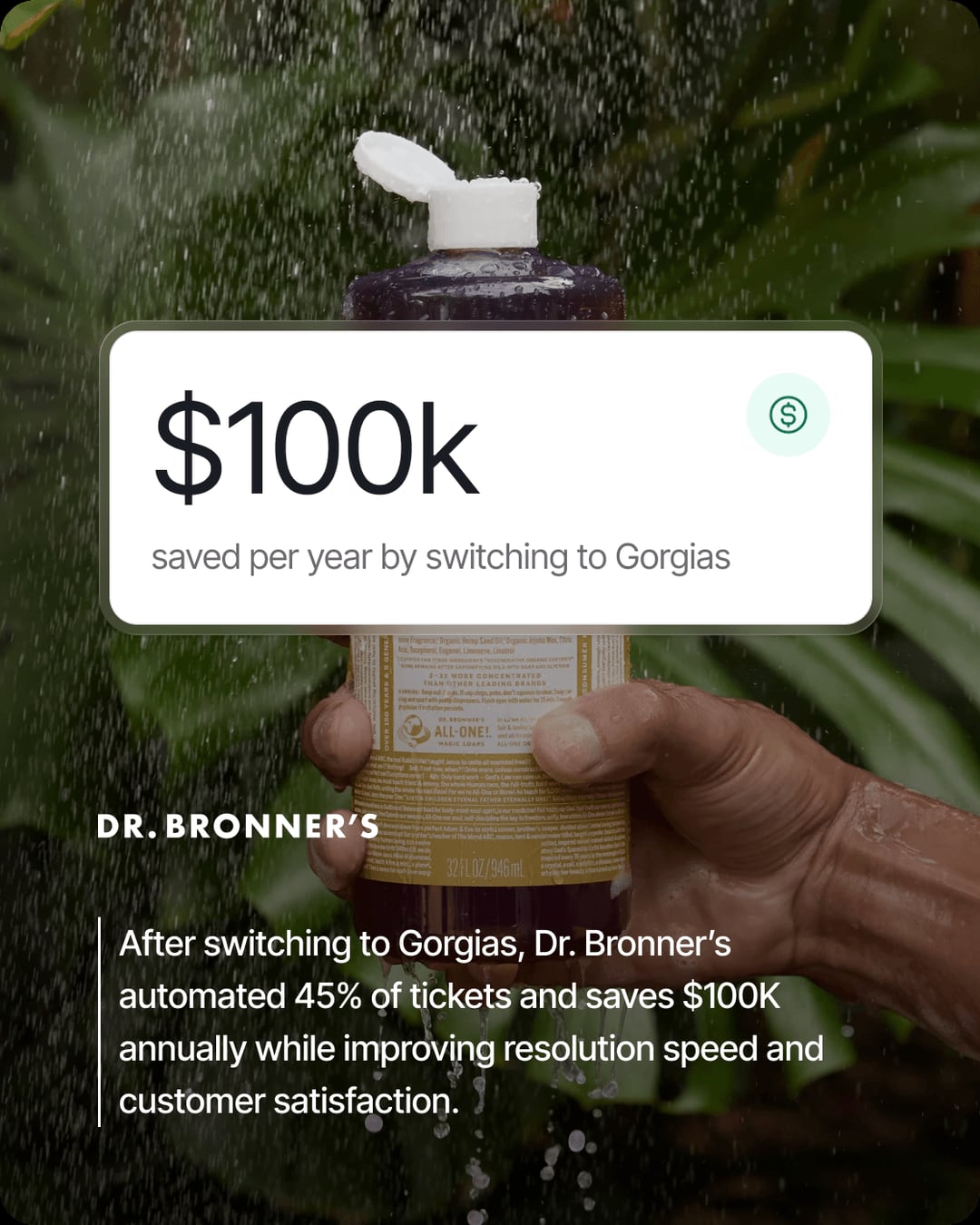
Dr. Bronner's, a Gorgias customer brand.
Every product below was assessed against five criteria:
- Ecommerce-native data model — Can it read order, fulfillment, and subscription context without heavy custom work?
- AI resolution capability — Does the AI agent resolve tickets end to end, or only deflect them?
- Channel coverage — Email, chat, SMS, social, and messaging apps relevant to retail shoppers.
- Operational depth — Automation, routing, macros, QA, and analytics for support leaders.
- Evidence of outcomes — Published case studies, review volume, and measurable results.
Pricing is noted where vendors publish it; most enterprise tiers require a quote. Intercom is not ranked here because it is a general AI-first customer service platform rather than an ecommerce-specific CX product. It appears later only where an adjacent workflow makes it relevant.
1. Gorgias
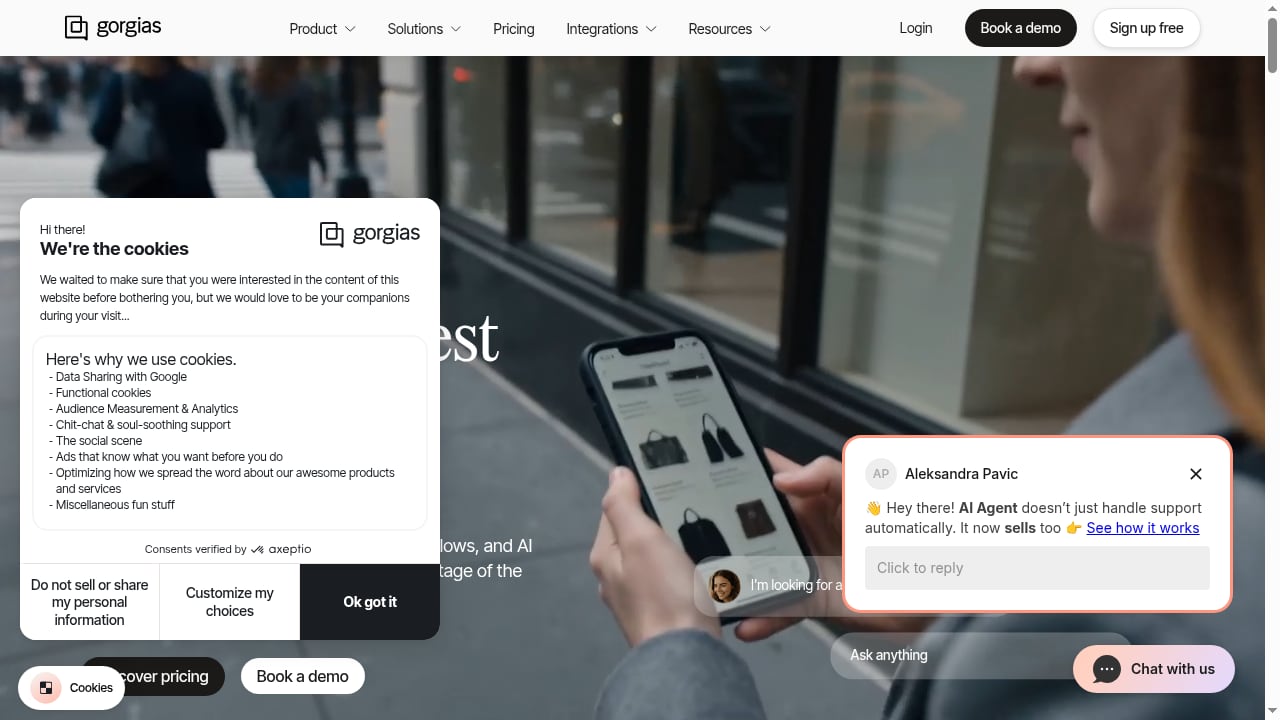
First viewport screenshot of The Conversational AI platform for Ecommerce | Gorgias.
Best for: Shopify, BigCommerce, and Magento merchants that want one helpdesk for support and revenue.
Gorgias is the most explicitly ecommerce-built platform on this list. Its helpdesk pulls order data, customer history, and subscription details directly into the ticket view, so agents and AI can answer "where is my order" without leaving the conversation. The AI Agent handles routine inquiries, while chat, FAQ, and automation tools cover pre-sales questions that convert into purchases.
Evidence: Gorgias states it is trusted by more than 17,000 brands. Its app ecosystem is centered on ecommerce integrations rather than generic CRM connectors, which shortens setup time for retail teams.
Watch-outs: Best value for stores already on supported ecommerce platforms; very large enterprise contact-center needs may outgrow it.
2. Zendesk
Best for: Mid-market and enterprise retailers that need omnichannel scale with deep customization.
Zendesk remains the broadest helpdesk in the category. Its ecommerce relevance comes from marketplace and storefront integrations, a mature AI layer, and workforce management tools that support high seasonal volume. Retailers often pair it with a customer data platform to reconstruct order context.
Evidence: Zendesk is consistently rated among the top CX platforms in independent reviews, and its marketplace includes prebuilt connectors for major commerce systems.
Watch-outs: Ecommerce context is not native — expect integration and configuration work.
3. Gladly
Best for: Premium retail brands that want relationship-based, agentic commerce experiences.
Gladly organizes conversations around the customer rather than the ticket, which suits brands with high-value repeat buyers. Its agentic commerce direction focuses on turning service interactions into revenue moments. For a deeper fit analysis, see Intercom vs Gladly: AI Helpdesk or Agentic Commerce?.
Evidence: Gladly publishes retail customer stories emphasizing lifetime value and agent efficiency, and is frequently cited in enterprise CX evaluations.
Watch-outs: Pricing is enterprise-oriented; smaller stores may find it heavy.
4. Kustomer
Best for: Retailers that want CRM-style customer timelines inside a support tool.
Kustomer's core strength is a unified customer timeline that combines conversations, orders, and history. That makes it a strong fit for brands with complex post-purchase journeys, including returns and subscription management.
Evidence: Kustomer is owned by Meta and appears in major CX platform comparisons, with documented deployments at consumer brands.
Watch-outs: The AI roadmap is strong but less ecommerce-specialized than Gorgias.
5. Re:amaze
Best for: Small and mid-sized ecommerce teams that want helpdesk, chat, and FAQ in one affordable package.
Re:amaze is a practical choice for stores that need ecommerce integrations without enterprise overhead. It supports Shopify and BigCommerce data, shared inboxes, and automation at a lower entry price.
Evidence: Re:amaze maintains a strong review presence on G2 and Shopify's app marketplace, with consistent praise for support quality and value.
Watch-outs: Advanced AI resolution is less mature than category leaders.
6. Freshdesk
Best for: Cost-conscious retailers that want AI-assisted support with broad channel coverage.
Freshdesk's Freddy AI and automation cover the essentials for ecommerce support, and the platform scales from small teams to larger operations. It is a common choice when budget matters more than deep retail specialization.
Evidence: Freshdesk publishes transparent pricing, including a free tier for up to two agents and paid plans starting at $15 per agent per month billed annually.
Watch-outs: Ecommerce order context requires integrations rather than being native.
7. Help Scout
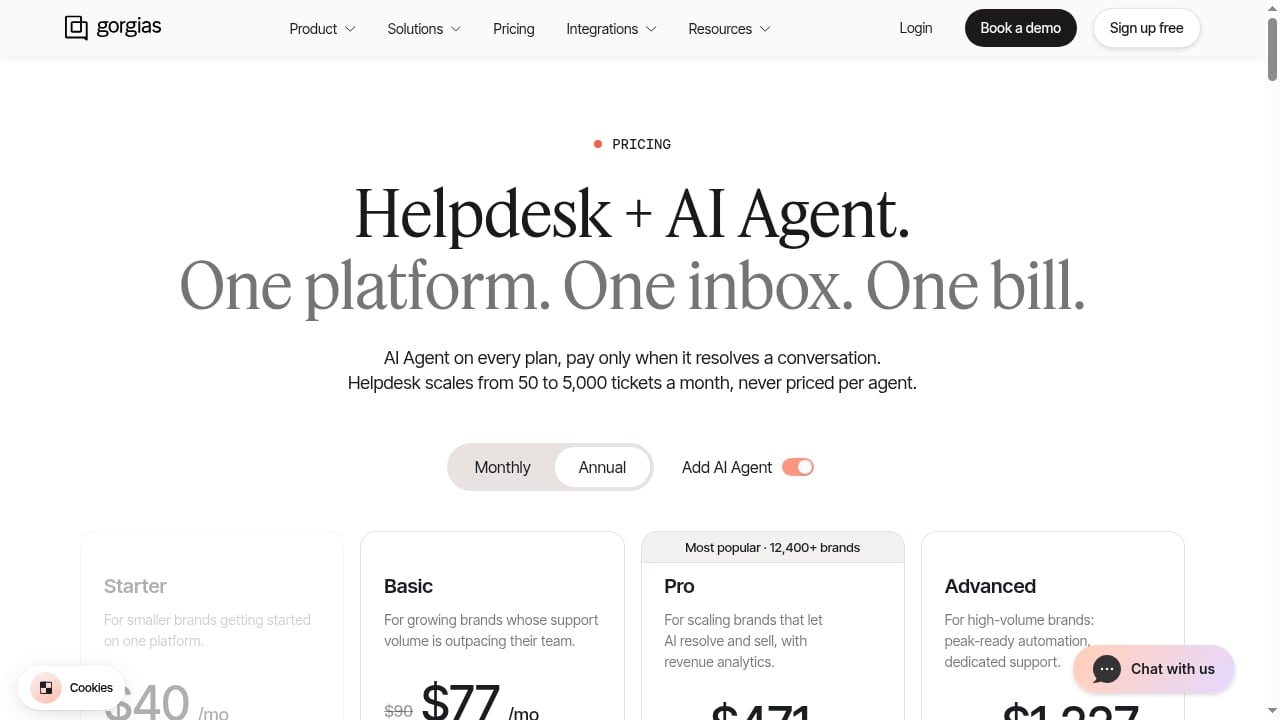
First viewport screenshot of Gorgias Pricing - AI-Powered Ecommerce CX Platform Plans.
Best for: Direct-to-consumer brands that prioritize human, conversational support.
Help Scout's email-first, customer-centric design suits brands that want personal replies at scale. It integrates with major ecommerce platforms and offers lightweight AI features without forcing a heavy automation layer.
Evidence: Help Scout is widely recommended in CX software roundups for its usability and support-focused feature set.
Watch-outs: Not built for high-volume contact-center operations.
8. Qualtrics XM
Best for: Retailers that need experience analytics layered on top of service operations.
Qualtrics XM captures feedback across web, app, chat, and reviews, then turns it into journey insights. It is less a helpdesk and more the measurement layer that tells you where ecommerce friction actually lives.
Evidence: Qualtrics is repeatedly ranked as a leader in experience management, with dashboards and sentiment analysis cited as strengths in verified reviews.
Watch-outs: Requires integration with a support platform to close the loop on individual tickets.
9. Medallia
Best for: Large retail organizations that need real-time voice-of-customer signals.
Medallia's Experience Cloud collects feedback across digital and physical touchpoints, which matters for omnichannel retailers with stores and ecommerce. Its AI layer predicts churn and surfaces at-risk customers.
Evidence: Medallia is a long-standing leader in CX management, with enterprise deployments across retail and consumer brands.
Watch-outs: Implementation and pricing suit enterprise budgets.
10. Adobe Experience Manager
Best for: Enterprises that want content, personalization, and commerce experience in one stack.
Adobe Experience Manager is a digital experience platform rather than a helpdesk, but it belongs in this list because ecommerce CX increasingly depends on personalized content and journey orchestration. It integrates with commerce engines and analytics to deliver consistent experiences across channels.
Evidence: Adobe Experience Manager appears in Gartner's digital experience platform evaluations and is used by large global brands.
Watch-outs: Not a support tool; pair it with a helpdesk for service workflows.
Where Intercom Fits (Not in This Ranking)
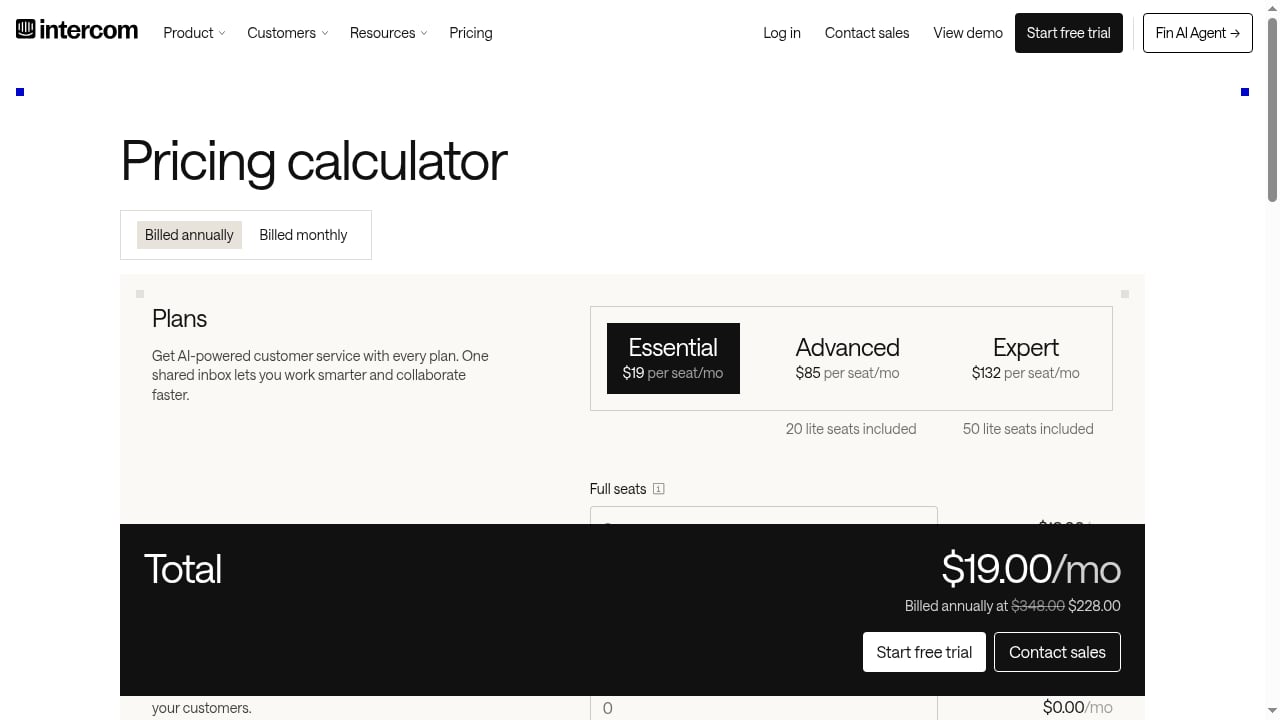
First viewport screenshot of Pricing Calculator | Intercom.
Intercom is an AI-first customer service platform with a natively integrated AI Agent called Fin. It is trusted by more than 30,000 brands, and published outcomes include AgriWebb reducing support costs by 80% and AI21 Labs automating 82% of support. For ecommerce teams, Intercom is most relevant as a complementary layer when you need a general-purpose AI helpdesk across multiple business lines, or when you want to compare AI resolution depth before committing to an ecommerce-native tool. If that is your situation, see Intercom vs Ada vs Talkdesk: Enterprise CX AI Comparison and How to Use Intercom with Fin: Setup, Workflows & Examples.
How to Choose in 2026
- Shopify-first store under 50 agents: Start with Gorgias or Re:amaze.
- Enterprise retail with complex contact center: Evaluate Zendesk and Gladly.
- Premium brand focused on lifetime value: Gladly and Kustomer are the strongest fits.
- Measurement-led CX program: Add Qualtrics or Medallia alongside your helpdesk.
- Content and personalization at scale: Adobe Experience Manager, paired with a service platform.
A useful rule: pick the platform that already understands your order data, then layer AI and analytics on top. Reversing that order usually creates integration debt.
Related reading
- Enjo Review 2026: AI Support Agent That Resolves End to End - Evidence-based Enjo review: end-to-end AI resolution, AI Actions, pricing signals, setup, limitations, and who should buy it in 2026.
Sources and further reading
- 10 Digital Commerce Solutions to Look Out For in 2026 - Explore the top digital commerce solutions and how the right technology stack helps brands boost time to market and improve customer experience.
- 17 Best Customer Experience Software & Platforms in 2026: Expert Picks for CX Teams - Discover 17 best customer experience software that top CX pros recommend in 2026. Includes trials, pricing, pros, cons, and more to help you make the best choice.
- Best Digital Experience Platforms Reviews 2026 | Gartner Peer Insights - Find the top Digital Experience Platforms with Gartner. Compare and filter by verified product reviews and choose the software that’s right for your organization.
FAQ
What is an ecommerce customer experience platform? It is software that manages customer interactions across the online buying journey — pre-sale questions, order support, returns, and retention — with native access to commerce data.
Is Intercom an ecommerce CX platform? No. Intercom is a general AI-first customer service platform. It can support ecommerce teams, but it is not built specifically around retail order data the way Gorgias, Gladly, or Kustomer are.
Which platform has the best AI resolution for ecommerce? Gorgias and Gladly lead on ecommerce-specific AI resolution because their agents can act on order and account data. Zendesk and Freshdesk are strong generalists.
Do I need a separate CX analytics tool? Only if you want journey-level insight beyond ticket reporting. Qualtrics and Medallia cover that layer; most helpdesks stop at operational metrics.
How much should I budget? Entry ecommerce helpdesks start around $15–$60 per agent per month. Enterprise platforms like Gladly and Medallia are quote-based and typically cost significantly more.
Conclusion
The best ecommerce customer experience platform in 2026 is the one that already speaks your order data. Gorgias leads for commerce-native support, Zendesk and Gladly serve larger and more complex retailers, and Qualtrics, Medallia, and Adobe Experience Manager cover the measurement and personalization layers that surround service. Evaluate AI resolution on real tickets, not demos, and confirm integration depth before you sign.