Intercom vs Capacity vs ClickDesk: 2026 Comparison
Intercom vs Capacity vs ClickDesk: Which AI Support Platform Fits Your Team?
Choosing between Intercom, Capacity, and ClickDesk comes down to one question: what kind of customer experience are you actually trying to build? Intercom positions itself as an AI-first customer service platform built for the AI Agent era, with Fin AI Agent at its core. Capacity targets contact centers and support teams that need automation across every touchpoint, from voice to SMS to email. ClickDesk takes a different angle: it evolved from a live chat tool into an always-on AI conversation system that promises to eliminate wait times entirely.
Each platform has a credible claim to your budget. The right choice depends on your support volume, channel mix, team size, and how much you want AI to resolve without human involvement.
How the Three Platforms Compare at a Glance
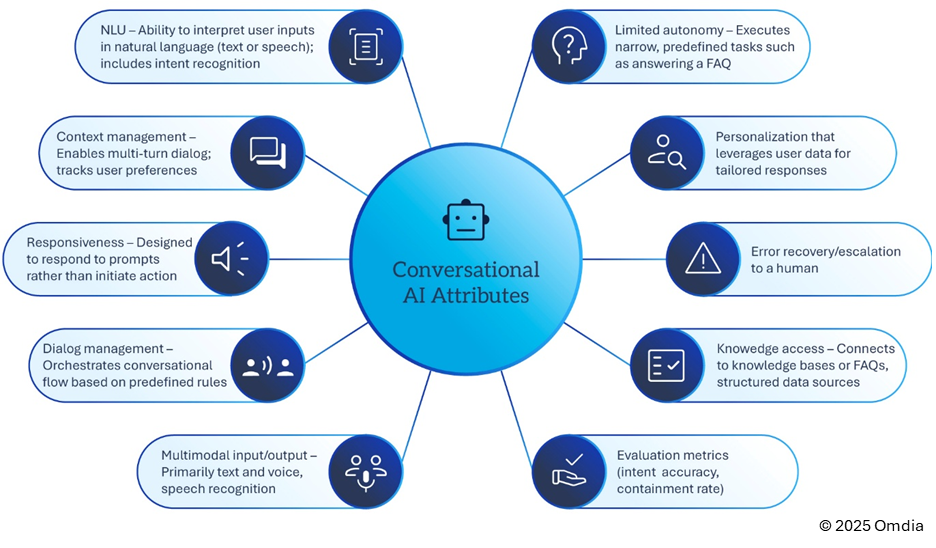
Intercom vs Capacity vs ClickDesk: 2026 Comparison - Capacity: CX Automation Built for Contact Centers.
| Criteria | Intercom | Capacity | ClickDesk |
|---|---|---|---|
| Core focus | AI-first helpdesk with Fin AI Agent | CX automation for contact centers | AI-driven live chat evolution |
| Primary channels | Chat, email, in-app, phone | SMS, chat, voice, email | Chat, voice, video |
| AI resolution | Fin AI Agent resolves routine requests | Agentic AI agents + agent assist | AI agents operate 24/7 |
| Best for | Product-led teams scaling support | Contact centers reducing cost per call | Businesses replacing live chat with AI |
| Pricing signal | Outcome-based tiers, free trial | Custom, enterprise-oriented | Free plan, premium from $12.99/agent/month |
Intercom: AI-First Helpdesk for the Fin AI Agent Era
Intercom vs Capacity vs ClickDesk: 2026 Comparison - Intercom: AI-First Helpdesk for the Fin AI Agent Era.
Intercom has staked its reputation on one clear idea: customer service should be resolved by AI before a human ever sees the ticket. The platform's Fin AI Agent handles frontline support around the clock, answering questions, resolving common issues, and escalating only when necessary. For support teams, Copilot assists agents with suggested responses and context, while AI Insights surfaces trends from conversation data.
The shared inbox unifies live chat, email, in-app messaging, and phone conversations, which matters for product-led companies where support requests arrive from multiple surfaces. Intercom also includes an integrated Help Center for self-service and outbound messaging capabilities for proactive communication.
Intercom is a strong fit when your team wants a natively integrated AI agent inside a helpdesk, rather than bolting AI onto an existing ticketing system. The platform is trusted by over 30,000 brands and offers Essential, Advanced, and Expert plans with a free trial. For a deeper look at how Intercom stacks up against other AI-first platforms, see our Intercom vs WotNot comparison.
Capacity: CX Automation Built for Contact Centers
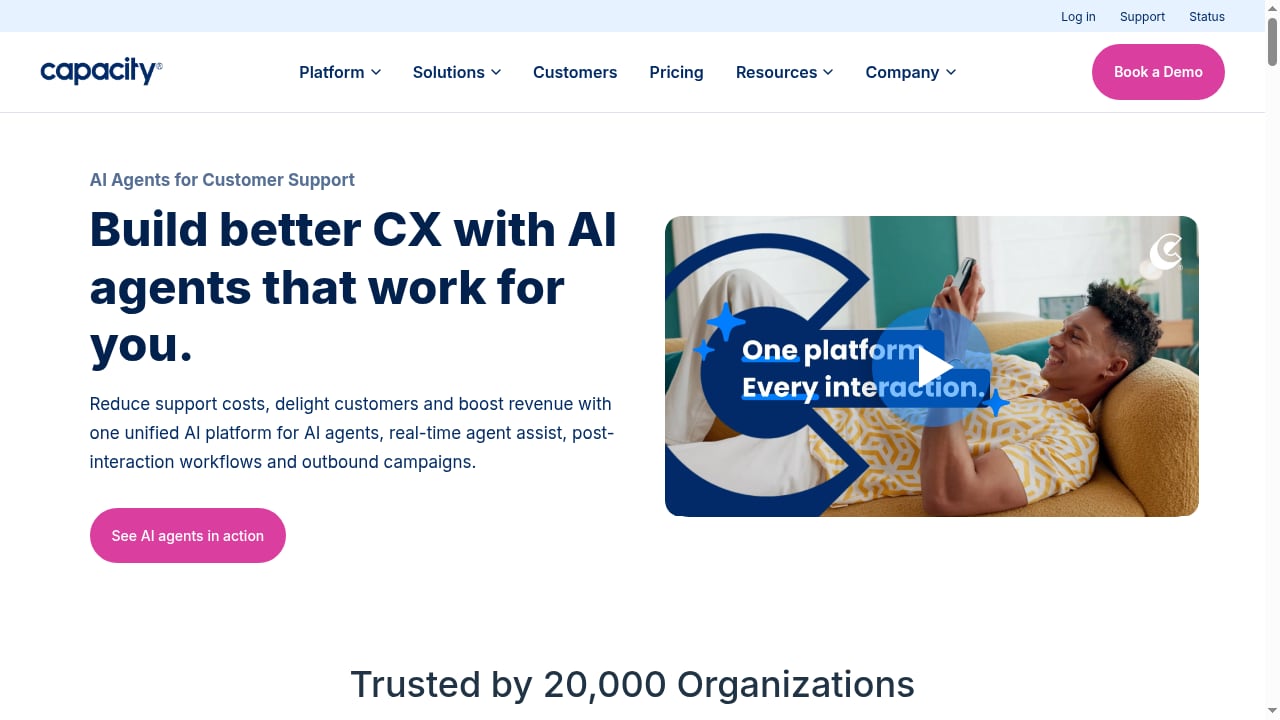
First viewport screenshot of Capacity CX Automation Platform.
Capacity approaches customer experience from an automation-first angle. The platform uses agentic AI to power three layers of support: AI agents that autonomously resolve requests, real-time agent assist for human representatives, and post-interaction automation that handles follow-up work. This structure is designed for organizations where support volume is high and cost per interaction matters.
A key differentiator is Capacity's emphasis on knowledge orchestration. The platform ensures consistent answers across every touchpoint, from SMS and chat to voice. For voice-heavy environments, Capacity offers intelligent voice assistants and speech recognition for call quality monitoring. Email automation targets inbox zero by resolving routine messages before they reach a human.
Capacity reports measurable outcomes including 66% cost-per-call savings and 4.5/5 CSAT scores across more than 20,000 organizations. The platform also offers industry-specific solutions, including for automotive. If your team operates a contact center with voice, SMS, and email volume, Capacity's automation layers may reduce operational costs more directly than a chat-first helpdesk. For teams evaluating contact center pricing models, our Talkdesk pricing breakdown offers useful context on how AI-first platforms compare on cost.
ClickDesk: From Live Chat to Always-On AI Conversations
ClickDesk began as a live chat tool in 2011 and has since repositioned itself around AI agents that operate without human standby. The pitch is straightforward: traditional live chat forces customers to wait for an available agent, while ClickDesk's AI agents respond instantly, 24/7, with contextual answers.
The platform emphasizes proactive resolution. ClickDesk's AI agents can access account data and deliver fixes, not just canned responses. The company describes this as "500 agents — always on," a framing aimed at businesses that need to scale customer communication beyond human limitations.
ClickDesk also retains voice and video chat capabilities from its live chat heritage, which is notable for support scenarios where visual or spoken communication resolves issues faster than text. A free plan and premium options starting at $12.99 per agent per month make it accessible for smaller teams. If your primary need is replacing a human-dependent live chat widget with an always-available AI conversation layer, ClickDesk offers a focused path.
Head-to-Head: AI Resolution, Channels, and Pricing
AI Resolution Capability
All three platforms claim AI resolution, but the architecture differs. Intercom's Fin AI Agent is natively integrated into the helpdesk, meaning AI resolution and human handoff live in the same workflow. Capacity layers AI across agents, assist, and post-interaction automation, which suits environments where AI augments a large human team rather than replacing it. ClickDesk positions AI as the primary responder from the first message, with human agents as a fallback.
For teams that want AI to resolve a high percentage of tickets without human review, Intercom and ClickDesk both emphasize autonomous resolution. For teams that need AI to support agents during calls and automate after-call work, Capacity's structure is more relevant.
Channel Coverage
Intercom covers chat, email, in-app messaging, and phone through its shared inbox. Capacity adds SMS and voice as first-class channels, reflecting its contact center focus. ClickDesk covers chat, voice, and video, preserving the real-time communication strengths of its live chat origins.
If your support strategy centers on in-app messaging and product-led growth, Intercom's channel mix aligns well. If you run a contact center with significant voice and SMS volume, Capacity is built for that reality. If live chat with occasional voice or video escalation is your model, ClickDesk matches.
Pricing Transparency
ClickDesk is the most transparent on entry pricing, with a free plan and premium tiers from $12.99 per agent per month. Intercom offers a free trial and outcome-based pricing across Essential, Advanced, and Expert plans, but final costs depend on resolution volume and features. Capacity uses custom, enterprise-oriented pricing, which is typical for contact center platforms but makes upfront comparison harder.
For budget-conscious teams, ClickDesk's published entry point is attractive. For teams that want pricing tied to outcomes rather than seats, Intercom's model may appeal. For enterprises evaluating total cost of ownership across a contact center, Capacity requires a direct quote. If you're comparing Intercom against other ticketing-focused platforms, our Intercom vs HappyFox vs OTRS comparison explores how pricing and customization differ.
How to Choose: Decision Framework
Choose Intercom if:
- You want a natively integrated AI agent inside a helpdesk, not a separate automation layer
- Your support volume comes primarily from chat, email, and in-app messaging
- You value outcome-based pricing with a free trial to validate fit
- Your team is product-led and needs outbound messaging plus self-service
Choose Capacity if:
- You operate a contact center with significant voice and SMS volume
- Your priority is reducing cost per call and automating post-interaction work
- You need agent assist features for a large human support team
- You want industry-specific solutions, such as automotive
Choose ClickDesk if:
- You're replacing a human-dependent live chat widget with always-on AI
- You want voice and video chat alongside AI conversation
- You need a free plan or low per-agent entry pricing
- Your team is small and wants fast deployment without complex setup
Related reading
- Customer.io Review 2026: Pros, Cons, Pricing & Verdict - In-depth Customer.io review covering automation, segmentation, pricing, setup complexity, and ideal users. See if this engagement platform fits your team.
Sources and further reading
- Top 10 Live Chat Products Ranked - The top 10 live chat platforms for 2025 compared on features, AI, and price, with ChatBeacon leading on co-browsing, screen share, and video chat.
- Best Live Chat Software – Forbes Advisor - Nov 2, 2024 ... Intercom's chatbots are also highly advanced and can be used to qualify leads and route them to the appropriate sales representative. The ...
- Top 10 Intercom Alternatives for Amazing Customer Support - Ultimately, the decision boils down to whether Intercom justifies its cost, as there are cheaper intercom alternatives that offer similar or better value for money.
FAQ
Is Intercom more expensive than Capacity and ClickDesk?
Intercom uses outcome-based pricing across Essential, Advanced, and Expert plans, so total cost depends on resolution volume and selected features. ClickDesk publishes entry pricing from $12.99 per agent per month with a free plan. Capacity uses custom enterprise pricing, so direct comparison requires a quote. For smaller teams, ClickDesk is typically the most affordable entry point.
Which platform has the strongest AI resolution?
All three platforms emphasize AI resolution, but the architecture differs. Intercom's Fin AI Agent is natively integrated into the helpdesk and resolves routine requests autonomously. Capacity uses agentic AI across AI agents, agent assist, and post-interaction automation. ClickDesk positions AI agents as the primary responder from the first message. The best fit depends on whether you want AI inside a helpdesk, across a contact center, or as a chat replacement.
Can Capacity replace Intercom for a SaaS company?
Capacity can replace Intercom for SaaS teams that need omnichannel automation, especially if voice and SMS are important channels. However, Intercom's in-app messaging and product-led growth features are more deeply integrated for SaaS workflows. Evaluate your channel mix and whether agent assist or autonomous resolution matters more to your team.
Does ClickDesk offer a free plan?
Yes, ClickDesk offers a free plan alongside premium options starting at $12.99 per agent per month. This makes it a low-risk option for teams testing AI-driven chat before committing.
Which platform is best for a contact center?
Capacity is purpose-built for contact centers, with intelligent voice assistants, speech recognition for call quality, email automation, and post-interaction automation. It reports 66% cost-per-call savings and 4.5/5 CSAT scores across more than 20,000 organizations.
Conclusion
Intercom, Capacity, and ClickDesk each solve a distinct problem. Intercom is the AI-first helpdesk for product-led teams that want Fin AI Agent resolving requests inside a unified inbox. Capacity is the CX automation platform for contact centers that need to reduce cost per call across voice, SMS, and email. ClickDesk is the always-on AI conversation layer for teams replacing human-dependent live chat.
Your decision should follow your support reality, not the marketing. If your volume is chat-heavy and product-driven, start with Intercom. If you run a contact center with voice and SMS at scale, evaluate Capacity. If you need an affordable, always-on chat replacement with voice and video, ClickDesk deserves a serious look. For a broader view of how Intercom compares to other AI support platforms, see our Intercom vs LiveAgent comparison.