Intercom vs Dialpad: Which AI Support Platform Wins in 2026?
Intercom vs Dialpad: Which AI Support Platform Wins in 2026?
Choosing between Intercom and Dialpad comes down to one core question: do you need a customer service platform built around an AI-first helpdesk, or an AI-powered contact center with unified communications? Both tools use AI heavily, but they solve different problems for different teams.
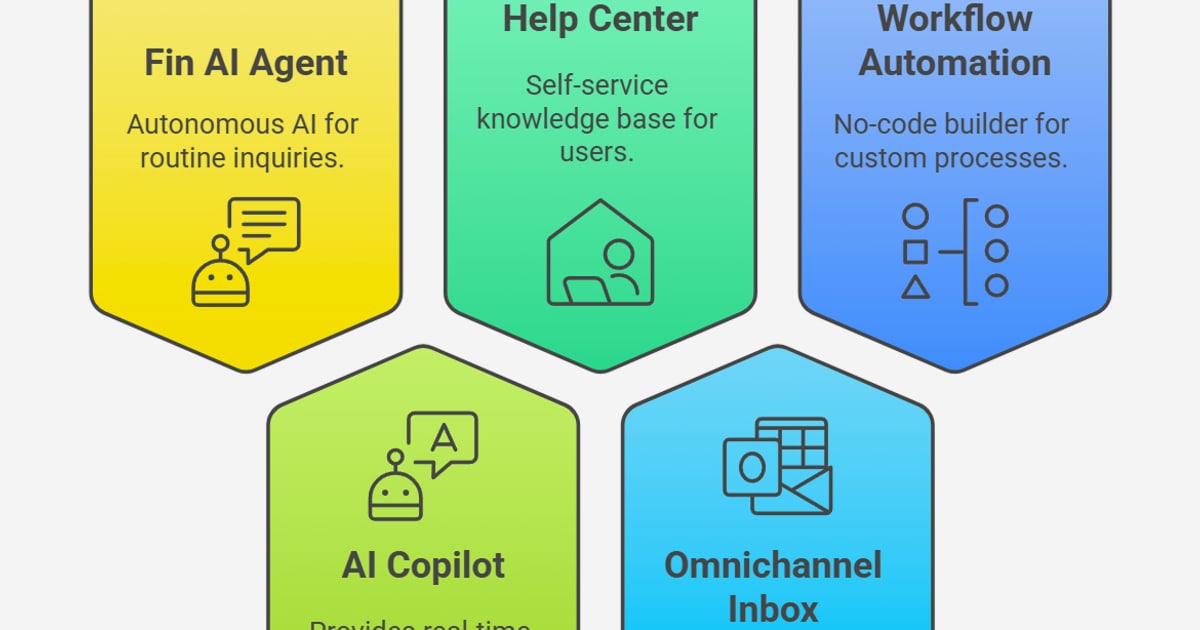
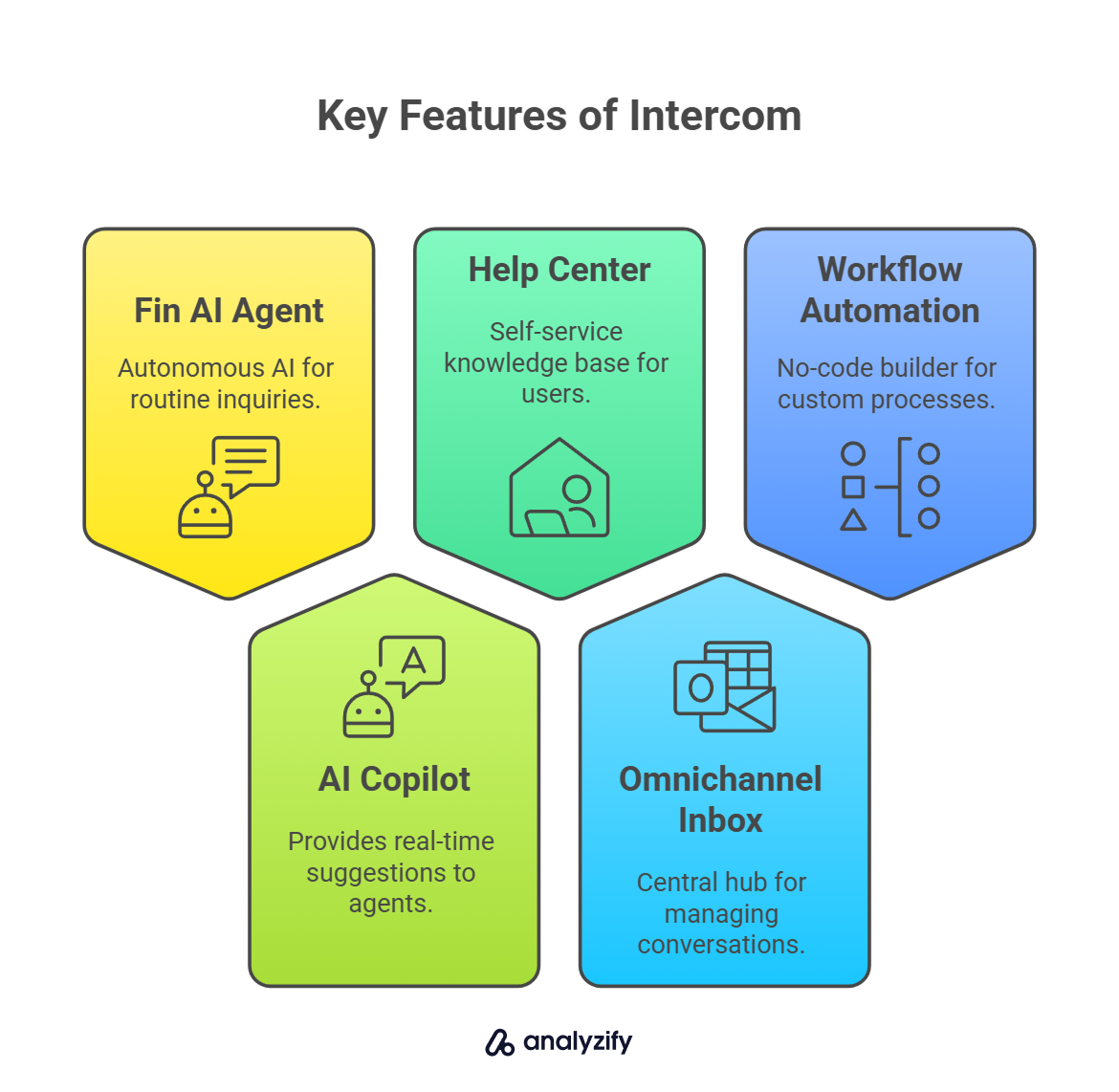
Intercom is an AI-first customer service platform with a natively integrated AI Agent called Fin, a shared inbox, and multi-channel support across live chat, email, in-app messaging, and phone. Dialpad is an AI-native contact center and communications platform with always-on AI Agents, real-time coaching, and unified calling, messaging, and meetings.
This comparison breaks down how the two platforms differ on AI capabilities, support channels, pricing, and ideal use cases so you can make a confident decision.
Intercom vs Dialpad at a Glance
Dialpad product interface.
| Category | Intercom | Dialpad |
|---|---|---|
| Core focus | AI-first customer service platform | AI-powered contact center and communications |
| Primary AI capability | Fin AI Agent resolves conversations end-to-end | Always-on AI Agents execute workflows across voice and digital |
| Native channels | Chat, email, in-app messaging, phone, Help Center | Voice, digital messaging, SMS, meetings |
| Best for | Product-led support teams, SaaS, ecommerce | High-volume call centers, outbound sales teams |
| Pricing model | Outcome-based (Essential, Advanced, Expert) | Seat-based with AI add-ons |
| Free trial | Yes | Yes |
What Intercom Does Well
Intercom vs Dialpad: Which AI Support Platform Wins in 2026? - AI Capabilities Compared.
Intercom is built for the AI Agent era. Its core promise is simple: let AI resolve a meaningful share of customer conversations instantly while human agents focus on complex, high-value work.
Fin AI Agent resolves conversations without agent involvement
The standout feature is Fin, Intercom's natively integrated AI Agent. Fin is trained on your help center content, past conversations, and internal knowledge to answer questions, execute actions, and resolve issues directly in chat, email, and other channels. Unlike bolt-on AI chatbots that only deflect simple queries, Fin is designed to complete full resolution paths, including account lookups, refunds, and order changes.
Because Fin lives inside the same platform as the inbox and help center, there is no separate integration layer to maintain. When Fin cannot resolve a conversation, it hands off to a human agent with full context.
A shared inbox that unifies every channel
Intercom's shared inbox brings live chat, email, phone, and in-app messages into one workspace. Agents see the full customer timeline, previous conversations, and product usage data in a single view. This context reduces back-and-forth and helps teams respond faster.
For teams evaluating how a shared inbox should work in practice, the principles covered in this shared inbox guide apply directly to Intercom's design philosophy.
AI Insights and outbound messaging
Intercom includes AI Insights for analyzing conversation themes, customer sentiment, and resolution quality. Teams can also use outbound messaging to proactively reach customers inside the product, via email, or through push notifications. This makes Intercom useful beyond reactive support, especially for onboarding, feature announcements, and churn prevention.
Outcome-based pricing
Intercom's pricing is tied to resolutions rather than just seats. The Essential, Advanced, and Expert plans scale with your volume of AI-resolved conversations, which means you pay for outcomes rather than simply adding agent licenses. This model can be more predictable for teams that expect Fin to handle a large share of conversations.
Where Dialpad Falls Short as an Intercom Substitute

Dialpad product interface.
Dialpad is a capable contact center platform, but it is not a direct substitute for Intercom's helpdesk and AI Agent model. Teams considering Dialpad as an Intercom replacement should understand these limitations.
AI Agents are workflow-focused, not conversation-native
Dialpad's always-on AI Agents are designed to execute specific workflows such as refunds, rebookings, and order lookups across voice and digital channels. That is powerful for contact center automation, but it is a different model from Intercom's Fin, which works inside a helpdesk alongside human agents and a knowledge base.
Dialpad's AI Agents do not replace the need for a full helpdesk with a shared inbox, customer timelines, and in-app messaging. If your team's primary need is managing asynchronous customer conversations across chat and email, Dialpad's voice-first DNA leaves gaps.
Limited native help center and self-service capabilities
Intercom includes an integrated Help Center that Fin uses as its knowledge source and that customers can browse directly. Dialpad's platform is centered on real-time interactions, calls, and agent workflows. It does not offer the same depth of native self-service content management, article authoring, or in-product help center embedding that Intercom provides.
For support teams that want to deflect tickets through self-service, this is a meaningful difference. Intercom's help center and Fin work together to reduce inbound volume before a conversation ever reaches an agent.
Pricing can add up for AI features
Dialpad's pricing is seat-based, and several AI capabilities, including AI Agents and advanced analytics, are positioned as add-ons or higher-tier features. For teams that want AI resolution at scale, the total cost can climb quickly. Intercom's outcome-based model ties cost directly to AI-resolved conversations, which can be more transparent for teams planning around AI automation.
The integration story tells the real difference
Dialpad's own blog describes an integration that lets Dialpad users start voice calls from inside Intercom's inbox. The framing is telling: Dialpad brings voice and SMS into Intercom's chat environment, not the other way around. Intercom is the system of record for customer conversations, while Dialpad supplies the telephony layer.
A third-party review of phone systems that integrate with Intercom reinforces this positioning. Allo's comparison lists Dialpad as best for call centers that need team management options, while noting that Intercom's native phone feature has per-call billing and limited phone number selection. The review positions Dialpad as a complementary phone system for Intercom users, not a replacement for the helpdesk itself.
AI Capabilities Compared

Dialpad product interface.
Intercom: Fin AI Agent and Copilot
Intercom's AI stack has three parts:
- Fin AI Agent resolves conversations autonomously using your knowledge base and past tickets.
- Fin AI Copilot assists human agents with suggested replies, tone adjustments, and knowledge retrieval during live conversations.
- AI Insights surfaces trends, sentiment, and resolution quality across all conversations.
The key differentiator is that Fin is natively embedded in the helpdesk. It shares the same inbox, customer data, and help center content as human agents, which reduces setup time and improves resolution quality.
Dialpad: AI Agents and real-time coaching
Dialpad's AI capabilities center on:
- Always-on AI Agents that execute complex workflows like refunds and rebookings across voice and digital channels.
- Real-time coaching with sentiment analysis, battle cards, and live transcription for agents on calls.
- AI-powered analytics for CSAT tracking and resolution time reduction.
Dialpad's AI is strongest in live voice interactions. Its real-time coaching and transcription are genuinely useful for call center managers. But for asynchronous support across chat and email, Intercom's Fin has the edge in native resolution capabilities.
Support Channels and Use Cases
When Intercom is the better fit
Choose Intercom if your team:
- Supports customers primarily through chat, email, and in-app messaging
- Wants an AI Agent that resolves conversations without agent involvement
- Needs an integrated Help Center for self-service
- Sells a SaaS or digital product where in-product messaging matters
- Wants outcome-based pricing tied to AI resolutions
Intercom is especially strong for product-led companies. In-app messaging, product tours, and proactive outbound campaigns are native features that a contact center platform like Dialpad does not replicate.
When Dialpad makes sense
Choose Dialpad if your team:
- Runs a high-volume voice contact center
- Needs real-time agent coaching on live calls
- Prioritizes outbound sales calling with AI insights
- Wants unified calling, messaging, and meetings in one platform
- Already uses Intercom and needs a better phone layer
Dialpad is a strong choice for voice-heavy operations. Its real-time transcription, sentiment analysis, and coaching tools are built for call center environments where agent performance on live calls drives CSAT.
The hybrid option
For some teams, the best answer is both. Dialpad's official integration with Intercom lets agents start voice calls directly from the Intercom inbox, with call recordings and transcripts logged back into the conversation history. This setup gives you Intercom's helpdesk and AI Agent plus Dialpad's voice quality and call analytics.
If you are already evaluating Intercom against other support platforms, the Intercom vs Talkdesk vs Freshdesk comparison covers additional alternatives with similar trade-offs.
Pricing Comparison
Intercom uses outcome-based pricing across three tiers:
- Essential: Core helpdesk, shared inbox, and basic Fin AI Agent access
- Advanced: Full Fin AI Agent capabilities, automation workflows, and advanced reporting
- Expert: Enterprise-grade features, custom AI training, and dedicated support
Intercom offers a free trial, and pricing scales with AI-resolved conversations rather than just seat count.
Dialpad uses seat-based pricing with AI features available as add-ons or higher-tier inclusions. The platform offers a free trial, but teams should budget carefully for AI Agents, advanced analytics, and omnichannel digital channels, which may not be included in the base plan.
For a deeper look at how Intercom's pricing model compares to other support platforms, see the Intercom vs Freshdesk comparison.
Related reading
- Dashly Review 2026: AI Revenue Platform Tested - In-depth Dashly review covering AI agents, lead qualification, pricing signals, setup, limitations, and who should buy it in 2026.
Sources and further reading
- Dialpad vs Intercom - 2026 Comparison - Software Advice - Dialpad vs. Intercom: 2026 Comparison · Popular among: Small businesses · Most common industry: IT & Software Development (44%) · Top use cases: Live Chat (21%) ...
- Dialpad and Intercom: Chat and Voice Get Even Better - Learn about Dialpad's integration with Intercom, which combines bringing Dialpad’s voice and SMS features with Intercom’s website- and mobile-based chat.
Frequently Asked Questions
Is Dialpad a good alternative to Intercom?
Dialpad is a strong alternative if your primary need is a voice-first contact center with AI coaching and workflow automation. It is not a direct substitute for Intercom's helpdesk, shared inbox, in-app messaging, or integrated Help Center. Many teams use Dialpad alongside Intercom through the official integration rather than replacing Intercom entirely.
Does Intercom have phone support?
Yes, Intercom includes phone as a channel in its shared inbox. However, third-party reviews note that Intercom Phone uses per-call billing and charges extra for recordings and transcripts. Teams with heavy voice volume often pair Intercom with a dedicated phone system like Dialpad, Aircall, or Allo.
Which platform has better AI?
It depends on the use case. Intercom's Fin AI Agent is stronger for resolving asynchronous conversations across chat and email using your help center content. Dialpad's AI Agents are stronger for executing voice and digital workflows in a contact center environment, and its real-time coaching is excellent for live call management.
Can Intercom and Dialpad work together?
Yes. Dialpad offers a native integration with Intercom that lets agents start voice calls from inside the Intercom inbox. Call recordings, transcripts, and summaries are logged back into the Intercom conversation history, giving agents a unified view of chat and voice interactions.
Which platform is better for small businesses?
Intercom is often a better fit for small SaaS and product-led businesses that need chat, email, and in-app messaging with AI resolution. Dialpad is better for small businesses that operate as call centers or rely heavily on outbound voice sales. Software Advice data shows Dialpad is popular among small businesses, with live chat listed as a top use case, but the platform's voice-first design remains its core strength.
The Bottom Line
Intercom and Dialpad are both excellent platforms, but they serve different primary needs. Intercom is an AI-first customer service platform built around a helpdesk, a shared inbox, and the Fin AI Agent that resolves conversations autonomously. Dialpad is an AI-powered contact center and communications platform built around voice, real-time coaching, and workflow automation.
If your team lives in chat, email, and in-app messaging and wants AI to resolve a large share of conversations, Intercom is the stronger choice. If your team lives on the phone and needs real-time agent coaching and voice workflow automation, Dialpad is worth a close look.
For many teams, the practical answer is to use Intercom as the customer conversation platform and add Dialpad as the voice layer through the native integration. That combination gives you Intercom's AI Agent and helpdesk plus Dialpad's call quality and analytics, without forcing a choice between two different platform philosophies.
Still comparing options? The Intercom vs Gorgias comparison explores how Intercom stacks up against an ecommerce-focused support platform, and the Talkdesk review covers another AI contact center alternative in depth.