Intercom vs Featurebase: Which Support Platform Wins in 2026?
Intercom vs Featurebase: Which Support Platform Wins in 2026?
Choosing between Intercom and Featurebase comes down to what your team actually needs: a deep, AI-first customer service platform built for scaling support operations, or a consolidated support-and-feedback tool that keeps product and support teams aligned. Both platforms handle customer conversations, but they approach the problem from different angles — and that difference matters when you're evaluating cost, AI capability, and long-term fit.
This comparison breaks down how Intercom and Featurebase stack up on AI resolution, support channels, feedback management, pricing, and scalability, so you can make a confident decision without wading through vendor marketing.
Quick Verdict

Upper section background.
Intercom is the stronger choice for teams that need advanced AI automation, deep help center customization, product tours, and an enterprise-grade integration ecosystem. Its Fin AI Agent is designed to resolve a large share of incoming conversations end-to-end, and the platform scales from small teams to large enterprises.
Featurebase is a compelling option for product-led teams that want support, feedback collection, and changelog announcements in one affordable package. It consolidates customer communication and product insights, which is valuable for startups and mid-sized SaaS companies that don't need the full depth of an enterprise helpdesk.
If your priority is AI-first customer service with mature automation and scalability, Intercom wins. If you want a lightweight, transparent, and affordable tool that bridges support and product feedback, Featurebase is worth a close look.
AI Support Capabilities
Featurebase product illustration.
Intercom Fin AI Agent
Intercom has bet heavily on AI automation — so much so that its parent company rebranded to Fin in May 2026, with Salesforce agreeing to acquire the company for roughly $3.6 billion in June 2026. The Intercom name lives on as the helpdesk product, but Fin is now the centerpiece.
Fin resolves support questions on its own by reading your help center content and past conversations. It can handle a significant portion of incoming volume end-to-end, and you can layer visual, no-code workflows on top for lead qualification, onboarding, and ticket deflection. Intercom also provides Fin AI Copilot, an agent-facing assistant that drafts answers and prepares handovers while keeping the final reply under human control.
That said, G2 reviewers consistently flag two limitations: Fin can over-escalate or answer confidently from stale content on multi-layered questions, and real setup often takes weeks rather than the "under an hour" the marketing promises. This is important context if you're expecting instant AI wins.
Featurebase Fibi AI Agent
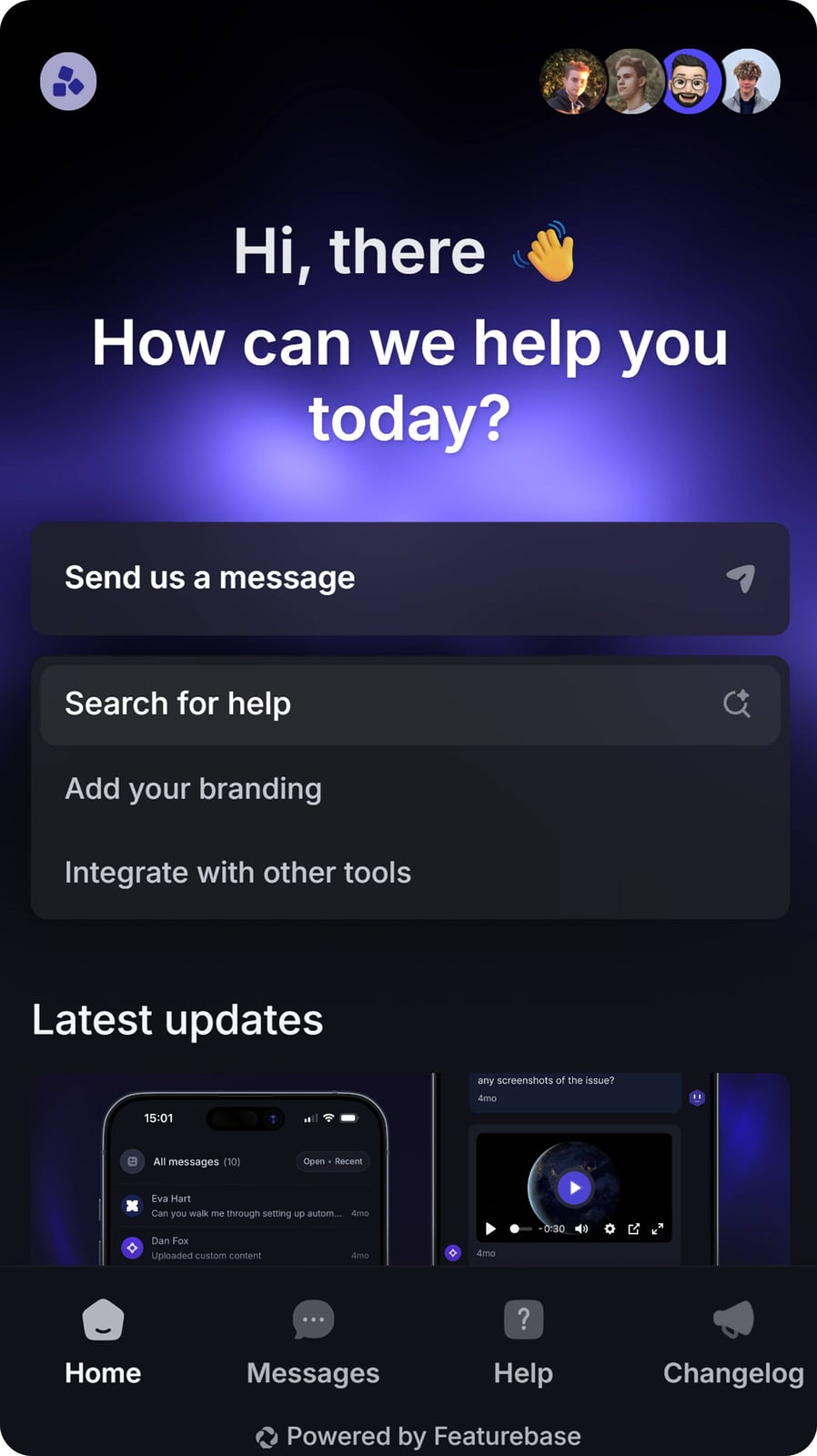
Featurebase ships Fibi, an AI agent designed to automate resolutions from your knowledge base and past tickets. It works across the omnichannel inbox — in-app, Slack, Discord, and email — and aims to deflect repetitive questions before they reach a human agent.
Featurebase also includes AI-powered feedback prioritization, which analyzes incoming feedback and helps product teams spot trends. This is a differentiator: Intercom focuses AI on support resolution, while Featurebase extends AI into product feedback analysis.
The takeaway: Intercom's Fin is more mature and deeply integrated into a broader automation ecosystem. Featurebase's Fibi is capable but less battle-tested at enterprise scale. If AI resolution volume is your primary metric, Intercom has the edge.
Support Channels and Inbox
Omnichannel inbox.
Intercom's Messenger is sleek, customizable, and built for targeted, behavior-based messaging. You can provide different chat experiences to different user segments, embed apps or forms directly in the widget, and trigger proactive messages based on previous interactions. However, Intercom sticks to core channels: website chat and email are excellent, but social messaging support is limited. WhatsApp and SMS are available on higher-tier plans, while Messenger and Instagram integrations are either unavailable or require third-party add-ons.
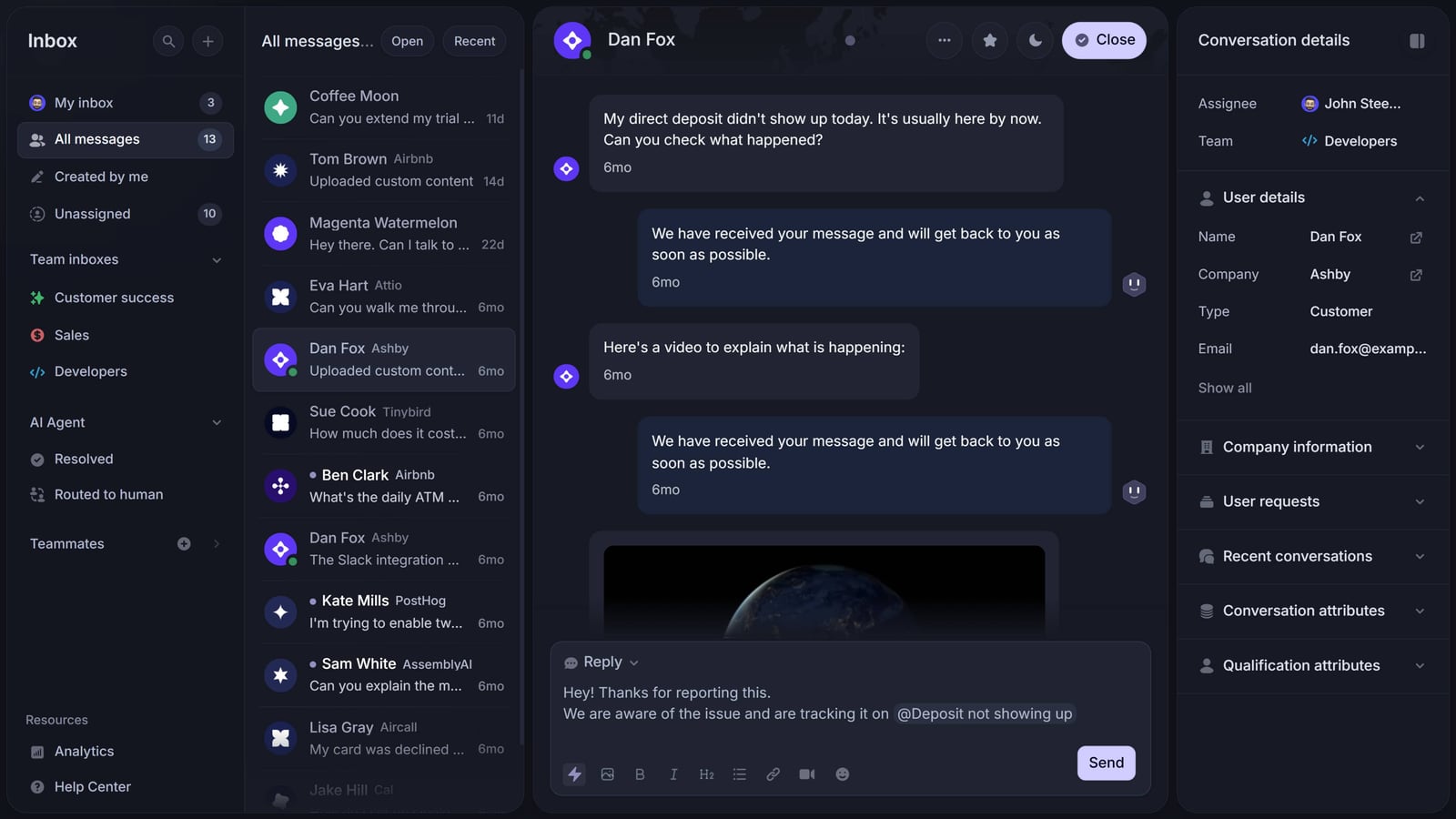
Featurebase takes a different approach with its omnichannel inbox. It unifies in-app chat, Slack, Discord, and email into a single view, which is especially useful for product-led teams that already live in Slack or Discord. The platform also supports public support tickets alongside private support chats, a feature that appeals to companies wanting transparency in their support process.
The takeaway: Intercom wins on chat customization and behavioral targeting. Featurebase wins on channel breadth for community-centric teams, particularly those using Slack and Discord as primary communication hubs.
Help Center and Self-Service
Intercom's help center is one of its strongest assets. You can brand it heavily, organize content by audience, and recommend articles based on what a user is doing in your product. The knowledge base is tightly integrated with Intercom Messenger, so help suggestions can appear automatically during chat conversations. This tight integration between self-service and live support reduces ticket volume and improves resolution speed.
Featurebase offers a knowledge base as part of its consolidated platform, but it's designed primarily to support the feedback and changelog workflow rather than serve as a deeply customizable, standalone help center. If you need a searchable FAQ with voting and roadmap visibility, Featurebase works well. If you need advanced self-service with contextual article recommendations, Intercom is clearly ahead.
Feedback Management and Product Roadmaps
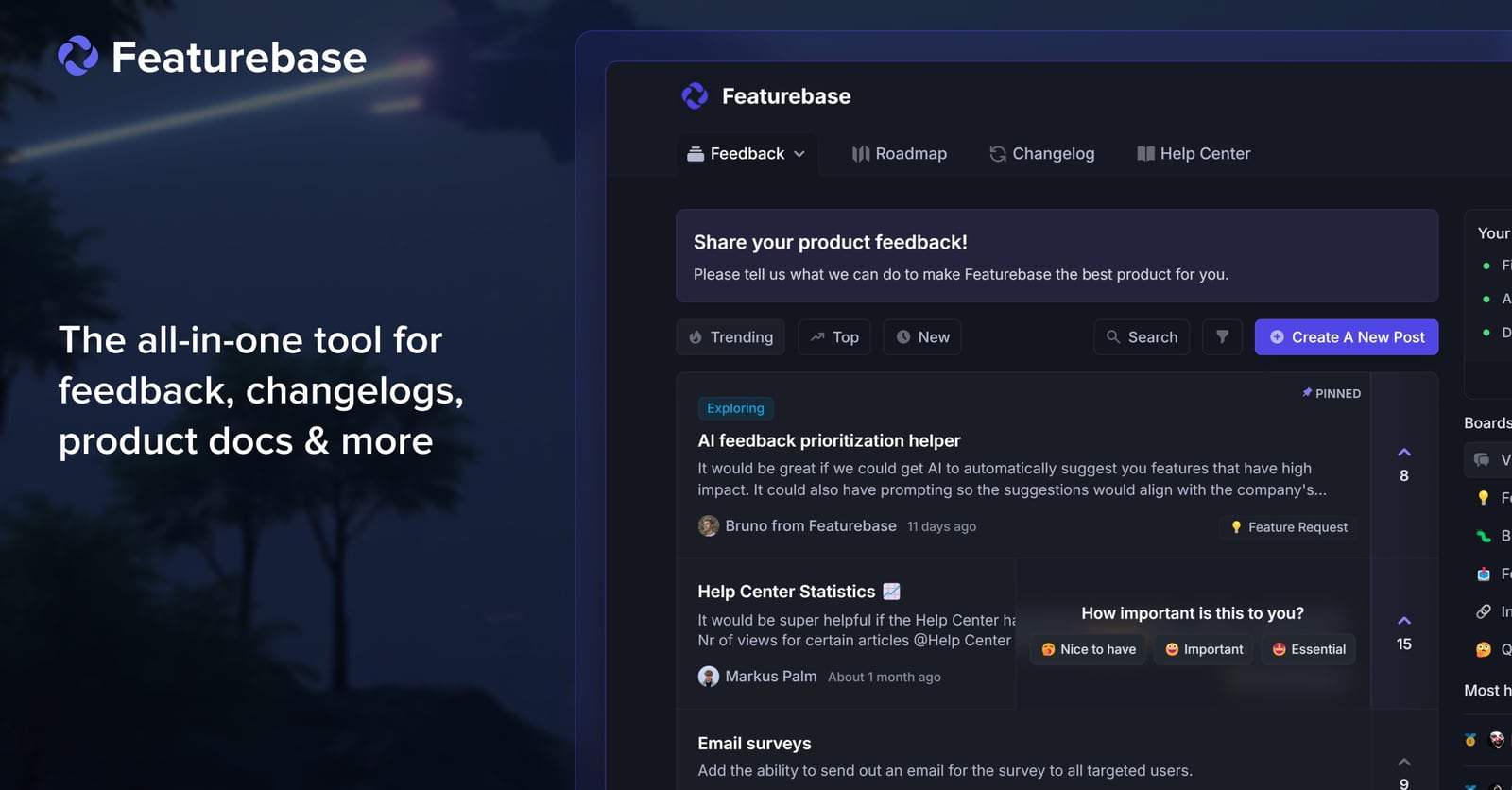
This is where Featurebase carves out its niche. The platform includes a centralized feedback hub with voting, a public roadmap, and a changelog tool for announcing updates across product, website, and email. Product teams can collect feature requests, prioritize them based on customer votes, and close the loop with public announcements — all without leaving the platform.
Intercom does not offer native feedback boards, voting, or public roadmaps. It's a customer service platform first, and product feedback management would require a separate tool like Canny or Productboard.
The takeaway: If you need feedback collection and product announcement workflows built into your support stack, Featurebase is the obvious choice. If you already have a dedicated feedback tool and need a best-in-class support platform, Intercom fits better.
Pricing and Total Cost of Ownership
Intercom uses a per-seat pricing model plus usage-based charges for Fin AI. This can get expensive quickly, especially for larger teams or high-volume AI usage. The platform offers Essential, Advanced, and Expert plans with outcome-based pricing, and a free trial is available. For fast-growing SaaS companies, the cost of Intercom is often cited as a primary reason for exploring alternatives.
Featurebase positions itself as an affordable Intercom alternative with powerful automation. It's praised by users for transparency, ease of use, and affordability compared to Intercom, Zendesk, and Canny. The platform is used by thousands of companies, including Lovable, Elementor, Checkly, Civitai, and Amplemarket.
The takeaway: Featurebase is generally more affordable and predictable. Intercom's pricing scales with seats and AI usage, which can create budget pressure as your team and automation volume grow.
Integrations and Ecosystem
Intercom offers over 450 integrations, covering CRMs, analytics platforms, ecommerce tools, and developer tools. Key options include Salesforce, HubSpot, Stripe, Segment, and Jira. If you work in a larger organization with lots of existing software, Intercom's integration library will fit better.
Featurebase has a smaller integration ecosystem, focused on the tools product and support teams use most: Slack, Discord, and email. It doesn't match Intercom's breadth, but for teams that don't need deep CRM or analytics integrations, it's often sufficient.
Product Tours and Onboarding
Intercom includes built-in product tours, which let you guide new users through your app step by step. You can highlight features, walk users through onboarding flows, and trigger tours based on user behavior. These tours can reduce support tickets by making your app easier to learn — and they keep onboarding inside the same tool your team already uses for support.
Featurebase does not offer built-in product tours. Teams that need in-app onboarding would need a separate tool or a custom-built experience.
When to Choose Intercom
Choose Intercom if:
- You need advanced AI automation with Fin resolving a high volume of conversations end-to-end
- You want deep help center customization with contextual article recommendations
- You need product tours and in-app onboarding tools
- You work in a larger organization with many existing software integrations
- You're willing to invest in a platform that scales with your support operation
For a deeper look at how Intercom compares to other AI-first support platforms, see our Intercom vs Capacity vs ClickDesk comparison and Intercom vs LiveAgent.
When to Choose Featurebase
Featurebase product interface.
Choose Featurebase if:
- You want support, feedback collection, and changelog announcements in one tool
- Your team lives in Slack or Discord and needs those channels unified in one inbox
- You need public feedback boards, voting, and a product roadmap
- You're a startup or mid-sized SaaS company looking for predictable, affordable pricing
- You value transparency and ease of use over enterprise-grade customization
If you're evaluating other mid-market support platforms, our Dashly review covers another AI-first alternative worth considering.
Related reading
- Gorgias Review 2026: AI Helpdesk for Ecommerce, Tested - In-depth Gorgias review covering AI Agent accuracy, Shopify integration, pricing by ticket volume, setup time, limitations, and who should buy it.
- Intercom vs WotNot: Which AI Support Platform Wins in 2026? - Compare Intercom and WotNot on AI resolution, pricing, channels, setup speed, and scalability. See which customer service platform fits your team in 2026.
Sources and further reading
- The best Intercom alternative - Is Intercom too expensive for you or lacking AI-powered features? Then Featurebase is the most affordable Intercom alternative with powerful automation.
- Crisp vs Intercom (Fin): the 2026 Comparison - Crisp vs Intercom in 2026: how they compare on live chat, AI agents (Crisp's Hugo vs Intercom's Fin), channels, and pricing - so you can pick the right support platform.
- Best Intercom Alternative 2025? : r/SaaS - Reddit - Sep 24, 2025 ... Why do you prefer Featurebase instead of platforms like Crisp and such? Crisp seems to be a full-fledged Intercom alternative. Anything I am ...
FAQ
Is Featurebase a full Intercom replacement?
Featurebase can replace Intercom for teams that primarily need support inbox, feedback management, and changelog tools in one platform. However, it lacks Intercom's advanced help center customization, product tours, and 450+ integration ecosystem. For enterprise support operations with complex automation needs, Intercom remains the more complete platform.
Which platform has better AI?
Intercom's Fin AI Agent is more mature and deeply integrated into a broader automation ecosystem. It's designed to resolve a large share of conversations end-to-end. Featurebase's Fibi AI agent is capable but less battle-tested at enterprise scale. If AI resolution volume is your primary metric, Intercom has the edge.
Is Intercom worth the higher price?
For teams that use Fin AI extensively, product tours, and deep help center customization, Intercom's higher price can be justified. For smaller teams that don't need those capabilities, Featurebase offers a more affordable path with solid automation and feedback tools.
Can Featurebase handle enterprise support volume?
Featurebase is used by thousands of companies, including enterprises like Elementor and Checkly. However, Intercom's integration ecosystem, advanced routing, and mature AI workflows make it better suited for very large support operations with complex requirements.
Conclusion
Intercom and Featurebase serve different priorities. Intercom is the AI-first customer service platform for teams that need advanced automation, deep customization, and enterprise-grade scalability. Featurebase is the consolidated support-and-feedback platform for product-led teams that want transparency, affordability, and product insights in one place.
Your decision should hinge on two questions: How much do you rely on AI to resolve support volume? And how important is native feedback management to your workflow? Answer those, and the right platform becomes clear.