Intercom vs Gladly: Which Support Platform Wins in 2026?
Intercom vs Gladly: Which Support Platform Wins in 2026?
Choosing between Intercom and Gladly comes down to a fundamental difference in philosophy. Intercom is an AI-first customer service platform built around the AI Agent era, with its natively integrated Fin AI Agent at the center of the experience. Gladly, by contrast, positions itself as a relationship-focused platform that organizes support around people rather than tickets. Both are capable tools, but they solve different problems for different types of teams.
This comparison breaks down how the two platforms differ across AI resolution, pricing, channels, agent experience, and ideal use cases, so you can make a decision based on how your team actually works.
How Intercom and Gladly Approach Customer Service Differently
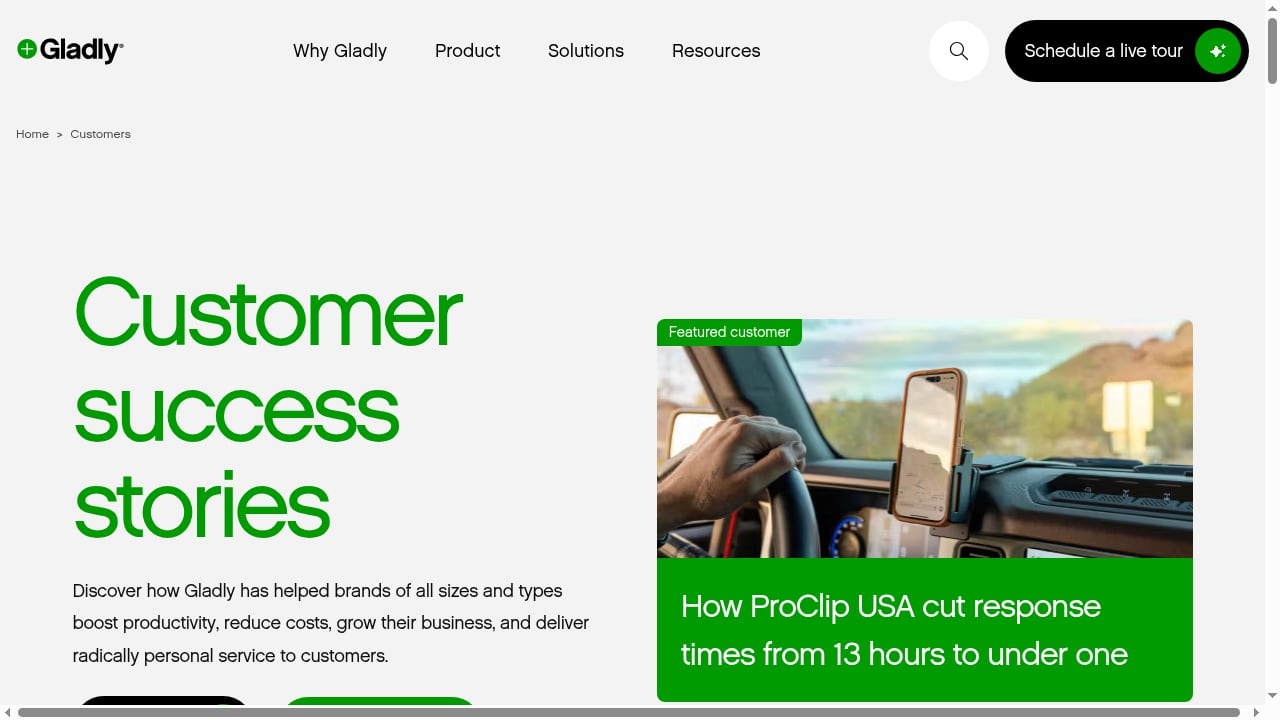
First viewport screenshot of Customers | Gladly.
The core distinction is architectural. Intercom combines a shared inbox, ticketing, omnichannel support, a help center, visual workflows, reporting, and Fin AI Agent in a single system. The AI is not bolted on; it is the default frontline for customer conversations, with human agents stepping in when a conversation requires judgment, empathy, or access to systems the AI cannot reach.
Gladly takes a different route. It unifies all customer communications—voice, chat, email, SMS, and social messaging—into one lifelong conversation thread. Instead of a ticket queue, agents see a complete history of each customer's interactions. Gladly's AI, called Sidekick, automates routine inquiries and routes complex issues, but the platform's primary selling point is the relationship view rather than the automation layer itself.
For teams evaluating both, the question is whether you want to optimize for AI resolution first or for relationship continuity first. Intercom leads with automation; Gladly leads with the customer record.
AI Resolution: Fin AI Agent vs Gladly Sidekick
AI capability is where the two platforms diverge most sharply.
Intercom Fin AI Agent
Fin is Intercom's natively integrated AI agent, and it reports an average resolution rate of 76% across more than 12,000 customers, with many customers exceeding 85%. Fin does more than answer questions. It can troubleshoot issues, update accounts, process refunds, and complete multi-step procedures in connected systems through procedures and data connectors. Support teams can define controlled processes for tasks such as refunds, account changes, and order management, and Fin can read from and write to external systems through integrations, APIs, and connectors.
Because Fin is built into the same platform as the inbox, tickets, and reporting, there is no separate operating model to manage. Fin handles frontline conversations, then hands unresolved or sensitive issues to human agents with the customer context intact. This native integration is a meaningful advantage over platforms where AI is an add-on or a separate product.
Gladly Sidekick
Gladly reports that 76% of conversations are fully resolved by AI, a figure that matches Fin's headline number. Gladly's AI automates routine inquiries, routes complex issues intelligently, and provides agents with real-time guidance. However, Gladly's AI is positioned as an add-on rather than the core of the platform, and the platform's own materials emphasize the relationship view as the primary differentiator.
The practical difference is one of depth and integration. Fin is designed to complete actions in other systems—processing a refund, updating an account, changing an order—not just answer questions. Gladly's AI is strong at automating routine work, but the platform's architecture is built around the conversation thread first, with AI layered on top.
Pricing and Total Cost of Ownership
Intercom vs Gladly: Which Support Platform Wins in 2026? - Pricing and Total Cost of Ownership.
Pricing is a major consideration for any support platform decision, and the two vendors take different approaches.
Intercom uses outcome-based pricing with three tiers—Essential, Advanced, and Expert—starting at $29 per seat per month, with Fin available from $0.99 per outcome. A 14-day free trial is available. The per-outcome model means the bill scales with AI usage, which can be a concern for high-volume teams, but it also means you pay for resolutions rather than seats.
Gladly uses custom, value-based pricing, which means you will need to contact sales for a quote. The platform positions itself as a strategic investment for brands where service drives revenue, and the pricing reflects that positioning. For smaller teams or those looking for transparent entry pricing, the lack of a public starting point can be a barrier to evaluation.
A practical note: when comparing costs, price the tool at the size you will be in two years, not the size you are now. Entry pricing is designed to look good on a comparison page, but the real cost emerges as volume grows.
Channels and Omnichannel Coverage
Intercom vs Gladly: Which Support Platform Wins in 2026? - Channels and Omnichannel Coverage.
Both platforms support multiple channels, but the emphasis differs.
Intercom supports email, live chat, phone, SMS, WhatsApp, and social messaging, all routing into a single inbox. The messenger-first model is particularly strong for product-led and SaaS companies that support customers inside their own app. In-app messaging is a core strength, and the AI works across channels rather than being limited to chat.
Gladly unifies voice, chat, email, SMS, and social messaging into a single conversation thread. The platform's omnichannel story is built around continuity—a customer can start a conversation on chat, continue on email, and finish on the phone without repeating themselves. This is a genuine strength for high-touch retail and travel brands where customers move between channels frequently.
The difference is one of emphasis. Intercom leads with in-app messaging and AI across channels. Gladly leads with channel continuity and the unified customer record.
Agent Experience and Workflow Depth
Intercom's Agent Workspace
Intercom's AI-enhanced inbox gives agents customer history, internal collaboration, tickets, routing, SLAs, macros, and real-time performance data. Copilot, the AI assistant for agents, helps them find answers and troubleshoot faster. Flexible ticketing allows customer tickets to collect structured information while a live conversation continues, and back-office tickets coordinate work with other teams.
No-code workflows let support operations teams build routing, automation, and escalation paths without relying on engineers or consultants. This is a meaningful advantage for teams that need to configure, test, and govern workflows quickly.
Gladly's Unified Agent Desktop
Gladly's agent desktop is built around the lifelong conversation thread. Agents see every interaction a customer has ever had, across every channel, in one view. This eliminates the need to rebuild context at every channel change and is a genuine advantage for relationship-driven service.
Where Gladly falls short is in the depth of workflow automation and operational control. The platform is designed for high-touch service, not for teams that need to build complex routing rules, SLAs, and multi-step automations. If your roadmap runs toward heavy automation and deep reporting, you may find the ceiling sooner than you would with Intercom.
Reporting, Analytics, and Continuous Improvement
Intercom includes Knowledge Hub, CX Score, Topics, reporting, testing, and observability tools that help teams identify weak answers, emerging issues, and opportunities to improve automation. This matters because AI performance is not static. Teams need visibility into what the AI is resolving, where it is failing, and how to improve it over time. The continuous AI improvement framework we recommend is built on exactly this kind of outcome-driven feedback loop.
Gladly offers robust analytics as well, with a focus on customer lifetime value, revenue per conversation, and CSAT. The platform reports a 2.2x boost in revenue per conversation and a 65% increase in CSAT for its customers. These are meaningful outcomes for brands where service is a revenue driver.
The difference is one of orientation. Intercom's reporting is built around AI performance and resolution quality. Gladly's reporting is built around customer relationships and revenue impact.
Which Platform Fits Your Team?
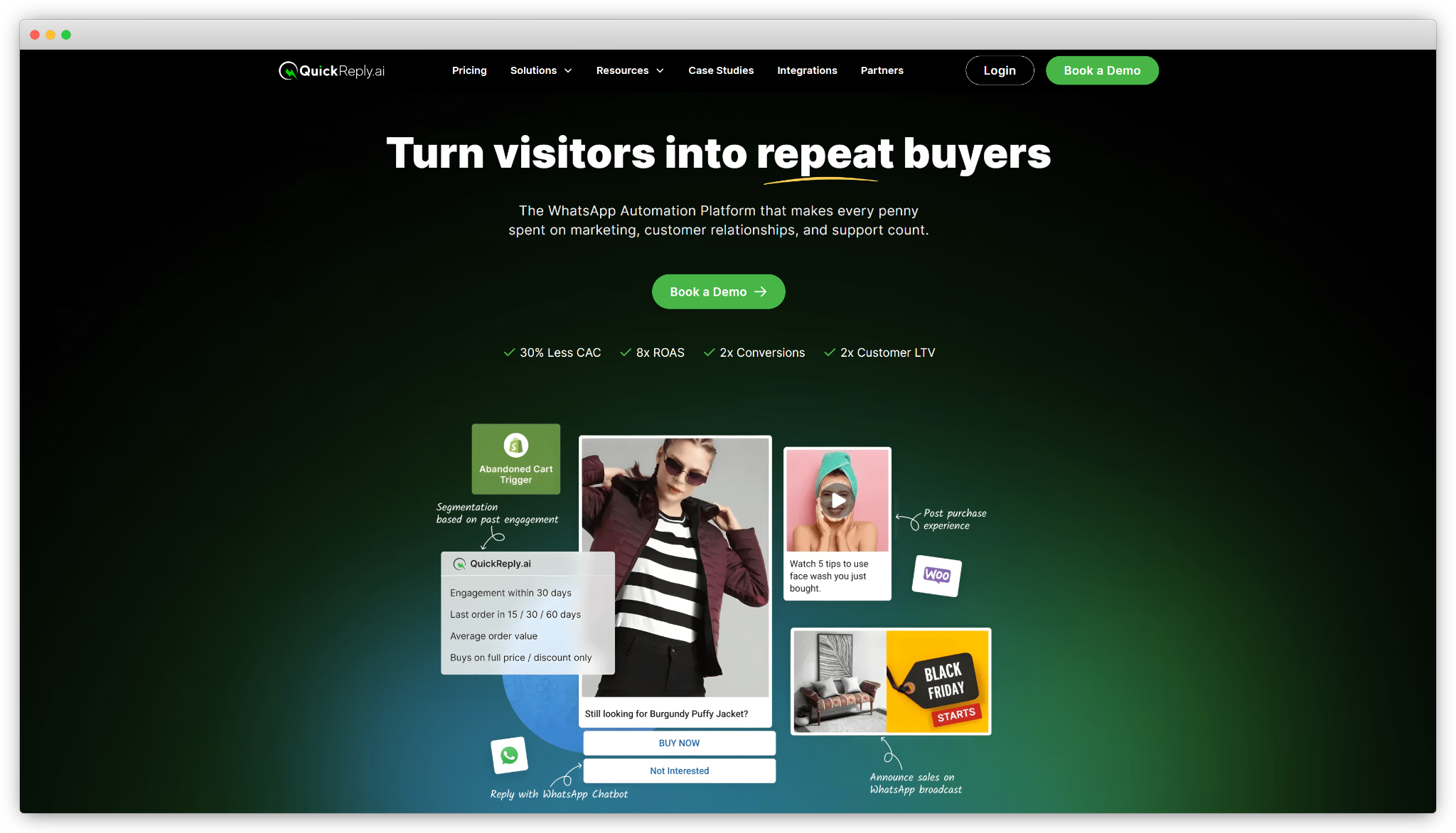
First viewport screenshot of Condé Nast customer service case study | Gladly.
The right choice depends on what you are optimizing for.
Choose Intercom if:
- You want AI to resolve customer requests first, with humans handling escalations
- You support customers inside your own product or app
- You need deep workflow automation, routing, and operational control
- You want transparent, outcome-based pricing with a free trial
- You are a product-led or SaaS company, or any team that wants to reduce cost per resolution through automation
Choose Gladly if:
- You are a B2C brand in retail, ecommerce, wellness, travel, or subscriptions
- Service is a strategic revenue driver, not just a cost center
- Your customers move between channels frequently and need continuity
- You are willing to invest in a custom-priced platform and a relationship-first model
- You prioritize the unified customer record over AI automation depth
For a broader view of how these platforms compare with other options, see our Intercom vs Gladly vs eesel AI comparison and our Intercom vs eesel AI breakdown.
Related reading
- ClearFeed Review 2026: Slack Helpdesk Tested - In-depth ClearFeed review covering AI resolution, Slack ticketing, pricing signals, setup, limitations, and who should buy it in 2026.
Sources and further reading
- 10 Best Helpdesk Software Platforms in 2026 - Compare the 10 best help desk software platforms in 2026, including features, pricing, AI capabilities, and key trade-offs to find the right fit.
- Help Scout alternatives for growing support teams - Compare the top Help Scout alternatives by use case, with honest pros, cons, pricing, and migration notes, plus when to stay on Help Scout. See how.
- 10 Best Intercom Alternatives for Support Teams in 2026 - Compare the 10 best Intercom alternatives on automation depth, AI capability and fit, then start free at enjo.ai.
Frequently Asked Questions
Is Intercom or Gladly better for AI-powered support?
Intercom is the stronger choice for AI-first support. Fin AI Agent is natively integrated into the platform, reports a 76% average resolution rate, and can complete multi-step actions in connected systems. Gladly's AI is capable but positioned as an add-on to a relationship-first platform.
How much does Intercom cost compared to Gladly?
Intercom starts at $29 per seat per month, with Fin available from $0.99 per outcome. Gladly uses custom, value-based pricing, so you need to contact sales for a quote. Intercom's transparent entry pricing makes it easier to evaluate.
Does Gladly offer a free trial?
Gladly offers a 30-day free trial for growing teams, according to its own materials. Intercom offers a 14-day free trial.
Which platform is better for ecommerce?
Gladly has strong proof points in retail and ecommerce, with customers like Crate & Barrel and Rothy's. However, Intercom's Fin AI Agent can process refunds, update accounts, and manage orders through connected systems, making it a strong ecommerce option as well. The choice depends on whether you prioritize relationship continuity or automation depth.
Can Intercom handle phone support?
Yes. Intercom supports phone as one of its omnichannel channels, routing calls into the same inbox as chat, email, and social messaging. Gladly also supports voice, with the added benefit of unifying voice conversations into the same lifelong thread as other channels.
Conclusion
Intercom and Gladly are both strong platforms, but they serve different strategic goals. Intercom is the better choice for teams that want AI resolution at the center of their support operation, with deep workflow automation, transparent pricing, and a platform built for the AI Agent era. Gladly is the better choice for B2C brands where relationship continuity and customer lifetime value are the primary metrics, and where the unified conversation thread justifies a custom-priced, relationship-first investment.
The decision comes down to one question: are you building your support operation around AI resolution or around customer relationships? If the answer is AI resolution, Intercom is the stronger platform. If the answer is relationship continuity, Gladly deserves a serious look. For most teams evaluating both, Intercom's combination of native AI, workflow depth, and transparent pricing makes it the more practical starting point.