Intercom vs Nextiva: AI Customer Service Compared (2026)
Intercom vs Nextiva: AI Customer Service Compared (2026)
Intercom and Nextiva both promise AI-powered customer service, but they were built from opposite starting points. Intercom began as a customer messaging and helpdesk platform and now positions itself as an AI-first customer service platform with Fin, its natively integrated AI Agent. Nextiva began as a business communications provider and evolved into an AI-powered customer experience (CX) and unified communications platform that bundles phone, contact center, team messaging, video meetings, and omnichannel engagement.
That difference in origin shapes almost every comparison point: how AI is priced, how deep the helpdesk goes, how voice is handled, and which team each product actually fits. This article breaks down the decision using published vendor information and third-party analysis, without hiding the trade-offs on either side.
The core architectural difference

Intercom vs Nextiva: AI Customer Service Compared (2026) - The core architectural difference.
Before comparing feature checklists, it helps to classify each platform by the architecture it was designed around.
A widely cited framework groups customer support tools into three architectures: shared inbox, help desk or ticketing, and unified contact center. Intercom sits closest to the helpdesk and shared inbox side, with digital-first support, a knowledge base, and an AI Agent layered on top. Nextiva sits closest to the unified contact center side, with voice and digital conversations sharing routing and an agent workspace.
That classification matters because it predicts where each platform feels strongest:
- Intercom is optimized for digital-first support teams that want an AI Agent to resolve customer questions across chat, email, in-app messaging, and phone, with a helpdesk and Help Center underneath.
- Nextiva is optimized for organizations where phone support is a first-class channel and where CX, unified communications, and contact center need to live in one platform.
If phone calls are a meaningful share of your volume, the unified contact center architecture deserves a serious look. If most of your volume is chat, email, and messaging, a digital-first helpdesk with a strong AI Agent is usually the better starting point.
Intercom: AI-first helpdesk with Fin
Intercom vs Nextiva: AI Customer Service Compared (2026) - Intercom: AI-first helpdesk with Fin.
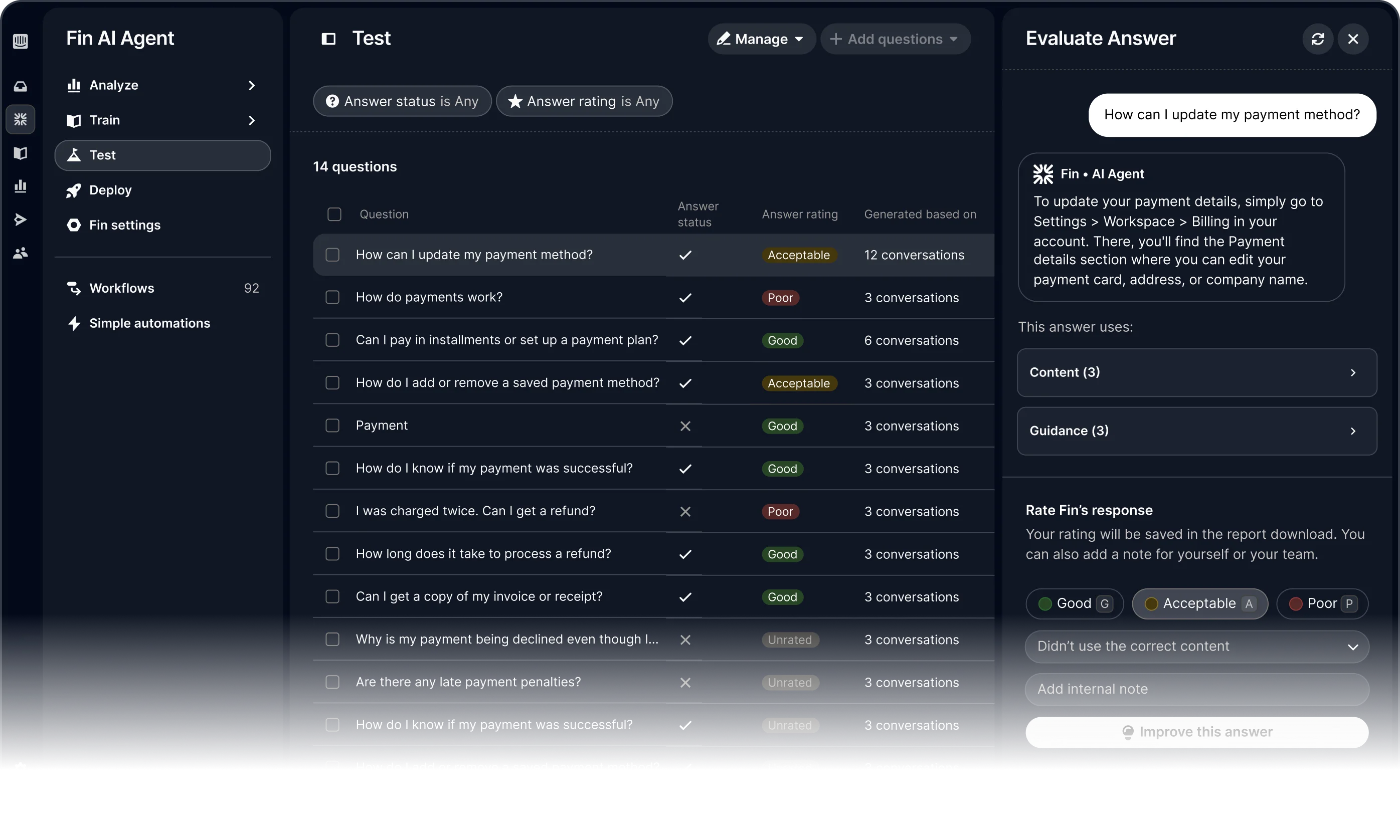
Intercom describes itself as an AI-first customer service platform designed for the AI Agent era. Its defining feature is Fin, a natively integrated AI Agent that resolves customer questions instantly, backed by a shared inbox, AI-powered automation, and multi-channel support.
What Intercom does well
- Native AI Agent. Fin is not bolted onto a legacy ticketing system; it is part of the platform's core design. That typically means fewer integration seams between the AI Agent and the helpdesk, and a more consistent experience for customers and agents.
- Agent assistance. Copilot supports human agents with AI assistance inside the inbox, which matters because AI assistance has been shown to improve agent productivity even on conversations that still need a person.
- Self-service. An integrated Help Center gives customers a place to find answers, which is important given that self-service frequently fails when relevant content is missing.
- Analytics. AI Insights provides analytics on AI and support performance, so teams can see what the AI Agent resolves and where it hands off.
- Outbound messaging. Intercom supports proactive and outbound messaging, useful for onboarding, announcements, and lifecycle communication.
- Breadth of customers. Intercom states it is trusted by over 30,000 leading brands, spanning small teams to large enterprises.
- Outcome-based AI pricing. Intercom's published AI pricing is per AI outcome, charged at most once per conversation, which makes cost predictable relative to per-session or per-resolution models that can bill repeatedly.
Where Intercom requires scrutiny
- Voice depth. Intercom supports phone as a channel, but organizations with heavy call volumes and complex routing requirements should verify whether the depth of telephony and contact center features matches a purpose-built unified contact center.
- AI billing predictability. Outcome-based pricing is more predictable than per-session billing, but you still need to model expected resolution volume against your plan tier.
- Plan fit. Essential, Advanced, and Expert plans exist, and the features you need may sit above your initial budget tier. Confirm which tier includes the AI and automation capabilities you are evaluating.
Nextiva: unified CX and communications with AI
Intercom vs Nextiva: AI Customer Service Compared (2026) - Nextiva: unified CX and communications with AI.
Nextiva positions itself as an AI-powered CX and unified communications platform. It integrates business phone, contact center, AI receptionist, team messaging, video meetings, and omnichannel engagement into a single solution, and it serves businesses of all sizes across industries such as healthcare, accounting, real estate, and retail.
What Nextiva does well
- Voice-first architecture. Because Nextiva started in business communications, phone support is native rather than an integration. For teams where calls are central, that removes a separate telephony vendor from the stack.
- Unified platform. The NEXT Platform brings CX, unified communications, and contact center together, which can reduce the number of tools agents keep open.
- AI features across the stack. XBert AI employee, AI Agent Assist, and AI Receptionist cover automation, real-time agent guidance, and call handling.
- Reliability claims. Nextiva advertises 99.999% uptime with 24/7 support, which is a meaningful claim for organizations that cannot tolerate call downtime.
- Switching incentive. A limited-time offer of up to 12 months free for switching lowers the cost of migration.
- AI trained on your data. Nextiva emphasizes AI trained on the business's own data, which can improve relevance for industry-specific language.
Where Nextiva requires scrutiny
- Helpdesk depth. Nextiva's heritage is communications, not digital-first ticketing. Teams with complex SLA structures, advanced ticket workflows, and knowledge-base-driven self-service should test whether the helpdesk layer is as mature as a dedicated helpdesk platform.
- AI Agent scope. Nextiva's AI features are spread across receptionist, agent assist, and automation. If your primary goal is an autonomous AI Agent that resolves customer questions end to end across chat and email, verify how much of that work the platform handles without human involvement.
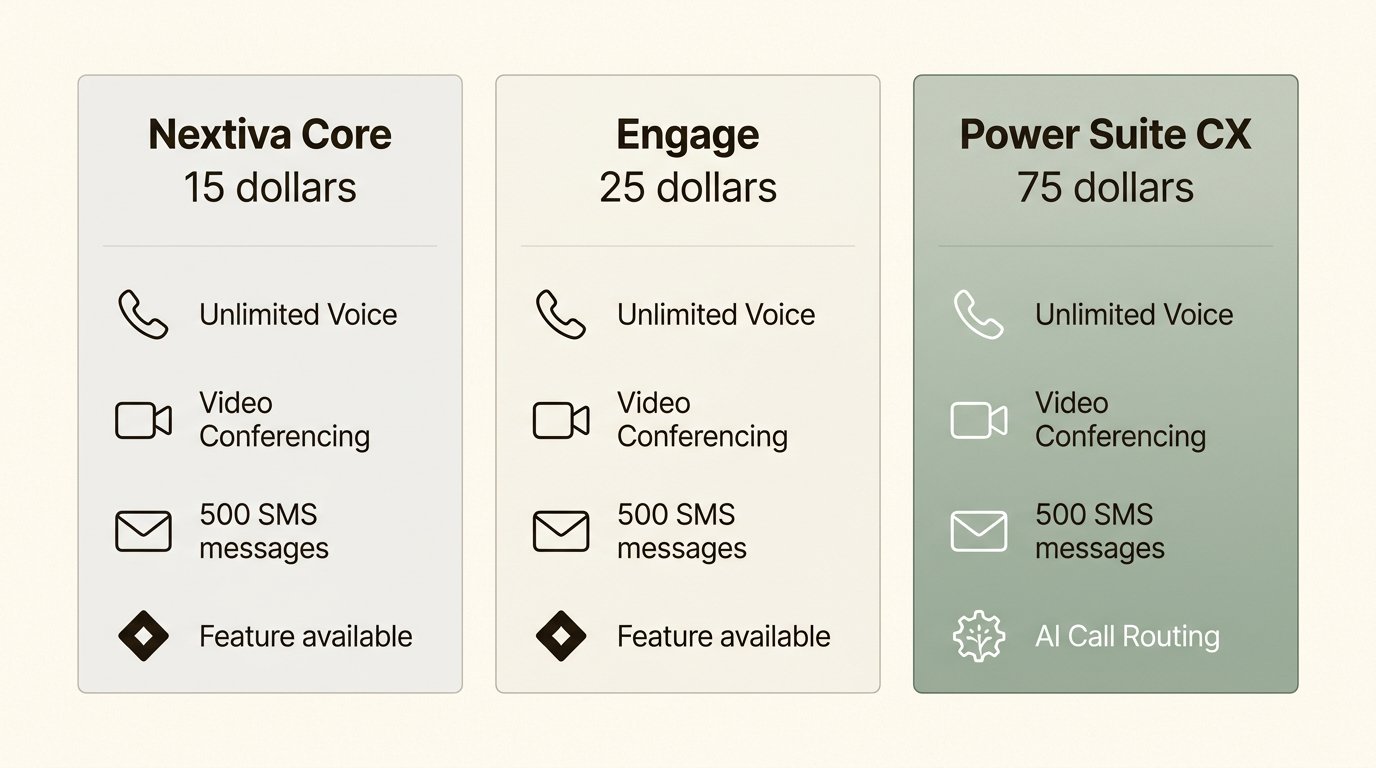
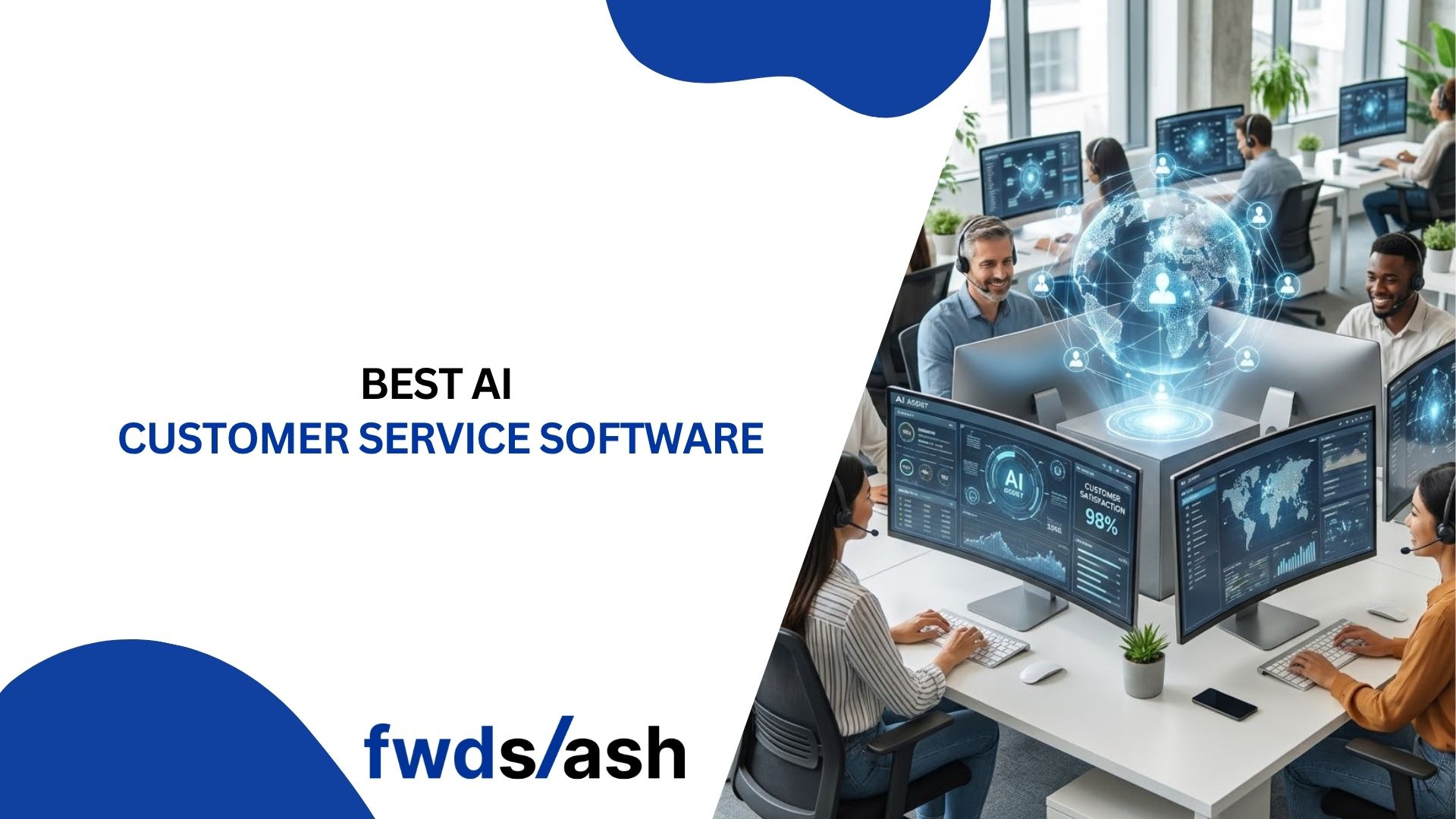
- Pricing unit differences. Nextiva's pricing is typically per agent or bundled by plan, while Intercom's AI is billed per outcome. These models are not directly comparable, so build a scenario-based cost model rather than comparing headline numbers.
Pricing models: outcome-based vs per-agent
Intercom vs Nextiva: AI Customer Service Compared (2026) - Pricing models: outcome-based vs per-agent.
AI pricing is where comparisons most often go wrong, because "AI included" means different things on different platforms.
A useful way to separate costs is to distinguish between an AI copilot that helps agents and an AI Agent that talks to customers. A copilot is usually billed per agent, while a customer-facing AI Agent is often billed by usage, such as per outcome, per session, or per automated resolution.
Intercom's published AI pricing is per AI outcome, charged at most once per conversation. Nextiva's pricing is generally per agent or bundled into plans, with a switching promotion that can offset initial costs.
To compare fairly:
- Estimate monthly conversation volume that an AI Agent could fully resolve.
- Multiply that by the AI Agent's per-outcome or per-session rate.
- Add the seat or plan cost for the agents you still need.
- Compare against Nextiva's per-agent or bundled plan cost at the same headcount.
This scenario model exposes the real difference: platforms with per-outcome AI pricing reward high automation rates, while per-agent pricing rewards stable headcount with predictable usage.
Feature-by-feature comparison
| Dimension | Intercom | Nextiva |
|---|---|---|
| Primary architecture | Digital-first helpdesk with native AI Agent | Unified contact center and unified communications |
| AI Agent | Fin, natively integrated, resolves customer questions | XBert AI employee, AI Agent Assist, AI Receptionist |
| Voice | Supported as a channel | Native business phone and contact center |
| Self-service | Integrated Help Center | Knowledge and self-service capabilities within CX suite |
| Agent assistance | Copilot | AI Agent Assist |
| Analytics | AI Insights | CX and contact center reporting |
| AI pricing model | Per AI outcome, at most once per conversation | Per agent or bundled plan |
| Best-fit buyer | Digital-first support teams prioritizing AI resolution | Voice-heavy teams wanting one CX and communications platform |
Which platform fits which team
Choose Intercom if
- Most of your customer conversations happen in chat, email, in-app messaging, and messaging channels.
- You want an AI Agent that is natively integrated with the helpdesk rather than added through integrations.
- Self-service through a Help Center is a core part of your deflection strategy.
- You prefer outcome-based AI pricing that charges at most once per conversation.
- You want outbound messaging and lifecycle communication in the same platform as support.
Choose Nextiva if
- Phone support is a primary channel and you want it native, not integrated.
- You need unified communications, contact center, and CX in one platform to reduce tool sprawl.
- You want an AI receptionist and real-time agent guidance alongside omnichannel engagement.
- You value a switching promotion that reduces migration cost.
- Your industry has specific call-handling requirements, such as healthcare or real estate.
Consider a hybrid or staged approach if
- You are voice-heavy today but want to grow digital self-service. Start with the platform that handles your dominant channel best, then expand.
- You are digital-first but expect call volume to grow. Confirm telephony depth before committing.
For teams still mapping channels, see our guide to multi-channel customer support for a framework on multichannel versus omnichannel.
Practical evaluation checklist
Bring these scenarios to every demo, regardless of vendor:
- Cross-channel continuity. A customer emails about a missing order, then calls before anyone replies. Can the agent see both attempts in one record?
- Routing and SLA. An urgent billing dispute arrives five minutes before closing. Does the platform prioritize, route by skill, and apply business-hours rules?
- Self-service quality. Test the knowledge base with vague wording and misspellings. Can your team see failed searches and update content easily?
- AI grounding. Ask which approved content supports an AI answer and what happens when content is missing.
- Voice ownership. Confirm whether phone is native or partner-supplied, who bills for numbers and minutes, and whether recordings appear on the same customer record.
- AI billing triggers. Ask exactly what counts as an outcome, session, or automated resolution, and whether you still pay when a human finishes the work.
If you are also evaluating adjacent platforms, our Intercom vs Front comparison and Intercom vs ClearFeed comparison apply the same framework to shared-inbox and Slack-native alternatives.
Related reading
- Olark Review 2026: Pricing, AI Chat, Pros & Limits - Hands-on Olark review for 2026: real pricing, PowerUps costs, AI chatbot and handoff, WCAG accessibility, setup, limitations, and who should buy it.
- Healthcare Patient Chatbot: Safe Use, Benefits & Platforms - Learn how healthcare patient chatbots improve triage, scheduling, and follow-up, plus safety, compliance, and platform selection tips for 2026.
- Intercom vs Ultimate AI vs Dixa: 2026 Comparison - Compare Intercom, Ultimate AI, and Dixa for AI customer service in 2026: AI agents, pricing models, deployment, and best-fit use cases.
Sources and further reading
- Cloud Based Phone System and Local Intercom System : r/VOIP - Feb 11, 2025 ... ... the system connecting to a cloud based environment? We're looking at either Nextiva, Vonage, or Ring Central as providers. Upvote 2. Downvote 22 ...
FAQ
Is Intercom or Nextiva better for AI customer service?
It depends on your dominant channel. Intercom is built around a natively integrated AI Agent, Fin, for digital-first support across chat, email, in-app messaging, and phone. Nextiva is built around unified communications and contact center, with AI features including XBert AI employee, AI Agent Assist, and AI Receptionist. If most conversations are digital, Intercom's architecture is a closer fit; if phone is central, Nextiva's is.
How does Intercom's AI pricing compare with Nextiva's?
Intercom's published AI pricing is per AI outcome, charged at most once per conversation. Nextiva's pricing is generally per agent or bundled into plans, with a limited-time offer of up to 12 months free for switching. Because the units differ, build a scenario model based on your expected AI resolution volume and agent headcount rather than comparing headline rates.
Does Nextiva have a helpdesk comparable to Intercom?
Nextiva includes omnichannel engagement and CX capabilities, but its heritage is business communications rather than digital-first ticketing. Teams with complex SLA policies, advanced ticket workflows, and knowledge-base-driven self-service should test the helpdesk layer directly against Intercom's shared inbox and Help Center.
Can Intercom handle phone support?
Yes. Intercom supports phone as one of its channels alongside live chat, email, and in-app messaging. Organizations with heavy call volume and complex routing should verify telephony depth against a purpose-built unified contact center before deciding.
What is Nextiva's uptime and support commitment?
Nextiva advertises 99.999% uptime with 24/7 support, which is relevant for organizations that cannot tolerate call downtime. Confirm the specifics of the SLA for your plan during evaluation.
Conclusion
Intercom and Nextiva are not direct substitutes so much as different architectures with overlapping AI claims. Intercom is the stronger fit when your priority is an AI Agent that resolves digital customer conversations inside a helpdesk, with self-service, agent assistance, analytics, and outbound messaging in one platform. Nextiva is the stronger fit when phone support is central and you want unified communications, contact center, and CX consolidated with AI receptionist and agent assist features.
The practical path is to classify your dominant channel first, then model AI costs using your own conversation volume, and finally run the six demo scenarios above. That sequence will tell you more than any feature checklist. For a broader view of how AI support platforms compare, see our Intercom vs Ultimate AI vs Dixa comparison.
Sources: Nextiva's customer support platform guide and Coworker's Intercom alternatives roundup.