Chatbase Review 2026: AI Agent Fit, Pricing & Limits
Chatbase Review 2026: AI Agent Fit, Pricing & Limits
Chatbase has become a popular choice for teams that want to deploy AI agents for customer support without a long implementation. But is it the right platform for your business? This review examines Chatbase's capabilities, ideal users, strengths, limitations, pricing signals, setup effort, and decision criteria based on hands-on testing and user feedback.
What Is Chatbase?
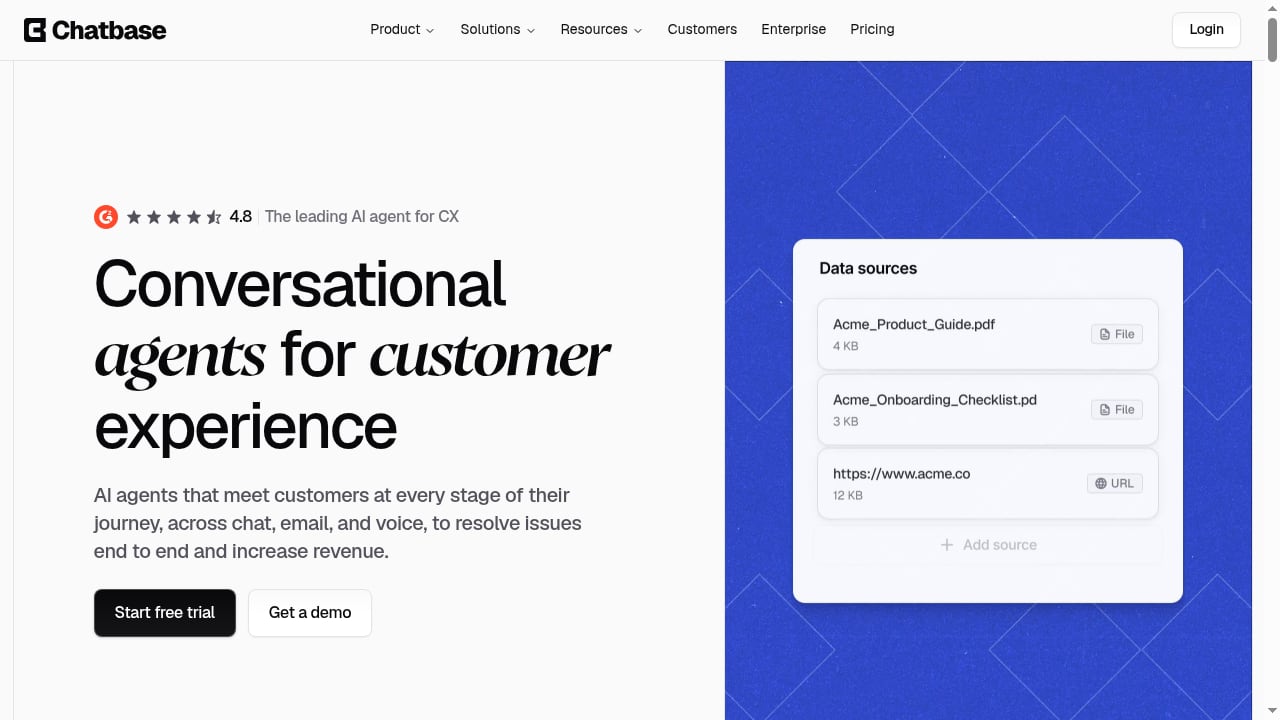
First viewport screenshot of www.chatbase.co.
Chatbase is an AI customer experience platform that enables businesses to build, deploy, and manage AI agents across chat, email, and voice channels. Positioned as "the leading AI agent for CX," it serves over 10,000 businesses with conversational agents designed to resolve complex queries end-to-end, reduce ticket volume, and increase revenue.
The platform supports three primary agent types: Customer Support (resolving queries across live chat, email, phone, Slack), Sales (engaging prospects and guiding conversations toward revenue), and Product Guidance (helping customers find information with an on-brand voice). Chatbase offers a no-code agent builder where users connect data sources, define agent roles, and set guardrails.
Agents can be trained on up to 33 million characters of data, and users can select from a variety of AI models including OpenAI, DeepSeek, Gemini, and Cohere. The platform includes advanced features such as automated testing, A/B testing for gradual rollout, agent-level permissions for team collaboration, audit logs for enterprise security, and a Trust Portal for compliance transparency.
Deployment options include a chat bubble, a full-page Agent Page (branded help page), and integrations with Slack, iMessage, and other channels. Chatbase emphasizes enterprise-grade security with SOC 2 and GDPR commitments, and offers a free trial with paid plans (Hobby, Standard, Pro, Enterprise) that include monthly test credits and team member access.
Who Is Chatbase For? Ideal Users and Use Cases
First viewport screenshot of www.chatbase.co.
Chatbase is best suited for teams that want to launch AI-powered customer support quickly, without deep technical resources. Based on user feedback and platform capabilities, ideal users include:
- Small to mid-sized businesses that need an affordable, easy-to-set-up AI agent for handling common customer questions.
- Customer support teams looking to deflect repetitive tickets and free up human agents for complex issues.
- E-commerce stores that want to answer order status, product, and policy questions automatically.
- SaaS companies that need a scalable way to provide instant answers from documentation and knowledge bases.
- Teams without dedicated developers who still want to deploy a functional AI agent across multiple channels.
Common use cases include:
- Answering FAQs about products, services, and policies.
- Checking order status and tracking shipments (via integrations like Shopify).
- Booking appointments or collecting leads.
- Providing product guidance and recommendations.
- Handing off complex queries to human agents with full context.
Strengths: What Chatbase Does Well
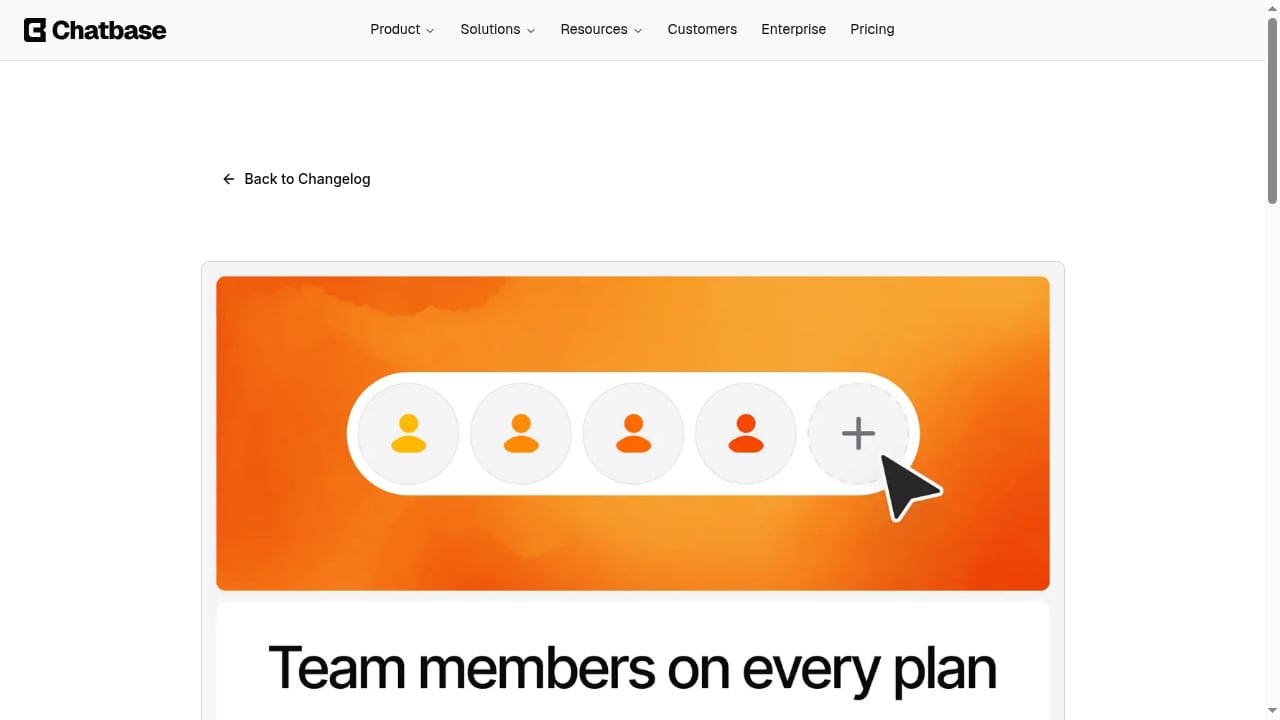
First viewport screenshot of Add Team Members on Any Plan.
Fast, No-Code Setup
Chatbase is known for its ease of use. Users can train an agent on a website URL, documents, or a knowledge base and have a working chatbot in minutes. The platform's "Backstage" feature allows users to make changes by simply describing what they want in natural language—no need to navigate complex menus. This makes it accessible to non-technical teams.
Multi-Channel Deployment
Agents can be deployed across web chat, email, WhatsApp, Slack, Instagram, Facebook Messenger, and voice. This flexibility means customers can get help wherever they are, without being pushed back to the website.
Actions and Procedures
Beyond answering questions, Chatbase agents can perform actions like looking up order information, booking appointments, or creating tickets. Procedures allow teams to define step-by-step workflows for multi-step requests, giving more structure than a simple prompt.
Built-In Help Desk
Chatbase includes a help desk (available from the Standard plan) where human agents can take over conversations, manage tickets, and use AI copilot features like summarization and suggested replies. It also integrates with external help desks like Zendesk, Intercom, and Freshdesk.
Model Flexibility
Users can choose from multiple AI models (OpenAI, DeepSeek, Gemini, Cohere, and others), allowing them to balance cost, performance, and specific capabilities.
Enterprise-Grade Security
Chatbase offers SOC 2 and GDPR commitments, audit logs, agent-level permissions, and a Trust Portal for compliance transparency—important for businesses with strict security requirements.
Limitations: Where Chatbase Falls Short
Limited Complex Workflow Automation
While Chatbase handles customer-facing support well, it is not designed to automate broader business workflows across internal tools. Teams looking for an AI system that manages operations, scheduling, or cross-departmental tasks may need a different solution.
Credit-Based Pricing Can Be Unpredictable
Chatbase uses message credits on its self-serve plans. As support volume grows, costs can become harder to forecast. Users have raised concerns about usage costs, especially on lower-tier plans with limited credits.
Knowledge Base Maintenance Required
Answer quality depends heavily on the accuracy and freshness of your source data. Outdated or conflicting information can lead to poor responses. While Chatbase offers auto-resync and suggestions to spot gaps, teams still need to maintain their knowledge base.
Plan Limits on Actions and Procedures
The number of actions and procedures available depends on your plan. Teams with complex support flows may need to upgrade to higher tiers, which increases cost.
No Traditional Chatbot Flows
Chatbase is built around AI agents rather than traditional decision-tree chatbots. If you need highly scripted conversational flows, this approach may feel less predictable.
Pricing Signals: What to Expect
Chatbase offers a free plan with limited credits (50 message credits per month) and paid plans starting at $40/month. The tiers include Hobby, Standard, Pro, and Enterprise. As you move up, you get more credits, features like the built-in help desk, suggestions, and higher limits on actions and procedures. Enterprise pricing is custom and offers more flexible billing.
Key pricing considerations:
- Credit consumption varies by conversation length and complexity. High-volume support teams should estimate monthly message volume carefully.
- Feature gating: Some advanced features (e.g., suggestions, support ticket data sources) are only available on higher plans.
- Team seats: Paid plans include a certain number of team members; additional seats may cost extra.
For a broader comparison of AI customer service platforms and their pricing models, see our Top 10 AI Customer Service Agent Platforms for 2026.
Setup and Ease of Use
Getting started with Chatbase is straightforward:
- Connect data sources: Add your website URL, upload files, or connect Notion or support tickets.
- Choose an agent template: Select from customer support, sales, or shopping assistant.
- Configure tools and integrations: Connect Shopify, Zendesk, or other tools.
- Deploy: Choose channels like website chat, WhatsApp, or Slack.
The entire process can take less than 10 minutes for a basic agent. The Backstage feature lets you refine the agent by describing changes in plain language, and the Playground allows testing before going live.
For teams comparing setup effort across platforms, our Top 10 Live Chat & Chatbot Software for 2026 ranks products on AI resolution, human handoff, pricing transparency, and setup effort.
Decision Criteria: Is Chatbase Right for You?
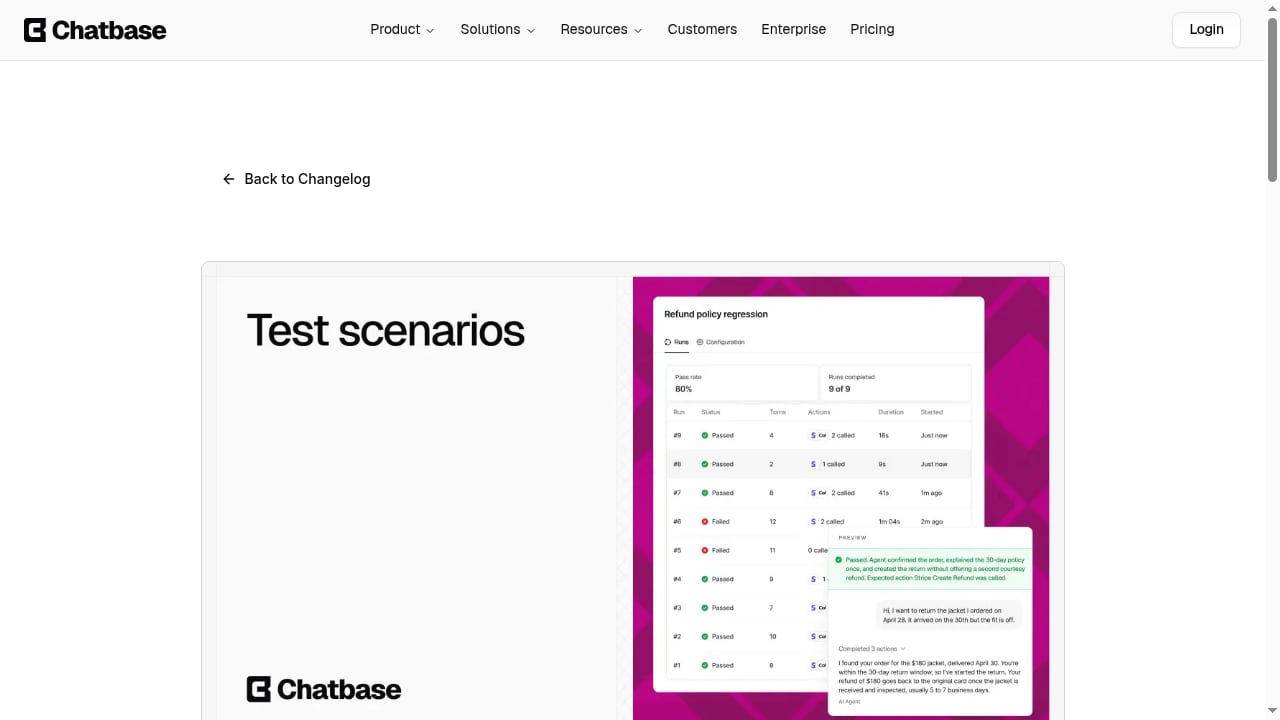
First viewport screenshot of www.chatbase.co.
Consider Chatbase if:
- You need a fast, no-code way to deploy an AI agent for customer support.
- Your primary goal is answering customer questions and deflecting tickets.
- You want multi-channel support without building separate integrations.
- You value ease of use and natural-language configuration.
- You are comfortable with credit-based pricing and can forecast usage.
Look elsewhere if:
- You need extensive automation across internal business workflows.
- You require highly scripted, decision-tree chatbot flows.
- You have very high support volume and need predictable, flat-rate pricing.
- You want a platform that also handles complex sales operations or back-office tasks.
For a comparison with enterprise-focused alternatives, see our Kore.ai Review 2026 and Intercom vs Kore.ai.
Real User Feedback
User reviews on Trustpilot highlight positive experiences with Chatbase's customer service, noting quick responses and helpful support. Hands-on testers praise the platform's ease of setup and the Backstage feature, while cautioning about credit costs and the need for knowledge base upkeep.
Related reading
- IT Service Desk Automation: A Practical 2026 Guide - Learn how IT service desk automation works, which tasks to automate first, and how AI helpdesk platforms like Intercom combine rules, self-service, and AI agents.
- How to Use Intercom with Zoom: Connect Support and Meetings - Learn how to connect Intercom with Zoom to unify customer support and live meetings. Setup steps, workflows, and practical examples for support teams.
Sources and further reading
- Read Customer Service Reviews of chatbase.co - Trustpilot - Chatbase Reviews · Customer service. Customers consistently note positive experiences with customer service, frequently highlighting quick... · User experience.
- Chatbase Review 2026: My Verdict After Real-World Testing - After building chatbots with Chatbase, I share hands-on insights into its pros, cons, and pricing and explain when it’s truly worth using.
- Chatbase Review 2026: Features, Pros, Cons, and Pricing - I tested Chatbase in 2026, breaking down its features, pricing, pros and cons, and real limits. Find out when it fits and when teams may need an option like Lindy.
FAQ
How much does Chatbase cost?
Chatbase offers a free plan with 50 message credits per month. Paid plans start at $40/month, with tiers (Hobby, Standard, Pro, Enterprise) that increase credits, features, and team seats. Enterprise pricing is custom.
Is Chatbase easy to set up?
Yes. Most users can build and deploy a basic AI agent in under 10 minutes by connecting a website URL or documents. The Backstage feature allows changes via natural language, reducing technical effort.
What channels does Chatbase support?
Chatbase agents can be deployed on web chat, email, WhatsApp, Slack, Instagram, Facebook Messenger, and voice.
Can Chatbase hand off to human agents?
Yes. Chatbase includes a built-in help desk (from the Standard plan) and integrates with external help desks like Zendesk, Intercom, and Freshdesk for human handoff.
What are the main limitations of Chatbase?
Key limitations include credit-based pricing that can be unpredictable at scale, limited support for complex internal workflows, and the need for ongoing knowledge base maintenance.
Does Chatbase offer enterprise security?
Yes. Chatbase provides SOC 2 and GDPR commitments, audit logs, agent-level permissions, and a Trust Portal for compliance transparency.
Conclusion
Chatbase is a strong choice for teams that want to deploy AI customer support agents quickly and without technical complexity. Its no-code builder, multi-channel deployment, and natural-language configuration make it accessible, while features like actions, procedures, and a built-in help desk add depth. However, teams with high support volumes should carefully evaluate credit-based pricing, and those needing broad workflow automation may find the platform too focused on customer-facing interactions. For many small to mid-sized businesses, Chatbase offers a practical, fast path to AI-powered support.
For more comparisons, explore our Intercom vs Zendesk AI Agents vs Hiver analysis.