Gorgias Review 2026: AI Helpdesk for Ecommerce, Tested
Gorgias Review 2026: AI Helpdesk for Ecommerce, Tested
Gorgias is one of the most recognizable names in ecommerce customer support, and for good reason. It was built specifically for online stores, not retrofitted from a generic ticketing system. The platform combines a unified helpdesk, an AI Agent that resolves common inquiries automatically, and deep integrations with Shopify, BigCommerce, Magento, and over 100 other apps. More than 17,000 brands currently use it.
But the real question isn't whether Gorgias is popular. It's whether the platform justifies its cost and whether the AI actually performs as advertised in day-to-day operations. This review breaks down what Gorgias does well, where it falls short, how pricing actually works, and which types of ecommerce teams should consider it.
What Is Gorgias?
Gorgias is a customer experience platform designed exclusively for ecommerce. Instead of treating support as a cost center, it positions support as a revenue channel. The core idea is simple: when customers ask about order status, returns, sizing, or product availability, an AI Agent can answer instantly using data pulled directly from your store. Human agents step in only for complex or sensitive conversations.
The platform consolidates email, live chat, voice, SMS, and social messages into a single inbox. Every conversation is enriched with customer data — order history, subscription status, loyalty tier, and past interactions — so agents and the AI Agent both have full context without switching tabs.
Who Should Use Gorgias?
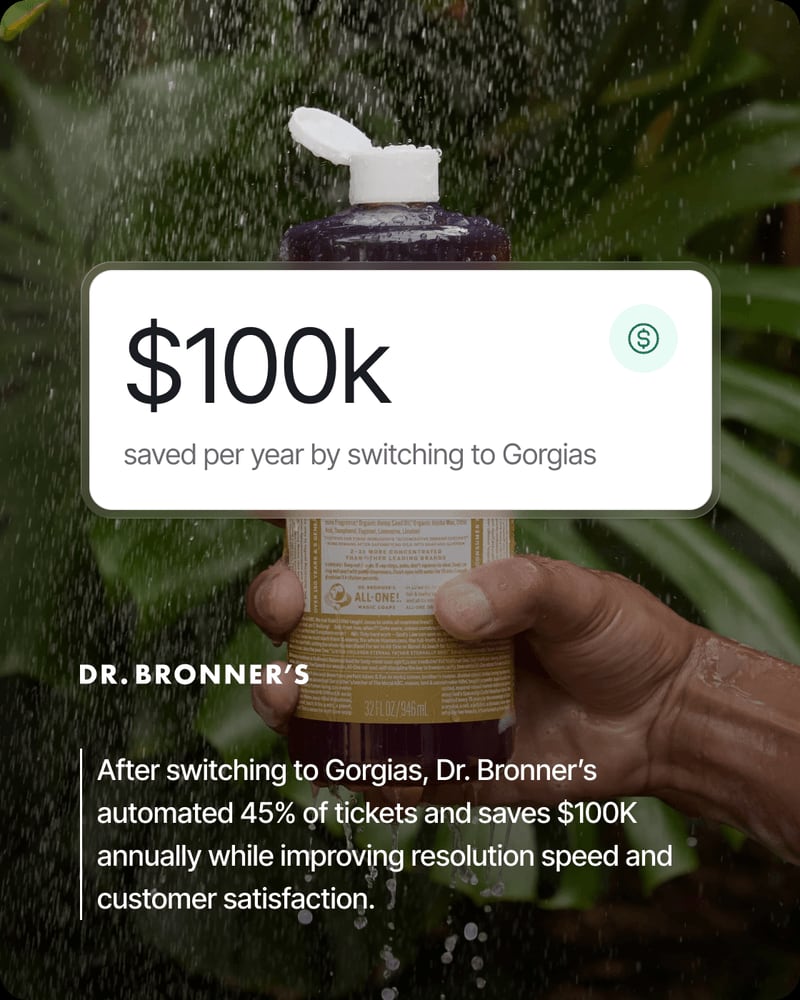
Dr. Bronner's, a Gorgias customer brand.
Gorgias is not a general-purpose helpdesk. It's optimized for a specific profile:
Ideal users:
- Shopify, BigCommerce, or Magento merchants processing at least a few hundred orders per month
- Brands where order status, shipping, returns, and product questions dominate support volume
- Teams that want to deflect repetitive tickets without hiring proportionally more agents
- DTC brands in apparel, beauty, subscriptions, health and wellness, and consumer goods
- Companies that want support conversations to drive upsells, win-backs, and product education
Less ideal users:
- B2B SaaS companies with complex technical troubleshooting
- Non-ecommerce businesses that don't need store data integrations
- Teams that rely heavily on phone support as a primary channel
- Very low-volume shops where the monthly cost outweighs the automation benefit
If you're evaluating Gorgias alongside broader platforms, it's worth comparing it to tools like Intercom, which serves both SaaS and ecommerce but with a different pricing philosophy. Our Intercom vs LiveAgent comparison explores how AI resolution and pricing models differ across helpdesk categories.
Key Features and How They Perform
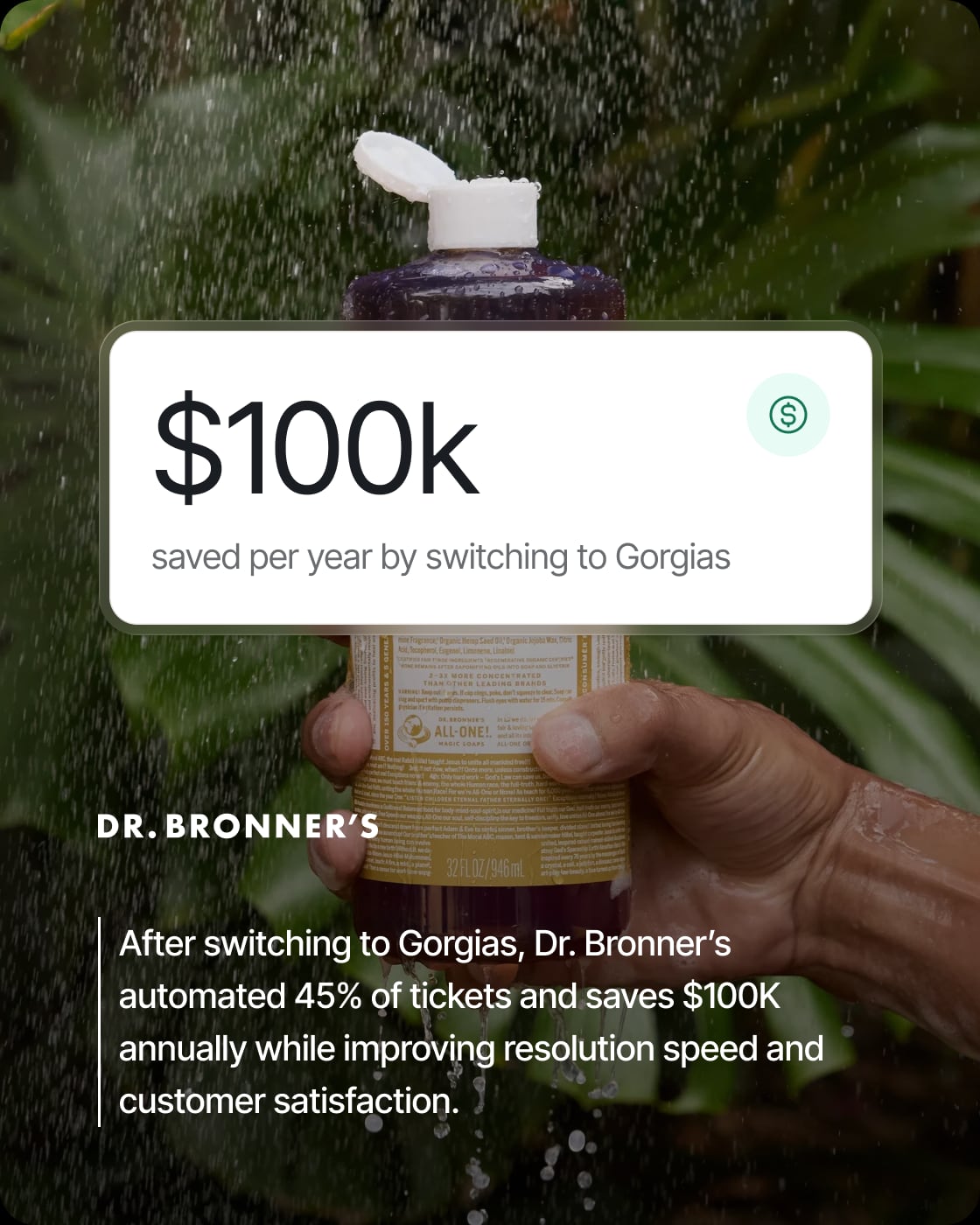
Dr. Bronner's, a Gorgias customer brand.
AI Agent
The AI Agent is now included on every Gorgias plan, which is a meaningful shift from the early days when automation was an expensive add-on. It's trained on your store's policies, product catalog, and historical conversations. When a customer asks "Where is my order?" or "Can I return this after 30 days?", the AI Agent pulls the relevant data and responds without human involvement.
In practice, users on G2 consistently praise the AI Agent's ability to handle order tracking and returns. One Reddit thread from a Shopify merchant noted that customers thank the bot by name as though it's a human, and CSAT scores remained strong after enabling automation. That said, performance depends heavily on how well you configure the knowledge base and how clean your product data is.
Unified Inbox
Email, chat, SMS, voice, and social messages all land in one queue. Macros, rules, and views help agents triage quickly. The interface is noticeably less cluttered than legacy helpdesks like Zendesk, which matters when support teams are small and time-constrained.
Ecommerce Integrations
The Shopify integration is the flagship. Gorgias can display order details inline, issue refunds, cancel orders, and modify subscriptions without leaving the conversation. BigCommerce and Magento integrations are solid but receive updates slightly slower than Shopify. The app ecosystem covers payments (Stripe, Klarna), returns (Loop, Returnly), subscriptions (Recharge), and marketing (Klaviyo).
Revenue Attribution
Gorgias tracks which support conversations lead to purchases. If a customer asks about sizing and then buys, that revenue is attributed to the support interaction. This is a differentiator — most helpdesks treat support purely as a cost, while Gorgias gives you data to argue that support drives sales.
Proactive Engagement
Chat campaigns can trigger based on browsing behavior, cart value, or time on page. For example, a visitor lingering on a high-ticket product page might receive a chat invitation offering a sizing guide or discount. This blurs the line between support and conversion optimization.
Pricing: How Ticket-Based Billing Actually Works
Gorgias prices by monthly ticket volume rather than per agent. This is both a strength and a source of confusion.
How it works:
- You select a plan based on the number of tickets you expect per month
- All agents are included — you don't pay more as your team grows
- AI Agent is included on every tier
- Overage charges apply if you exceed your ticket allowance
Pricing signals:
- Entry-level plans start around $10–$60 per month for very low volumes
- Mid-tier plans for growing brands typically run $300–$900 per month
- Enterprise plans scale into the thousands monthly
- Add-ons like voice and SMS may carry additional per-message or per-minute costs
For a small shop doing 300 tickets a month, Gorgias can be surprisingly affordable. For a brand doing 5,000 tickets a month, the cost becomes significant — but so does the cost of hiring additional agents. The math usually favors Gorgias when AI deflection rates exceed 30–40%.
If you're comparing pricing models across platforms, our Talkdesk pricing breakdown explains how per-seat pricing differs from ticket-based billing and where hidden fees tend to appear.
Setup and Onboarding
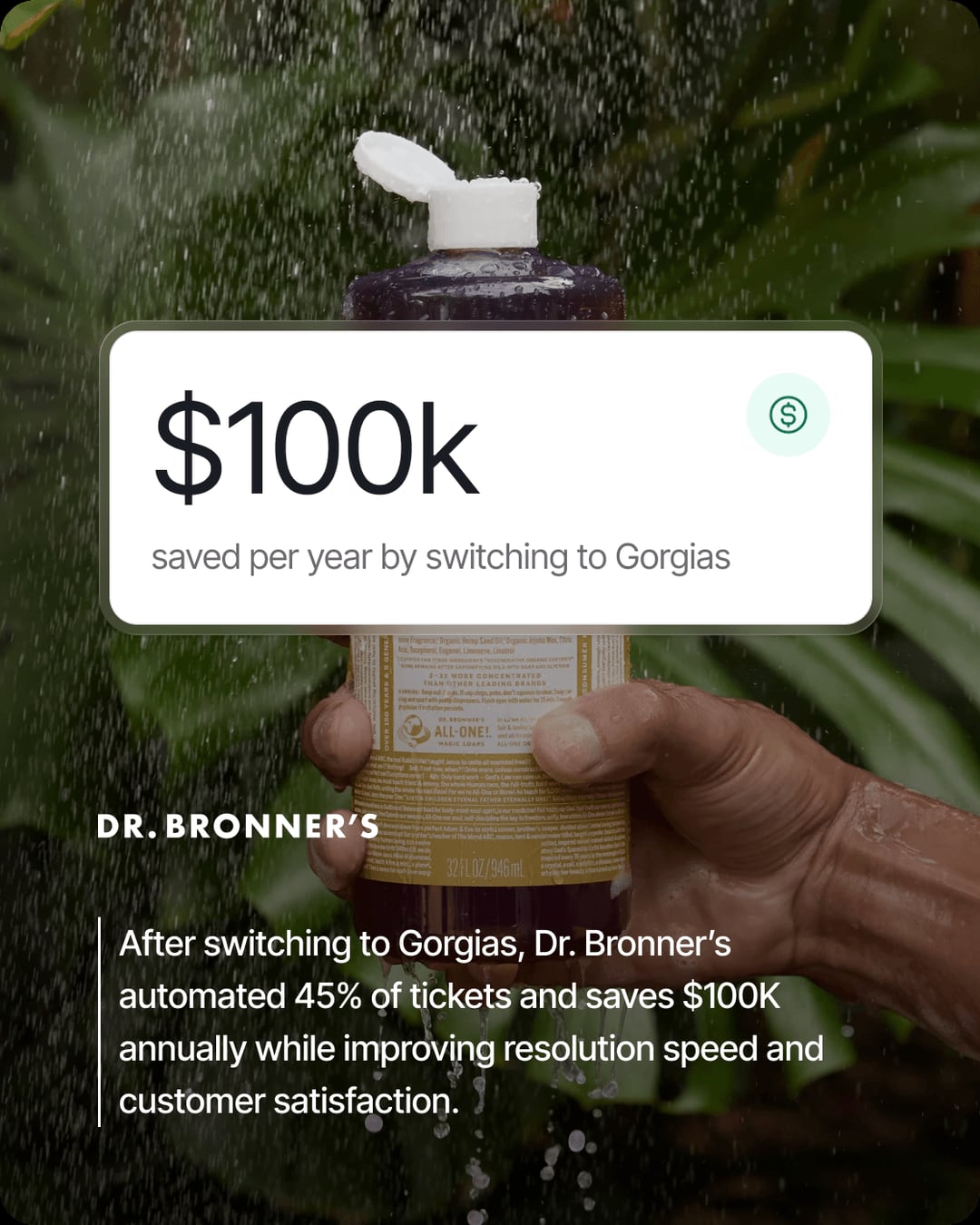
Dr. Bronner's, a Gorgias customer brand.
Gorgias setup is faster than most enterprise helpdesks. Connecting Shopify takes minutes. Importing historical conversations, building macros, and configuring the AI Agent's knowledge base takes a few hours to a few days depending on how much customization you want.
The AI Agent requires thoughtful configuration. You need to define which topics it should handle autonomously, which should escalate to humans, and what tone it should use. Brands that skip this step often report frustrating customer experiences — the bot confidently gives wrong answers about returns or shipping windows. Brands that invest time in training the AI Agent generally report strong results.
Strengths and Limitations
What Gorgias Does Well
- Purpose-built for ecommerce: Order data, returns, subscriptions, and revenue attribution are native, not bolted on
- Ticket-based pricing: Growing your team doesn't automatically increase your bill
- Strong AI deflection: When configured properly, the AI Agent resolves a meaningful share of repetitive tickets
- Fast setup: Shopify merchants can be operational in under an hour
- Revenue analytics: Few competitors tie support conversations to actual sales
Where Gorgias Falls Short
- Limited fit outside ecommerce: If you're not selling physical or digital products through a supported platform, the value drops sharply
- AI quality depends on your data: Poor product descriptions, inconsistent policies, or sparse knowledge bases lead to bad bot answers
- Ticket overages can surprise: Brands that underestimate volume face unexpected charges
- Voice and SMS are less mature: The core chat and email experience is stronger than the phone channel
- Customization ceiling: Deep workflow customization is more limited than on platforms like Zendesk or Freshdesk
Gorgias vs. Alternatives
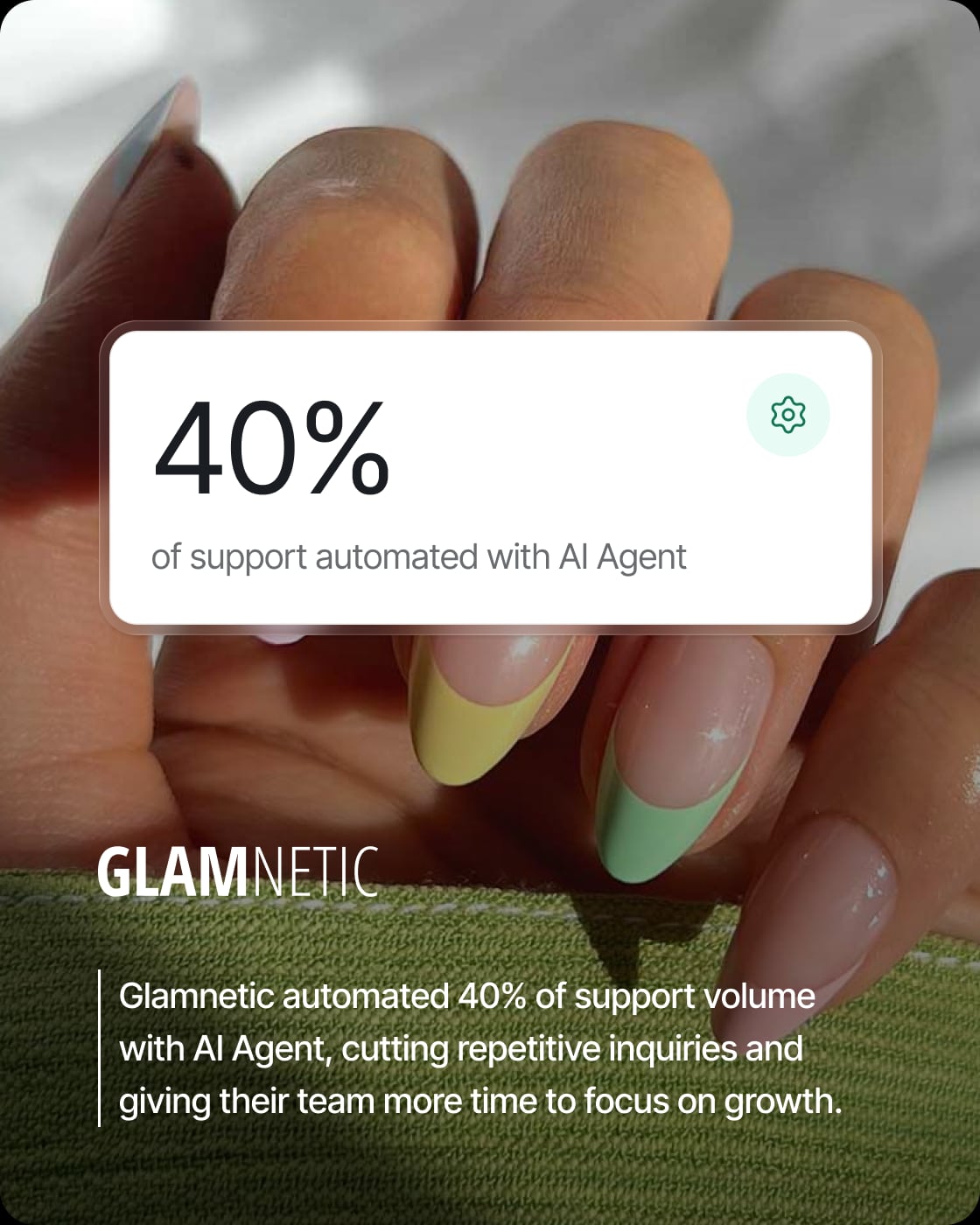
Glamnetic logo.
Gorgias vs. Intercom: Intercom is broader — it serves SaaS, fintech, and ecommerce — with a stronger focus on proactive messaging and product tours. Gorgias is deeper for ecommerce operations like order management and returns. Intercom prices per seat, which gets expensive for large teams; Gorgias prices per ticket, which scales differently. See our Intercom vs Capacity vs ClickDesk comparison for a detailed breakdown of AI resolution and pricing across these platforms.
Gorgias vs. Zendesk: Zendesk is more customizable and better suited to complex enterprise workflows, but requires significantly more setup and administrative overhead. Gorgias wins on speed-to-value for Shopify merchants.
Gorgias vs. Ultimate AI: Ultimate AI is an AI-first automation layer that can sit on top of existing helpdesks, while Gorgias is an all-in-one platform. If you already have a helpdesk you like and only want to add AI resolution, our Ultimate AI review covers that use case in depth.
Gorgias vs. Dashly: Dashly focuses on AI inbound revenue agents and lead qualification, which overlaps with Gorgias's proactive chat but targets a broader range of website types. Our Dashly review examines how these AI-first engagement tools compare.
What Real Users Say
Across G2 and Trustpilot, the sentiment is broadly positive but with consistent caveats:
Common praise:
- "Ease of use and powerful Shopify integration"
- "AI Agent handles order tracking and returns without human help"
- "Revenue attribution changed how we think about support"
- "Setup was much faster than Zendesk"
Common complaints:
- "AI gives wrong answers if the knowledge base isn't maintained"
- "Ticket overage charges caught us off guard"
- "Voice features feel less polished than chat"
- "Customer support from Gorgias can be slow during peak periods"
One Trustpilot reviewer noted that negative reviews seemed inconsistent with their own experience, suggesting that configuration quality — not the platform itself — often determines satisfaction. This aligns with the broader pattern: Gorgias works well when teams invest in setup and ongoing tuning.
Decision Criteria: Should You Buy Gorgias?
Choose Gorgias if:
- You run a Shopify, BigCommerce, or Magento store
- Order status, returns, and product questions make up most of your tickets
- You want AI automation without paying per agent
- You want to measure support's impact on revenue
- You need to launch quickly without a lengthy implementation project
Look elsewhere if:
- You're a B2B SaaS company with technical support needs
- You need deep workflow automation and custom business logic
- Phone support is your primary channel
- Your ticket volume is very low and you'd rather use a free or near-free tool
- You're not on a supported ecommerce platform
Related reading
- Intercom vs WotNot: Which AI Support Platform Wins in 2026? - Compare Intercom and WotNot on AI resolution, pricing, channels, setup speed, and scalability. See which customer service platform fits your team in 2026.
- Customer.io Review 2026: Pros, Cons, Pricing & Verdict - In-depth Customer.io review covering automation, segmentation, pricing, setup complexity, and ideal users. See if this engagement platform fits your team.
Sources and further reading
- Read Customer Service Reviews of www.gorgias.com - Trustpilot - Write a review. We use technology to protect platform ... I don't know how there are 1 star reviews for Gorgias, they must be from their competitors.
- Gorgias Reviews 2026: Details, Pricing, & Features - G2 - Users consistently praise Gorgias for its ease of use and powerful integrations with platforms like Shopify, which streamline customer support processes. The ...
- Been using gorgias AI for our online shop and it's broken… : r/shopify - Jul 23, 2025 ... We get reviews thanking the bot by name as though it's a human. The CSAT scores are good. Plus you can 'soft-launch' and see how it would ...
Frequently Asked Questions
Is Gorgias worth the money?
For ecommerce brands with meaningful ticket volume, yes. The combination of AI deflection, revenue attribution, and ticket-based pricing typically delivers ROI when the AI Agent resolves at least 30% of incoming tickets. Very small shops may find cheaper alternatives sufficient.
How accurate is the Gorgias AI Agent?
Accuracy depends heavily on your knowledge base, product data, and policy configuration. Well-configured instances handle order tracking, returns, and FAQs reliably. Poorly maintained knowledge bases lead to incorrect answers and frustrated customers.
Does Gorgias charge per agent?
No. Gorgias prices by monthly ticket volume. All agents are included on your plan, which makes it cost-effective for teams that are growing headcount.
How long does Gorgias take to set up?
Basic Shopify integration takes under an hour. Configuring the AI Agent, macros, and custom rules typically takes a few hours to a few days, depending on the complexity of your policies and product catalog.
Can Gorgias replace Zendesk for ecommerce?
For many Shopify and BigCommerce merchants, yes. Gorgias offers faster setup, native order management, and revenue attribution that Zendesk lacks out of the box. However, Zendesk remains stronger for complex enterprise workflows and non-ecommerce use cases.
Does Gorgias support voice and SMS?
Yes, but these channels are less mature than chat and email. If phone support is central to your operation, test the voice features carefully before committing.
Final Verdict
Gorgias earns its reputation as the leading helpdesk for ecommerce. The platform's deep Shopify integration, ticket-based pricing, and AI Agent make it a compelling choice for brands that want to scale support without scaling headcount. The revenue attribution feature is genuinely differentiated — it reframes customer service as a growth function rather than a cost center.
The main risks are configuration quality and ticket overages. Gorgias is not a set-and-forget tool. Teams that invest in training the AI Agent and monitoring its answers will see strong results. Teams that expect magic out of the box may be disappointed.
For ecommerce brands on Shopify or BigCommerce processing enough volume to justify the monthly cost, Gorgias is hard to beat. For everyone else, the alternatives are worth a closer look.