Intercom vs Zendesk AI Agents: Which AI Support Wins?
Intercom vs Zendesk AI Agents: Which AI Support Platform Fits Your Team?
Both Intercom and Zendesk now lead with AI agents, but they got there from different starting points. Intercom built Fin as part of an AI-first platform from the ground up, while Zendesk layers its AI Agents onto a long-established ticketing system it calls the Resolution Platform. That origin story shapes everything that follows: how the AI resolves conversations, how it is priced, and how much work your team does around it.
This comparison focuses on what the AI agents actually do, what each vendor claims, and where independent evidence is thin. Both companies publish aggressive comparison pages, so treat vendor claims with the skepticism you would apply to any sales deck.
The Short Answer
First viewport screenshot of ultimate.ai.
- Choose Intercom if you want an AI agent and helpdesk built as one system, outcome-based AI pricing that is included on every plan, and a conversational experience your customers and agents find intuitive.
- Choose Zendesk AI Agents if you run high-volume, complex ticketing with strict SLAs, need native quality assurance and workforce management, or depend on a very large integration marketplace.
Neither answer is universal. The rest of this article explains the trade-offs behind each.
How the Two AI Agents Differ
First viewport screenshot of ultimate.ai.
Intercom's Fin AI Agent
Fin is natively integrated into the Intercom helpdesk rather than bolted on. It handles customer conversations across channels, connects to your systems to take actions on a customer's behalf, and hands unresolved conversations to human agents in the same inbox with full context. Intercom says Fin resolves an average of 76% of customer queries at $0.99 per outcome, and that Fin is included on every plan rather than sold as a separate add-on. Intercom also markets a "Fin Flywheel" — a repeatable process for reviewing performance and refining how Fin resolves over time.
Zendesk AI Agents
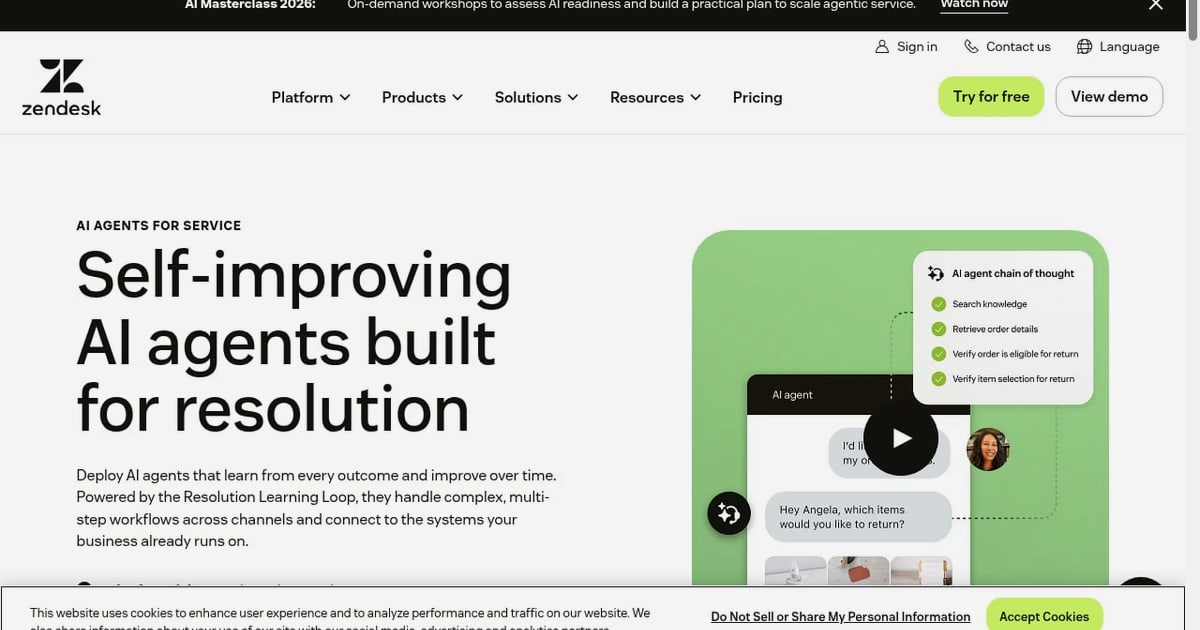
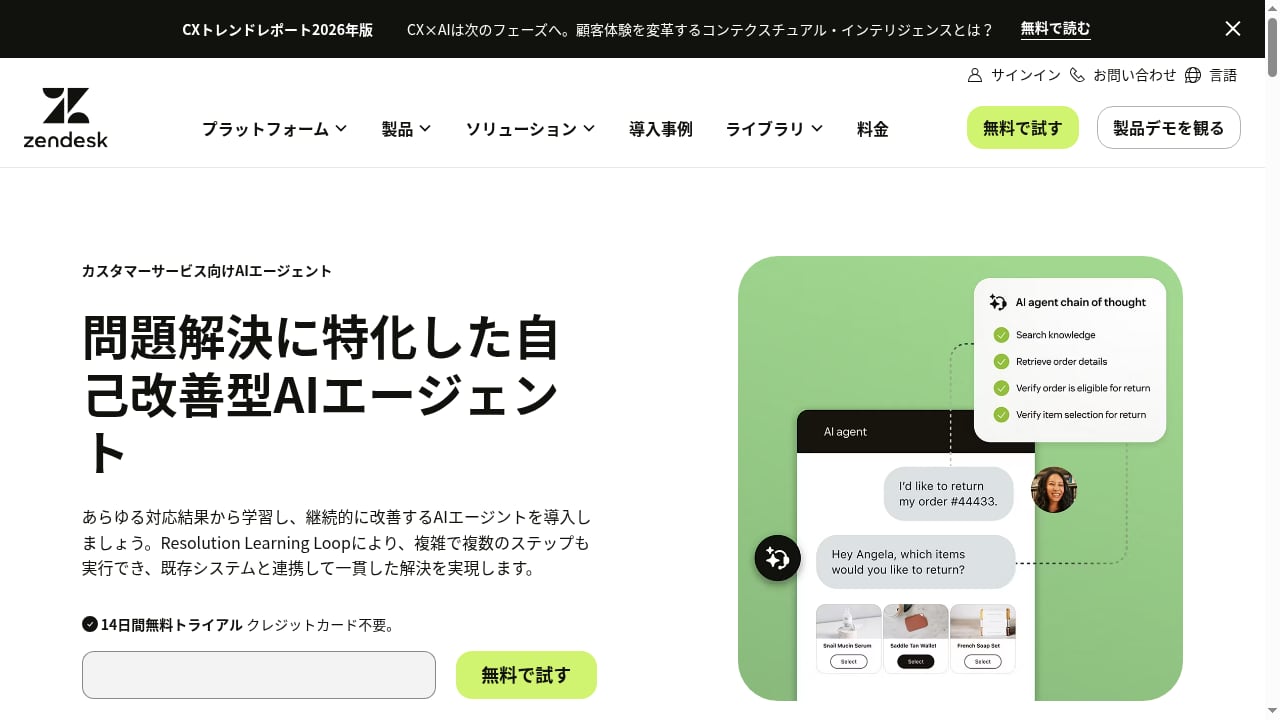
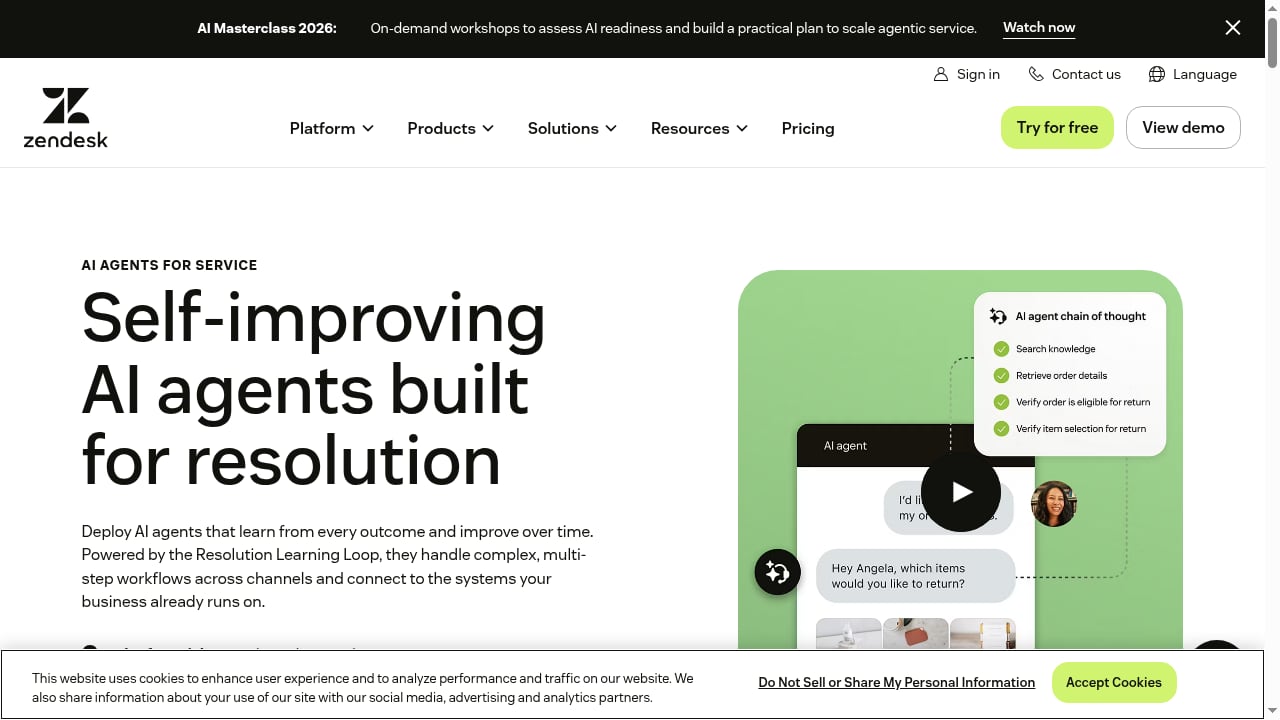
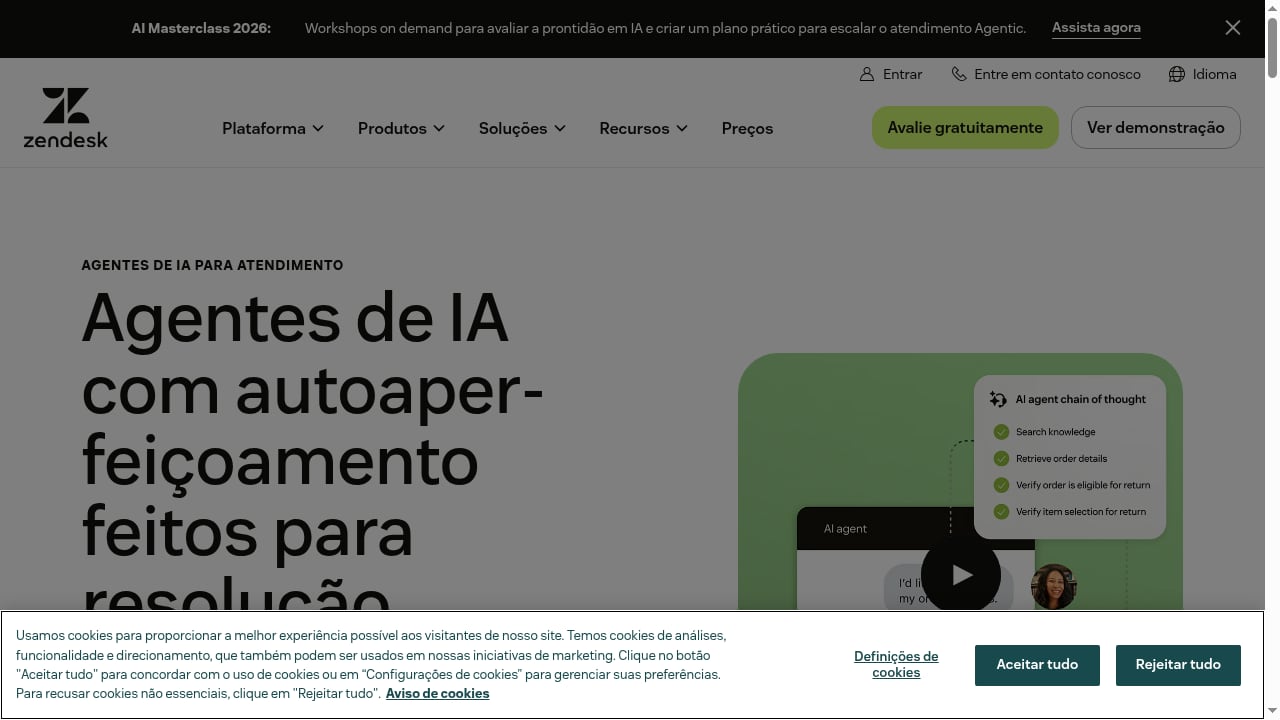
Zendesk positions its AI Agents as part of the Zendesk Resolution Platform, which it describes as the only AI-first service platform for delivering faster, higher-quality resolutions. Zendesk states its AI can resolve up to 80% of customer interactions across 80+ languages, and that its models are trained on billions of real interactions. The platform bundles reporting and analytics, a marketplace with 1,800+ apps, integrations that drive resolutions across unified data, and enterprise-grade security and AI governance. It serves customer service, employee service, and contact center teams across industries including education, financial services, government, healthcare, and property management.
The Honest Read
Both vendors claim resolution rates in the high 70s to 80%. Those numbers come from vendor-published averages, not independent benchmarks, and resolution definitions vary. Zendesk argues that Intercom's model can charge for "resolved" interactions even when issues go unanswered; Intercom argues that Zendesk adds AI on top of a traditional ticketing system rather than building for AI first. Each criticism points at a real design difference, but neither should be taken as settled fact without a pilot on your own conversation data.
Pricing: Per Outcome vs. Platform Tiers
First viewport screenshot of ultimate.ai.
This is where the two models diverge most sharply.
Intercom bills per seat plus per Fin outcome. Published plan tiers are Essential at $29 per seat per month, Advanced at $85, and Expert at $132, with Fin AI Agent included on every plan and billed per outcome at $0.99. Intercom frames this as transparent and aligned with value delivered.
Zendesk publishes tiered plans — Support Team at $19 per agent per month, Suite Team at $55, and Suite Professional at $115 — with AI capabilities positioned as part of its platform offering. Zendesk argues its plans are predictable and scale with team size.
A Reddit practitioner working in enterprise automation notes that both platforms can get expensive quickly, and that Intercom's per-seat costs add up fast for large agent teams. The practical takeaway: model your costs on your own volume. A team with high AI resolution rates and few human agents may prefer outcome pricing; a large human team with moderate AI usage may prefer flat per-agent tiers.
Helpdesk and Workflow Depth
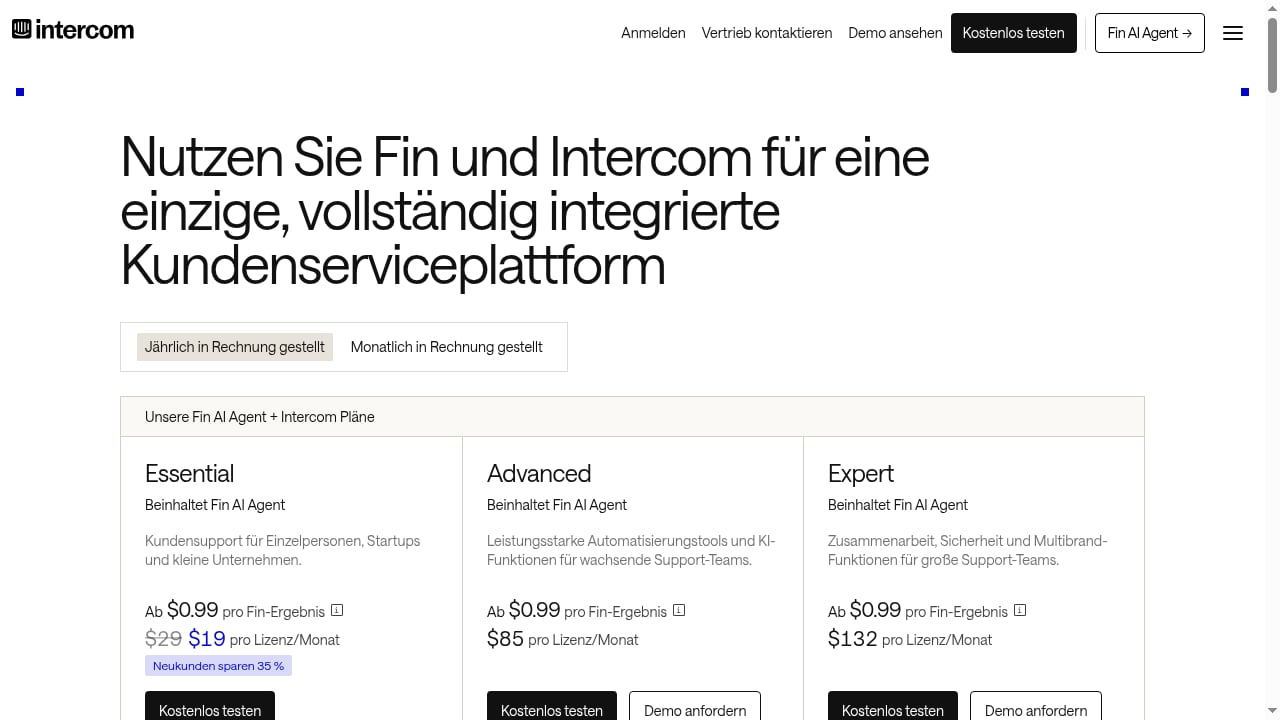
First viewport screenshot of www.intercom.com.
Zendesk's strongest argument is operational maturity. Its comparison page cites 18 years of service experience, 100,000+ customers, granular SLA and OLA management, native quality assurance, native workforce management, and reporting dashboards built for service leaders. It also cites a Nucleus Research finding that companies switching from Intercom to Zendesk reduced response times by 61%.
Intercom counters that its helpdesk and AI are one connected system — Inbox, Tickets, Phone, Copilot, and Fin all learning from each other — so customers are never bounced between tools. It positions its interface as modern and intuitive for agents.
The Reddit discussion lands in a similar place from practitioner experience: Zendesk suits teams of 10+ agents needing SLA tracking, advanced routing, and complex ticket workflows, while Intercom suits teams prioritizing conversational support and sales integration. That thread also offers the most useful advice in any of these sources: have your actual support agents test both platforms with real scenarios before committing, because the daily interface matters more than the feature checklist.
Where Each Platform Is Stronger
| Dimension | Intercom | Zendesk AI Agents |
|---|---|---|
| AI and helpdesk architecture | Built as one platform | AI layered on established ticketing |
| Published AI resolution claim | 76% average at $0.99 per outcome | Up to 80% across 80+ languages |
| AI pricing model | Per outcome, included on all plans | Bundled into platform tiers |
| SLA and workflow depth | Lighter; strongest SLA features on top tier per Zendesk | Granular SLA/OLA, advanced routing |
| Native QA and WFM | Not native per Zendesk | Included |
| Integration marketplace | Smaller catalog per Zendesk | 1,800+ apps |
| Conversational experience | Frequently praised as smoother | Ticket-centric heritage |
Note that several rows rely on Zendesk's own comparison page, which is a competitor's characterization of Intercom. Verify capability claims directly with each vendor during evaluation.
Which Should You Choose?
Pick Intercom if:
- You want AI and human support in one inbox with shared context.
- Outcome-based AI pricing fits your volume profile.
- Conversational channels and sales-adjacent messaging matter to you.
- You value fast onboarding and a modern agent interface.
Pick Zendesk AI Agents if:
- You run complex, high-volume ticketing with strict SLAs.
- Native QA, workforce management, and deep reporting are non-negotiable.
- You need a very broad integration marketplace.
- You serve multiple products, brands, or support tiers from one workspace.
If you are still mapping the wider market, our top 10 helpdesk and project management software comparison and our Intercom vs Desk365 vs Kustomer comparison put these options in broader context. Teams planning high-traffic moments may also find our playbook on scaling event support with AI useful.
Practical Evaluation Checklist
- Run a pilot on real conversations. Load 200–500 historical tickets into each AI agent and compare true resolution rates, not deflection rates.
- Define "resolution" in writing. Ask each vendor exactly what counts as a resolved outcome for billing purposes.
- Model total cost at your volume. Include seats, AI outcomes, channel fees, and any add-ons.
- Test the agent experience. Have support staff complete real scenarios in both interfaces.
- Check reporting against your KPIs. Confirm the dashboards answer the questions your service leaders actually ask.
- Review security and governance. Confirm compliance certifications and AI governance controls meet your requirements.
Related reading
- Salesforce Review 2026: Fit, Pricing & Real Trade-offs - Evidence-based Salesforce review covering ideal users, use cases, strengths, limitations, pricing signals, setup effort, and decision criteria for 2026.
- How to Use Intercom with Braze: Integration Workflow & Use Cases - Learn how to connect Intercom with Braze to unify AI-powered support and cross-channel engagement. Setup steps, workflows, and practical examples.
Frequently Asked Questions
Is Intercom's Fin AI Agent better than Zendesk AI Agents?
There is no independent verdict. Intercom claims a 76% average resolution rate; Zendesk claims up to 80%. Both are vendor figures. The better agent for you depends on your conversation types, channels, and workflow complexity — which is why a pilot matters more than either claim.
How does Intercom's AI pricing compare with Zendesk's?
Intercom charges per seat plus $0.99 per Fin outcome, with Fin included on every plan tier. Zendesk bundles AI into tiered platform plans. Intercom argues its model is transparent and value-aligned; Zendesk argues its plans are more predictable for scaling teams. Model both against your own volume.
Can I use Intercom's Fin with Zendesk?
Intercom states that Fin works with any helpdesk, including Zendesk, Salesforce, and Freshdesk. That makes a hybrid setup possible if you want to test Fin without migrating your ticketing system.
Does Zendesk have features Intercom lacks?
According to Zendesk, it offers native quality assurance, native workforce management, granular SLA and OLA management, and a marketplace of 1,800+ integrations. Intercom disputes the framing of some of these comparisons, so confirm current capabilities with both vendors.
Which platform is better for small teams?
Small teams often favor Intercom for its conversational experience and included AI. Zendesk's practitioner-reported strength is complex, high-volume ticketing, which typically matters more as teams grow past roughly 10 agents.
Conclusion
Intercom and Zendesk AI Agents are both credible AI-first support platforms, and the decision comes down to architecture and operating model rather than a clear winner. Intercom's advantage is a natively unified AI agent and helpdesk with outcome-based pricing included on every plan. Zendesk's advantage is operational depth — SLA management, native QA and WFM, and a vast integration ecosystem — backed by years of high-volume service experience. Pilot both on your own data, define resolution in writing, and let your agents test the interfaces before you sign.
For further reading, see Intercom's comparison page and Zendesk's counter-comparison, and weigh both against practitioner perspectives in this Reddit discussion.