Kore.ai Review 2026: Enterprise Agentic AI Platform Fit
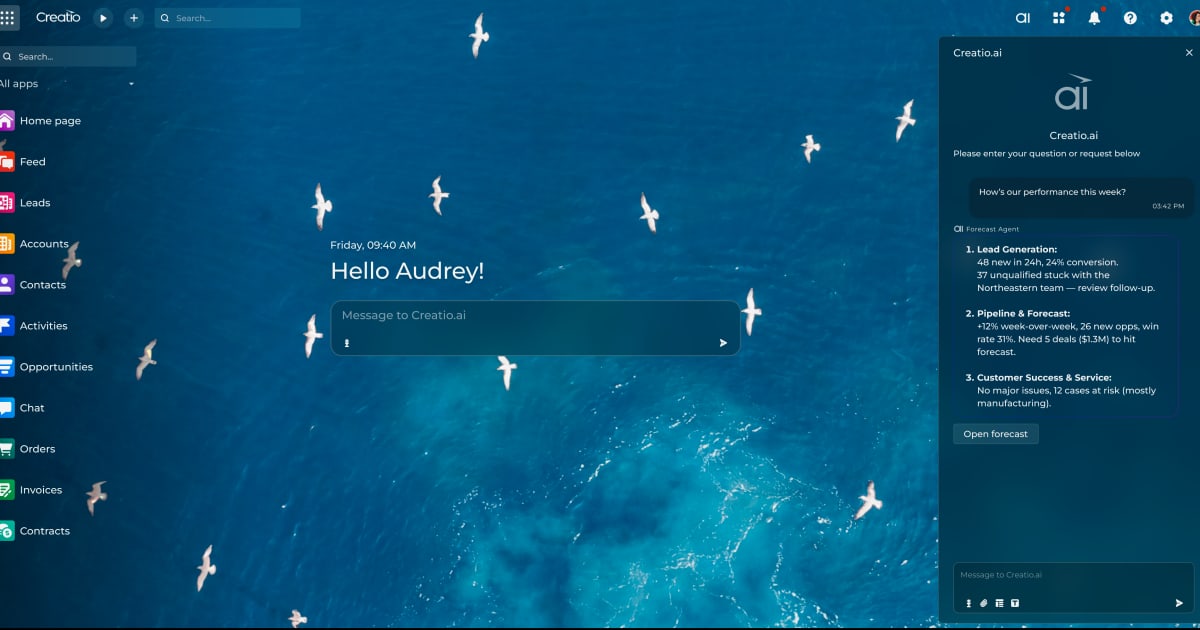
Kore.ai Review 2026: Is the Enterprise Agentic AI Platform Right for You?
Kore.ai is one of the most established names in enterprise conversational AI, and it has repositioned aggressively around agentic AI. But a platform that can build, govern, and run thousands of agents is not automatically the right platform for every team. This review examines where Kore.ai genuinely excels, where buyers report friction, what the pricing signals actually suggest, and how to decide whether it fits your organization in 2026.
What Kore.ai actually is
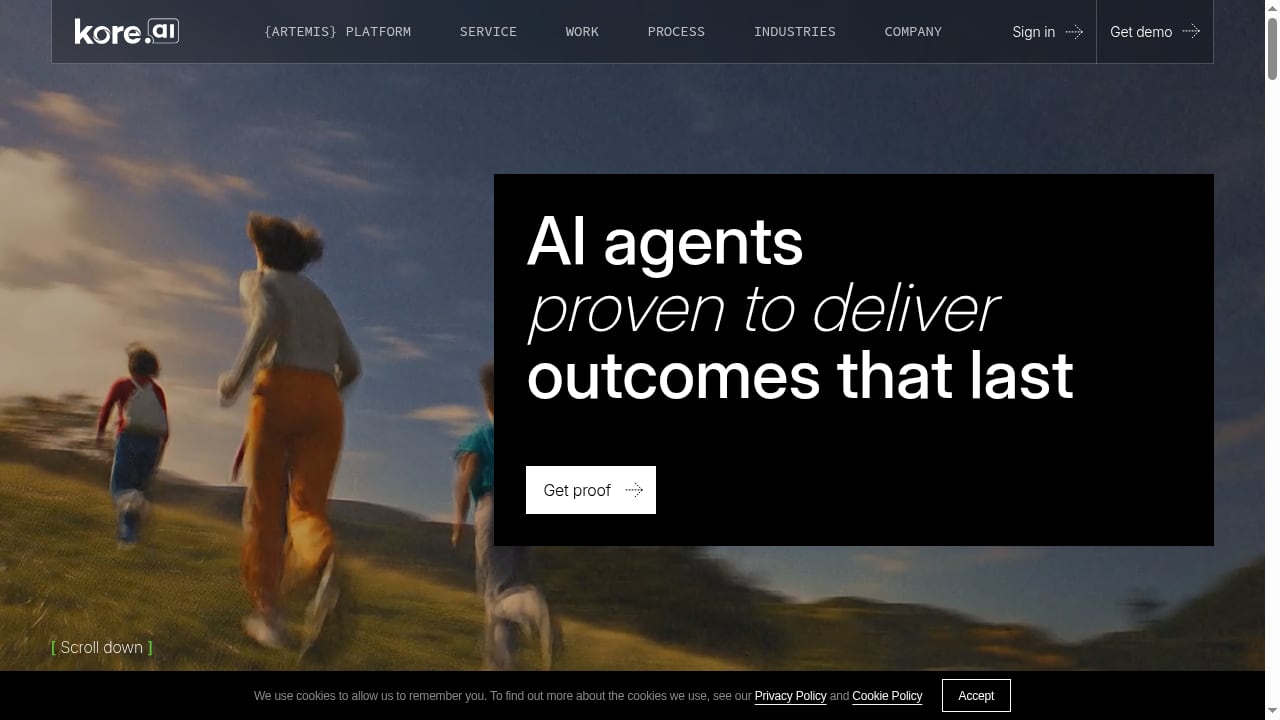
First viewport screenshot of kore.ai.
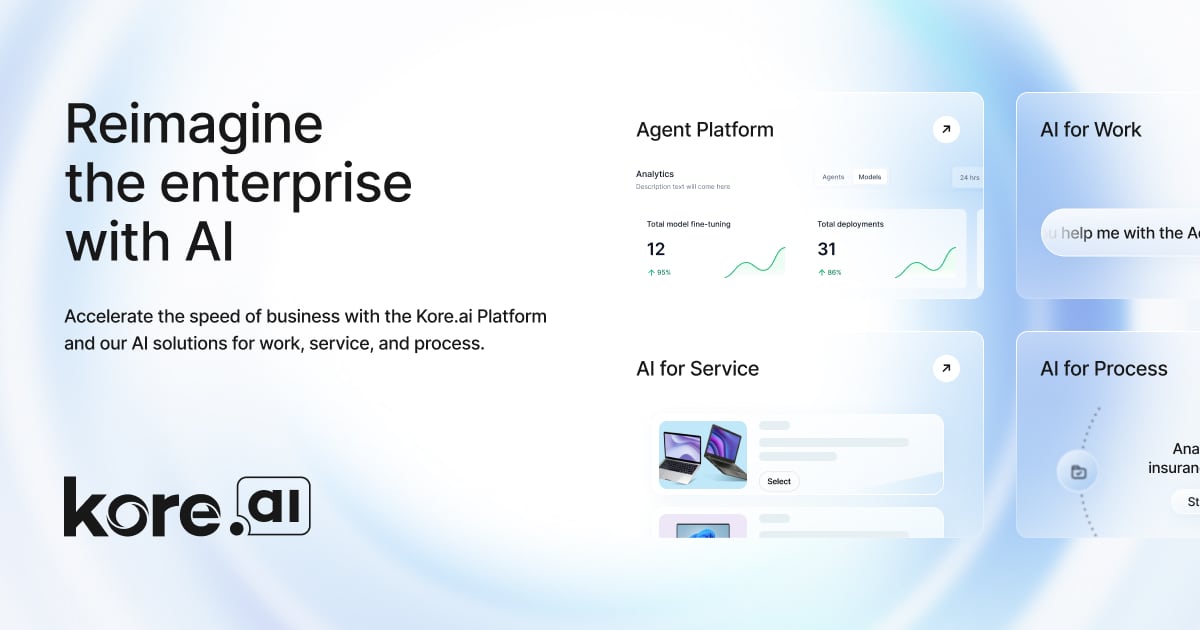
Kore.ai is an enterprise AI platform company founded in 2014. Its current product family spans three areas:
- AI for Service — customer-facing agents and contact-center automation.
- AI for Work — employee-facing agents across HR, IT, finance, legal, and sales.
- Agent Platform {Artemis} — the underlying build-and-govern layer that both application families run on.
The platform deploys onto existing CRM, contact-center, and collaboration stacks rather than replacing them. Documented integrations include Salesforce, ServiceNow, Zendesk, SAP, Genesys, Microsoft Teams, Slack, Zoom, and Webex.
A naming note that trips up buyers: the older "Kore.ai XO Platform" branding still appears in some documentation and review sites. Artemis is the current generation, launched in May 2026, first on Microsoft Azure.
Who Kore.ai is built for
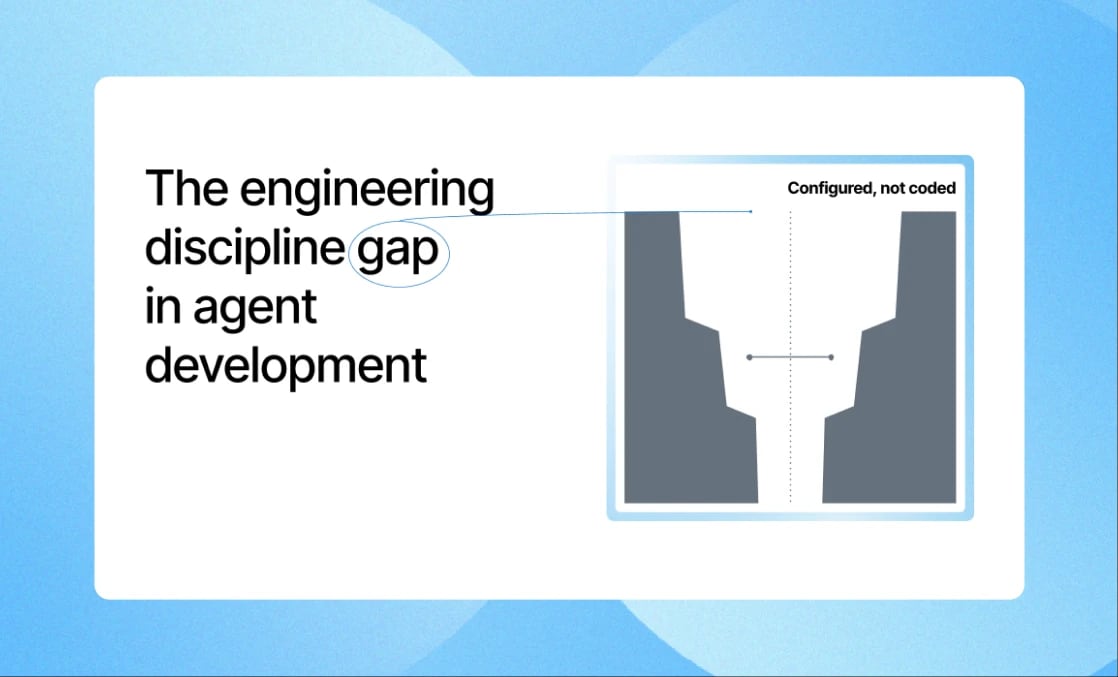
Configured, not coded. The engineering discipline gap in agent development.
Kore.ai is not a plug-in-and-go chatbot tool. It is infrastructure for organizations that intend to run many agents, across many departments, under centralized governance.
Strong-fit profiles
- Large enterprises standardizing agent development across customer service, HR, and IT on one control plane.
- Regulated industries — banking, healthcare, pharmaceuticals, insurance — with data-residency, audit, and compliance requirements.
- Organizations with platform engineering capacity who can invest in a multi-month implementation and a multi-year agent roadmap.
- Contact centers with existing voice and digital channels that need agents to work inside Genesys, NICE, Amazon Connect, or similar environments.
Poor-fit profiles
- SMBs and most mid-market support teams that need automated resolutions live within a quarter.
- Teams without dedicated implementation resources — buyer reviews consistently cite a steep learning curve.
- Buyers seeking a lightweight, single-purpose chatbot rather than an enterprise platform.
If you are comparing lighter-weight support options, our roundup of the top 10 AI customer service agent platforms for 2026 provides a useful contrast point.
Core capabilities and strengths
First viewport screenshot of www.kore.ai.
Dual-engine architecture for reliability
Artemis runs an agentic reasoning engine alongside a deterministic flow engine over shared memory. In practice, this means teams can use reasoning where flexibility matters and a fixed path where the same outcome must occur every time. For regulated enterprises, this is the most persuasive architectural argument in Kore.ai's favor.
Governance and security depth
Kore.ai publishes SOC 2 Type II, ISO 27001:2022, and PCI DSS compliance, and ships eight pre-built guardrail scanners. Audit logging, permissions frameworks, and policy enforcement are part of the platform rather than bolted on. For teams that need to prove control over autonomous agents, this matters more than any demo.
Deployment flexibility
Hosting options include SaaS, dedicated VPC, and on-premises. That range is unusual in the agentic AI category and is a genuine differentiator for organizations with strict data-residency rules.
Breadth of integrations and channels
Kore.ai documents deep contact-center integrations — including NICE CXone, NICE MAX Desktop, Amazon Connect Chat, and Twilio SMS and voice — plus CRM and collaboration connectors. Marketing claims 40+ channels; roughly 23 are documented for AI for Service, including voice, chat, email, SMS, WhatsApp, and social.
Agent Blueprint Language
Agents are defined in a compiled, declarative language with six orchestration patterns. Agent definitions become versioned code artifacts that can be reviewed, rather than clicks in a builder. This appeals to engineering-led organizations and is a meaningful governance advantage.
Limitations and friction points
Time to value is the biggest cost
Buyer-reported data on G2 puts average implementation at about two months and average time to ROI at about seven months. "Steep learning curve" is the most-cited complaint on the platform's review profile. For a team that needs results this quarter, that timeline is a disqualifier.
Evidence quality is uneven
Performance figures are largely drawn from anonymized case studies. There is no independently audited benchmark. Analyst recognition — including Leader placements in Gartner, Forrester, and Everest Group reports — is vendor-reported, and the underlying reports are paywalled. Treat those placements as directional, not verified.
Product complexity can overwhelm
Kore.ai's own market guide acknowledges that the large product suite can confuse teams without a structured plan, and that documentation for newer integrations is still evolving. Finding the right pre-built template can take extra steps.
Pricing transparency is partial
Kore.ai publishes self-serve tiers, which is more than many rivals do. But enterprise terms are quote-only, and the gap between published tiers and real enterprise contracts is significant.
Pricing signals: what to expect
Kore.ai publishes self-serve tiers starting around $29 per month plus per-session usage. Those tiers are not representative of enterprise deployments. Kore.ai's own AWS Marketplace listing positions a realistic first-year enterprise bundle near $90,000.
That figure should be read as a signal, not a quote. Actual cost depends on session volume, channels, hosting model (SaaS versus dedicated VPC versus on-premises), and implementation services. Budget for the platform plus implementation plus internal engineering time — the last of which is often the largest hidden cost.
For a broader view of how pricing models differ across support platforms, see our Intercom vs Chatbase comparison and the Intercom vs Jitbit Helpdesk vs Tidio breakdown.
Setup and implementation reality
A realistic Kore.ai rollout follows four phases:
- Architecture and use-case selection — choose one or two high-value workflows rather than boiling the ocean. Customer service triage and IT helpdesk are common starting points.
- Integration and data grounding — connect CRM, contact-center, and knowledge systems. This is where most timeline risk lives.
- Agent design and governance configuration — define agents in Agent Blueprint Language, configure guardrails, and set up audit and escalation paths.
- Pilot, measure, and expand — run a controlled pilot, measure containment and resolution quality, then expand to additional departments.
Expect the first phase to consume more time than the demo suggests. Organizations that succeed tend to assign a dedicated platform owner and treat the rollout as a program, not a project.
Kore.ai vs alternatives: decision criteria
Enterprise Agentic AI Platform | Kore.ai product interface.
Kore.ai competes with several enterprise agentic platforms, including Glean, Moveworks, Aisera, Sierra, Decagon, and Cognigy. The right choice depends on what you are optimizing for.
| Criterion | Kore.ai strength | When to look elsewhere |
|---|---|---|
| Scope | CX, EX, and process automation on one platform | If you need only customer service, a focused vendor may be simpler |
| Governance | Deep guardrails, audit, compliance | If governance needs are light, you may overpay |
| Deployment | SaaS, VPC, on-premises | If cloud-only is fine, flexibility has less value |
| Time to value | Multi-month implementation | If you need resolutions within a quarter |
| Build model | No-code and pro-code options | If your team has no engineering capacity, consider managed alternatives |
A practical decision test: if you can name three departments that will run agents within 18 months and you have platform engineers to support them, Kore.ai deserves a serious evaluation. If you cannot, start smaller.
Related reading
- Fathom Customer Service Story: Inside a 97% CSAT Support Team - How Fathom cut response times by 60% and hit 97% CSAT by rebuilding support on Intercom. A practical customer service story with lessons you can apply.
- How to Use Intercom with Slack: AI Support Meets Team Chat - Connect Intercom with Slack to route alerts, collaborate on tickets, and let AI handle support. Setup steps, workflows, and practical examples.
FAQ
Is Kore.ai suitable for small businesses?
Generally no. Kore.ai is designed for large enterprises with complex integration and governance needs. SMBs and most mid-market teams will find the implementation effort and cost disproportionate to their needs.
How much does Kore.ai cost?
Published self-serve tiers start around $29 per month plus usage. Enterprise contracts are quote-only, and Kore.ai's AWS Marketplace listing suggests a realistic first-year enterprise bundle near $90,000. Actual pricing depends on volume, channels, and hosting model.
How long does Kore.ai implementation take?
Buyer-reported data puts average implementation at about two months, with average time to ROI around seven months. Complexity increases with the number of integrations and departments involved.
What is the difference between Kore.ai XO and Artemis?
XO is the prior-generation branding. Artemis is the current generation of the Kore.ai Agent Platform, launched in May 2026. Some documentation and review sites still use the older name.
Does Kore.ai support on-premises deployment?
Yes. Kore.ai offers SaaS, dedicated VPC, and on-premises hosting, which is a differentiator for organizations with strict data-residency requirements.
Conclusion
Kore.ai is a credible, mature enterprise agentic AI platform with genuine strengths in governance, deployment flexibility, and multi-department orchestration. It is also slow to implement, complex to operate, and expensive relative to lighter alternatives. The platform rewards organizations that treat agentic AI as a multi-year program with dedicated engineering resources. It frustrates teams that need fast, contained wins.
Before committing, run a structured pilot on one high-value workflow, confirm the total cost including implementation and internal effort, and verify that your integration stack is supported. If governance and scale are your priorities, Kore.ai belongs on your shortlist. If speed and simplicity are, look elsewhere first.
For related reading on compliance and support operations, see our guide on ensuring compliance in AI customer service and the top help desk and ticketing software comparison.
Sources: