Zendesk Review 2026: AI Support Platform Tested
Zendesk Review 2026: AI Support Platform Tested
Zendesk has spent nearly two decades building one of the most recognizable names in customer service software. But the 2026 version of Zendesk is a fundamentally different product from the ticketing tool many teams remember. Today it positions itself as an AI-powered resolution platform that promises to move beyond deflecting tickets to actually solving customer problems at scale.
This review examines whether that promise holds up in practice. We look at who Zendesk genuinely serves, where it excels, where it frustrates, what pricing signals suggest about its target market, and how to decide if it belongs in your stack.
What Zendesk Actually Is
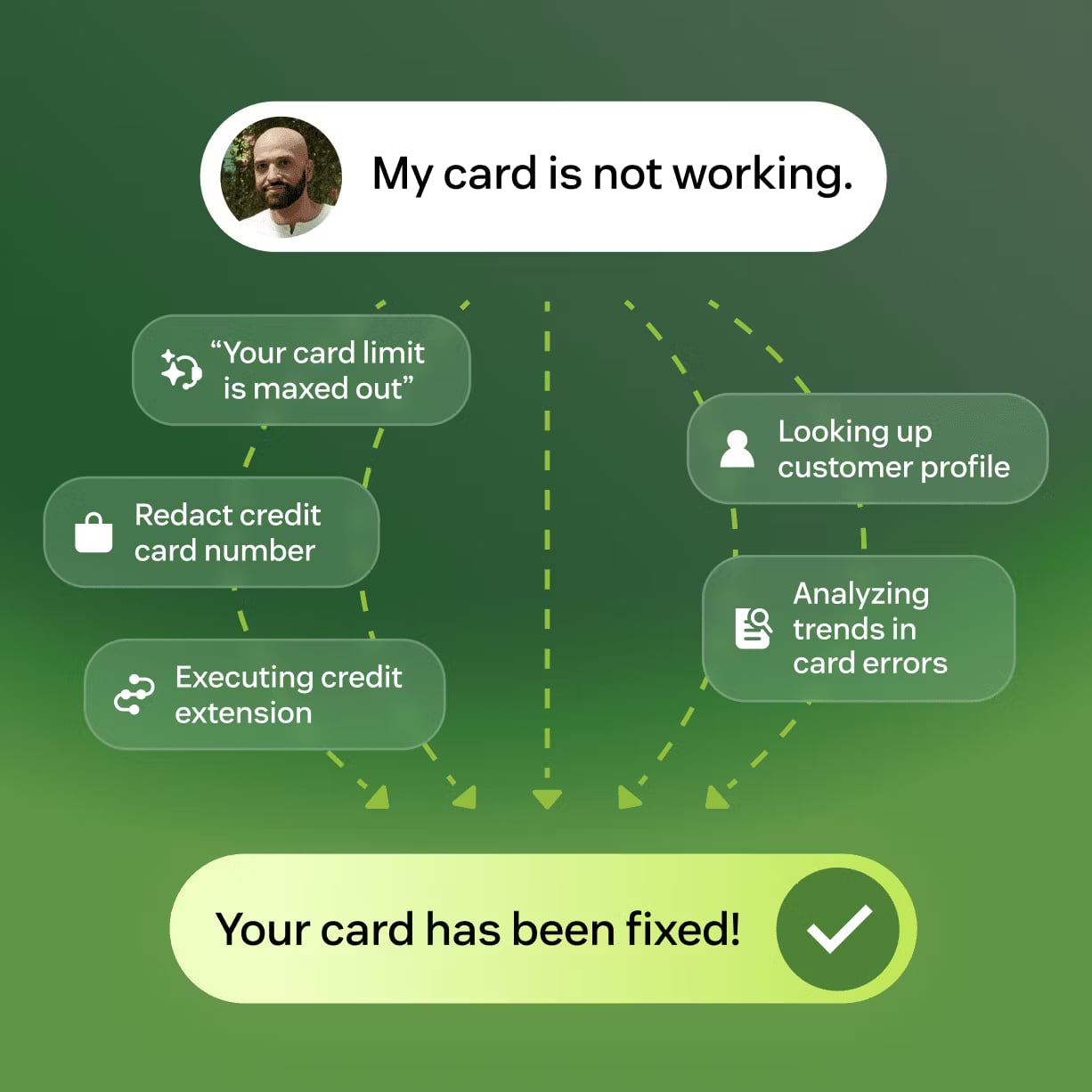
Zendesk product interface.
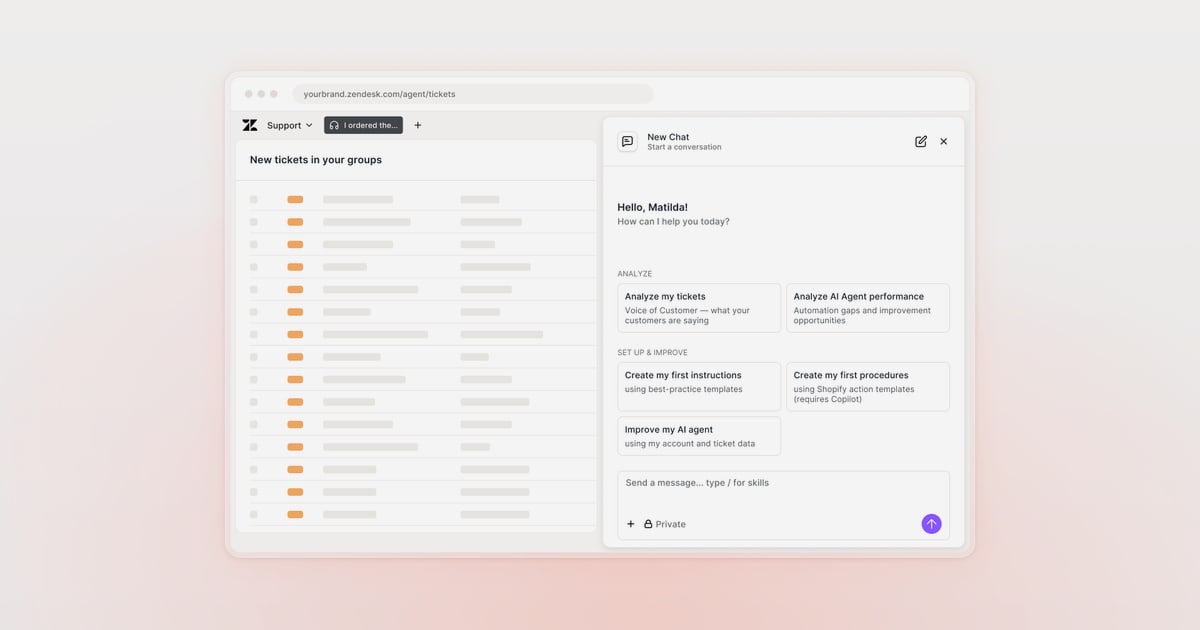
Zendesk is an omnichannel customer service platform built around a core help desk, with AI layered across every channel. Teams use it to manage email, live chat, voice, social messaging, and self-service from a single workspace. The AI layer includes self-improving agents that learn from each resolved interaction, workflow automation, and analytics that surface operational bottlenecks.
The company reports 22,000+ AI customers, 830 million AI interactions, and 4.8 billion resolutions delivered. It holds a Leader position in the 2025 Gartner Magic Quadrant for CRM Customer Engagement Center and maintains SOC 2 and ISO 27001 compliance, which matters for regulated industries.
Those numbers tell you Zendesk is mature and widely deployed. They do not tell you whether it fits your team. That depends on your volume, channel mix, and how much you want AI to handle without human review.
Who Zendesk Is Best For

Zendesk product interface.
Zendesk earns its strongest marks in three scenarios.
Mid-Market and Enterprise Support Teams
Organizations with 20 to several hundred agents benefit most from Zendesk's workflow depth. The platform handles complex routing rules, SLAs, multiple brands, and granular permissions without requiring a developer to configure every change. G2 reviewers consistently describe implementation as straightforward relative to enterprise competitors, and the admin interface remains approachable for non-technical team leads.
Teams Running High-Volume, Repetitive Inquiries
If a large share of your tickets follows predictable patterns, Zendesk's AI agents can absorb meaningful volume. The Resolution Learning Loop means the system studies every interaction, including ones where a human stepped in, and improves its responses over time. Zendesk claims up to 80% automation on suitable ticket types. Real-world results vary by industry and ticket complexity, but teams with clean knowledge bases and well-defined processes report the strongest outcomes.
Companies That Need Omnichannel Without Custom Engineering
Zendesk connects email, chat, voice, social messaging, and help center content natively. For teams that would otherwise stitch together three or four point solutions, that consolidation has real operational value. Customer context follows the conversation across channels, and agents work from one queue rather than switching tools.
Core Strengths
Zendesk Review 2026: AI Support Platform Tested - Core Strengths.
AI That Aims for Resolution, Not Just Deflection
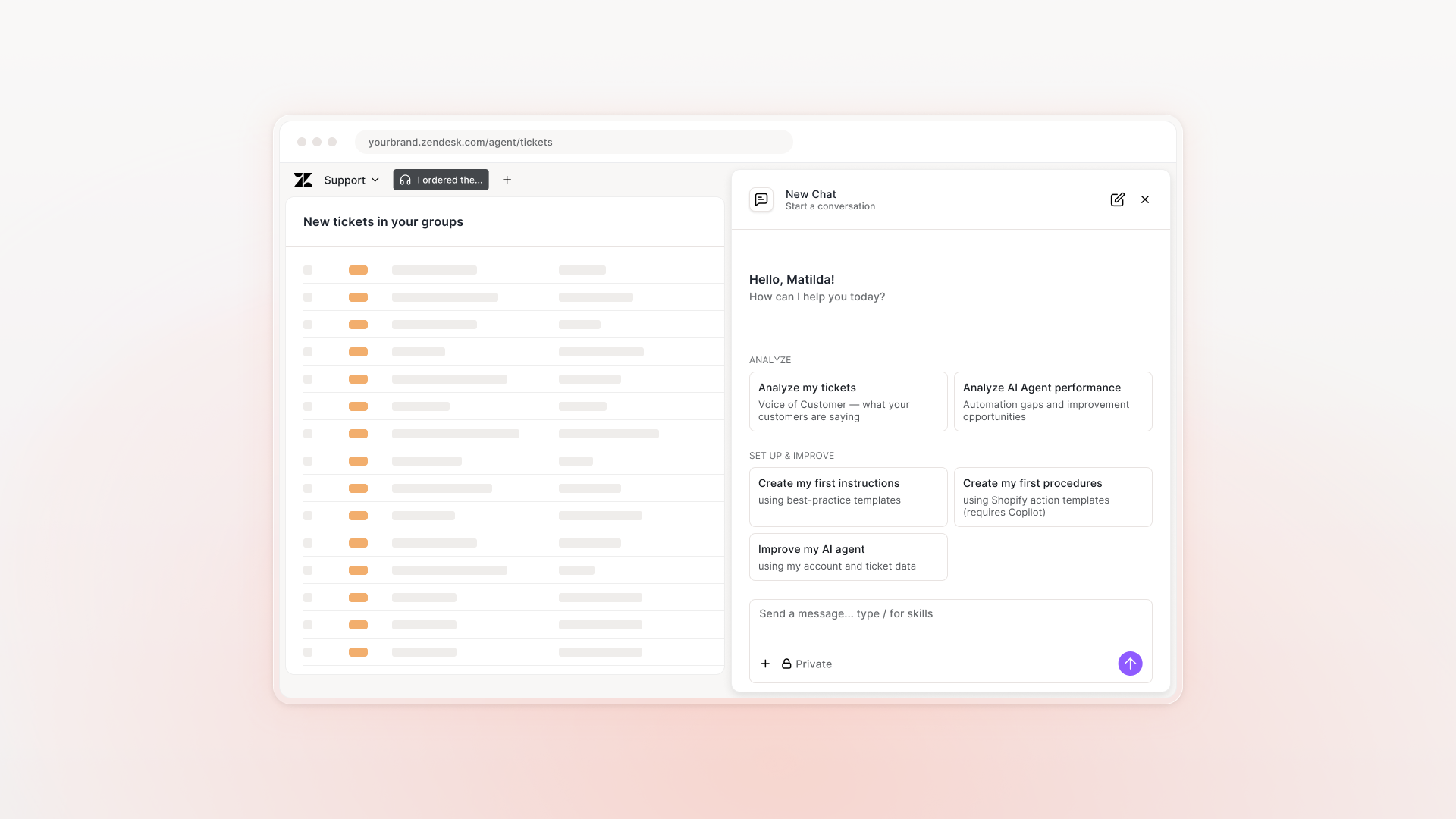
Many AI support tools route customers to articles or close conversations after a canned response. Zendesk's stated goal is different: complete the resolution. Its AI agents can update order details, process refunds within configured guardrails, and escalate to humans when confidence drops. The learning loop is the differentiator. Every human intervention becomes training data for the next similar inquiry.
A Deep, Flexible Workflow Engine
Triggers, automations, macros, custom fields, and routing rules give admins substantial control without code. Teams can build multi-step workflows that span departments, set SLAs per channel or priority, and create approval chains for sensitive actions. This flexibility is why Zendesk scales from a 10-person startup to a Fortune 500 support organization without a platform migration.
Strong Analytics and Workforce Management
Zendesk's reporting goes beyond ticket counts. Teams can track resolution rate, first-contact resolution, AI containment, CSAT, and agent capacity. Workforce management tools help forecast volume and schedule agents accordingly. Quality assurance features let managers review AI and human interactions against internal standards. For operations leaders, this closes the loop between automation and service quality.
Marketplace and Integration Ecosystem
Zendesk's marketplace includes over 1,500 integrations spanning CRMs, ecommerce platforms, payment processors, and internal tools. If your stack includes Salesforce, Shopify, Slack, or Jira, native connectors likely exist. This reduces the custom API work that often derails platform rollouts.
Limitations and Frustrations

Zendesk Review 2026: AI Support Platform Tested - Limitations and Frustrations.
Pricing Escalates Quickly
Zendesk's entry-level plans look accessible, but the features most teams actually need, including advanced AI, workforce management, and quality assurance, sit in higher tiers. Per-agent pricing multiplies fast as teams grow. Several G2 reviewers note that the total cost of ownership rises sharply once you add AI add-ons, voice, and premium support. Budget-conscious teams should model the full cost before committing.
Cross-System Workflows Can Feel Rigid
Reddit discussions among Zendesk admins surface a recurring theme: workflows that stay inside Zendesk are easy to build, but anything requiring deep integration with external systems can become limiting. Native integrations cover common use cases, but unusual or highly customized workflows may require middleware or developer time. Teams with complex, non-standard processes should validate their specific requirements during a trial.
AI Quality Depends on Your Knowledge Base
Zendesk's AI agents are only as good as the content they learn from. Teams with outdated help center articles or inconsistent macros will see mediocre AI performance and may blame the platform. Implementation requires a content cleanup phase that many teams underestimate. The learning loop helps over time, but the first 30 to 60 days demand real operational investment.
The Interface Can Feel Dense
Zendesk packs a lot into its agent workspace. New agents often need more training than they would on simpler tools. The admin panel, while powerful, has a learning curve. Smaller teams that want a lightweight chat tool may find Zendesk heavier than necessary.
Pricing Signals
Zendesk does not publish a single transparent price sheet, and costs vary by plan tier, add-ons, and contract terms. The pricing structure sends clear signals about its target market.
The entry-level Suite Team plan covers basic ticketing, email, and chat at a per-agent monthly rate that suits small teams. But the AI features that define Zendesk's current positioning, including advanced AI agents and workforce management, require Suite Professional or Enterprise tiers. Voice is typically an add-on. Annual billing discounts are standard, and enterprise contracts are negotiated individually.
The practical takeaway: Zendesk is not a budget tool. Teams should expect meaningful per-agent costs once they activate the features that make the platform compelling. For a deeper comparison of how Zendesk-style pricing stacks up against AI-first alternatives, see our Top 10 AI-First Customer Service Platforms in 2026.
Setup and Implementation
Zendesk's setup experience is one of its historical strengths. Most teams can configure a basic help desk, connect email, and launch a help center within a day or two. The G2 seller profile emphasizes ease of implementation and scaling without costly developer resources, and that matches the experience of most small and mid-sized teams.
The harder work is configuration depth. Building effective routing rules, designing AI agent flows, cleaning the knowledge base, and setting up analytics dashboards takes weeks, not days. Zendesk offers professional services and a partner network for enterprise deployments, but most teams can handle the core setup internally.
One practical tip: launch with a narrow scope. Pick one channel and one ticket category, let the AI learn, then expand. Teams that try to automate everything on day one usually create more cleanup work than value.
Decision Criteria: Is Zendesk Right for You?
Choose Zendesk if:
- You run a support team of 20+ agents and need deep workflow control.
- You want AI that improves over time rather than static chatbot scripts.
- You need native omnichannel support across email, chat, voice, and social.
- You have budget for higher-tier plans and the operational discipline to maintain a knowledge base.
Look elsewhere if:
- You are a small team that needs simple chat and email without heavy configuration.
- Your budget is tight and per-agent pricing will strain your operations.
- Your workflows depend on unusual cross-system integrations that native connectors do not cover.
- You want a lightweight tool you can fully deploy in an afternoon.
For teams evaluating AI-first alternatives, our Intercom vs Richpanel vs Ultimate AI comparison breaks down how different platforms approach AI resolution, pricing models, and deployment. If enterprise AI agents are your focus, the Kore.ai Review 2026 examines a platform built specifically for enterprise-scale automation.
Related reading
- Intercom vs Capacity: Which AI Support Platform Wins in 2026? - Compare Intercom and Capacity on AI agents, pricing, omnichannel support, and ease of use. See why Intercom leads for most customer service teams in 2026.
- Intercom vs Replicant: AI Customer Service Platform Comparison - Compare Intercom and Replicant for AI customer service. See why Intercom’s AI-first platform outperforms Replicant’s contact center automation for most teams.
Sources and further reading
- Read Customer Service Reviews of www.zendesk.com - Trustpilot - Zendesk offers a complete AI-powered service solution that is ready from day one and built to scale to any size. Zendesk AI is trained on the largest dataset ...
- Zendesk Products | Read 7626 Reviews on G2 - Easy to implement, scale, and adapt across departments, Zendesk is designed to accommodate the evolving needs of growing organizations without costly developer ...
- Zendesk - why and pros/cons? - Reddit - Feb 6, 2025 ... Zendesk is nice because it's easy to setup and build custom workflows. However, workflows involving other systems can be very limiting ...
Frequently Asked Questions
Is Zendesk worth the price?
For mid-market and enterprise teams that use its workflow depth, omnichannel routing, and AI features, Zendesk typically justifies its cost. For small teams that only need basic ticketing and chat, the higher-tier pricing will likely feel excessive. Model your required features against the actual plan tier before buying.
How good are Zendesk's AI agents?
Zendesk's AI agents perform well when trained on a clean, current knowledge base and given clear resolution paths. The Resolution Learning Loop improves accuracy over time. Teams with outdated content or vague processes will see weaker results regardless of the platform.
How long does Zendesk take to set up?
A basic configuration with email, chat, and a help center can go live in one to two days. Full deployment with custom routing, AI agent flows, knowledge base cleanup, and analytics typically takes several weeks. Enterprise rollouts with multiple brands and complex permissions take longer.
Does Zendesk offer a free trial?
Zendesk offers a free trial for its Suite plans, typically 14 days. The trial gives you access to core features, though some advanced AI capabilities may require a higher-tier trial or sales conversation.
Is Zendesk good for small businesses?
Zendesk can work for small businesses that expect to scale and want a platform they will not outgrow. However, simpler tools like Tidio may be a better fit for very small teams that prioritize ease of use and lower cost over workflow depth.
Conclusion
Zendesk in 2026 is a mature, capable platform that has successfully repositioned itself around AI-powered resolution. Its strengths are real: deep workflow flexibility, a learning AI layer, strong analytics, and an integration ecosystem that covers most enterprise needs. Its weaknesses are equally real: escalating costs, a dense interface, and AI performance that depends heavily on your content quality.
The platform earns its place for mid-market and enterprise teams that need omnichannel support at scale and are willing to invest in the operational discipline that good AI requires. Smaller teams and budget-constrained organizations should evaluate whether they need that depth or would be better served by a lighter, more focused tool.
For a broader view of how Zendesk compares to the current AI-first market leaders, start with our Top 10 AI-First Customer Service Platforms in 2026.