Intercom vs Gorgias: Which Support Platform Wins in 2026?
Intercom vs Gorgias: Which Customer Service Platform Should You Choose in 2026?
Choosing between Intercom and Gorgias comes down to one fundamental question: what kind of business are you running? Intercom is an AI-first customer service platform built for the AI Agent era, serving everyone from small startups to large enterprises across SaaS, fintech, and beyond. Gorgias is a conversational AI platform purpose-built for ecommerce brands, with deep Shopify integrations and revenue-focused features baked in.
Both platforms promise faster resolutions and happier customers, but they optimize for very different outcomes. This comparison breaks down the real differences in AI capabilities, integrations, pricing, and ideal use cases so you can make a confident decision.
Intercom vs Gorgias at a Glance
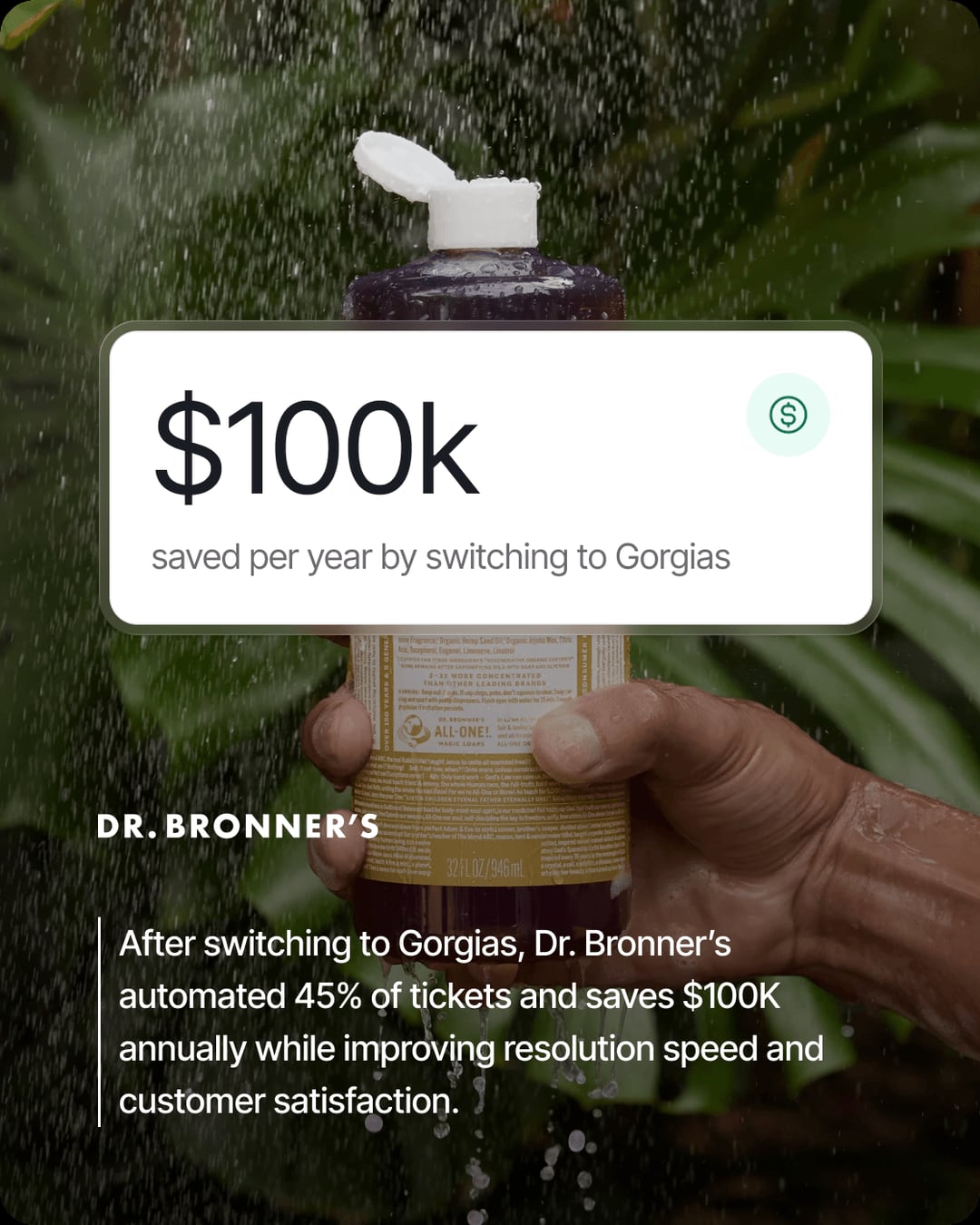
Dr. Bronner's, a Gorgias customer brand.
| Intercom | Gorgias | |
|---|---|---|
| Primary focus | AI-first customer service for all business types | Ecommerce customer experience |
| Core AI | Fin AI Agent, Copilot AI assistant, AI Insights | AI Agent with pre-built ecommerce actions |
| Best for | SaaS, tech, and scaling teams needing multi-channel support | Shopify, BigCommerce, and Magento stores |
| Pricing model | Outcome-based, per-seat with Essential, Advanced, Expert plans | Ticket-volume-based, AI Agent on every plan |
| Channels | Live chat, email, in-app messaging, phone | Email, live chat, voice, SMS, social media |
| Key strength | Broad AI automation and proactive engagement | Deep ecommerce integrations and revenue tracking |
What Is Intercom?
Intercom is an AI-first customer service platform designed for the AI Agent era. It combines a shared inbox, AI-powered automation, and multi-channel support into a single helpdesk trusted by over 30,000 leading brands. The platform's centerpiece is Fin, a natively integrated AI Agent that resolves customer questions instantly by learning from your help center and past conversations.
Beyond Fin, Intercom offers:
- Copilot AI assistant for agents, which drafts responses and summarizes conversations
- AI Insights for analytics that surface trends and opportunities
- Outbound messaging for proactive engagement across email, chat, and in-app
- Integrated Help Center for self-service support
Intercom positions itself as the highest-performing platform for customer service, with outcome-based pricing across Essential, Advanced, and Expert plans. It serves businesses of all sizes, from small teams to large enterprises, and supports a solution partner program for agencies and consultants.
What Is Gorgias?
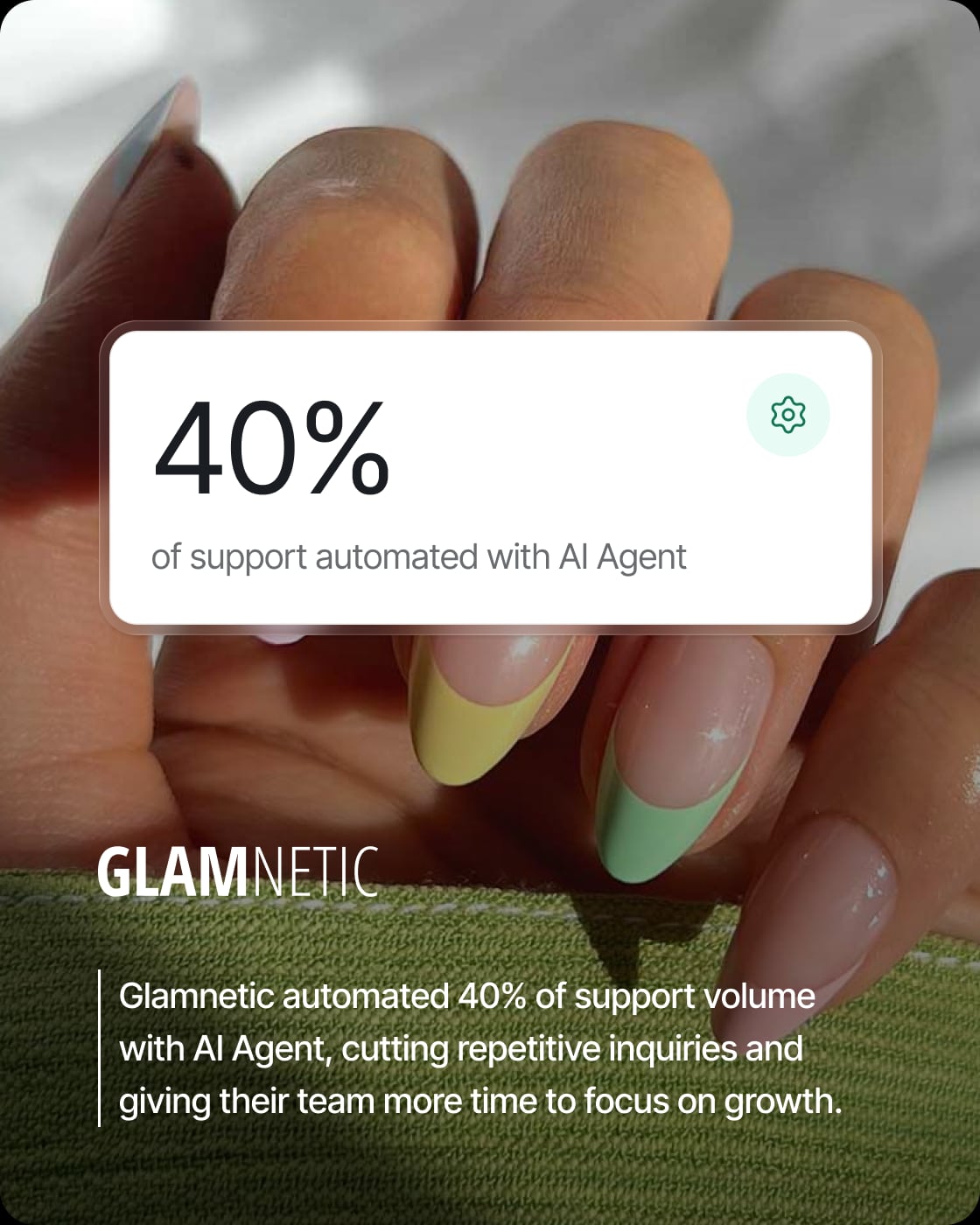
Glamnetic logo.
Gorgias is a conversational AI platform built specifically for ecommerce brands. It combines an AI agent, unified helpdesk, live chat, and voice/SMS into a single inbox, with the explicit goal of automating support and driving sales. The platform serves over 17,000 brands, from small shops to enterprise retailers.
Gorgias differentiates itself through deep integrations with ecommerce platforms like Shopify, BigCommerce, and Magento, plus over 100 apps covering payments, subscriptions, returns, and marketing. Its AI Agent can update orders, manage subscriptions, and answer pre-sale questions using real-time store data. The platform also includes revenue analytics that show how support conversations impact sales.
Key Differences Between Intercom and Gorgias
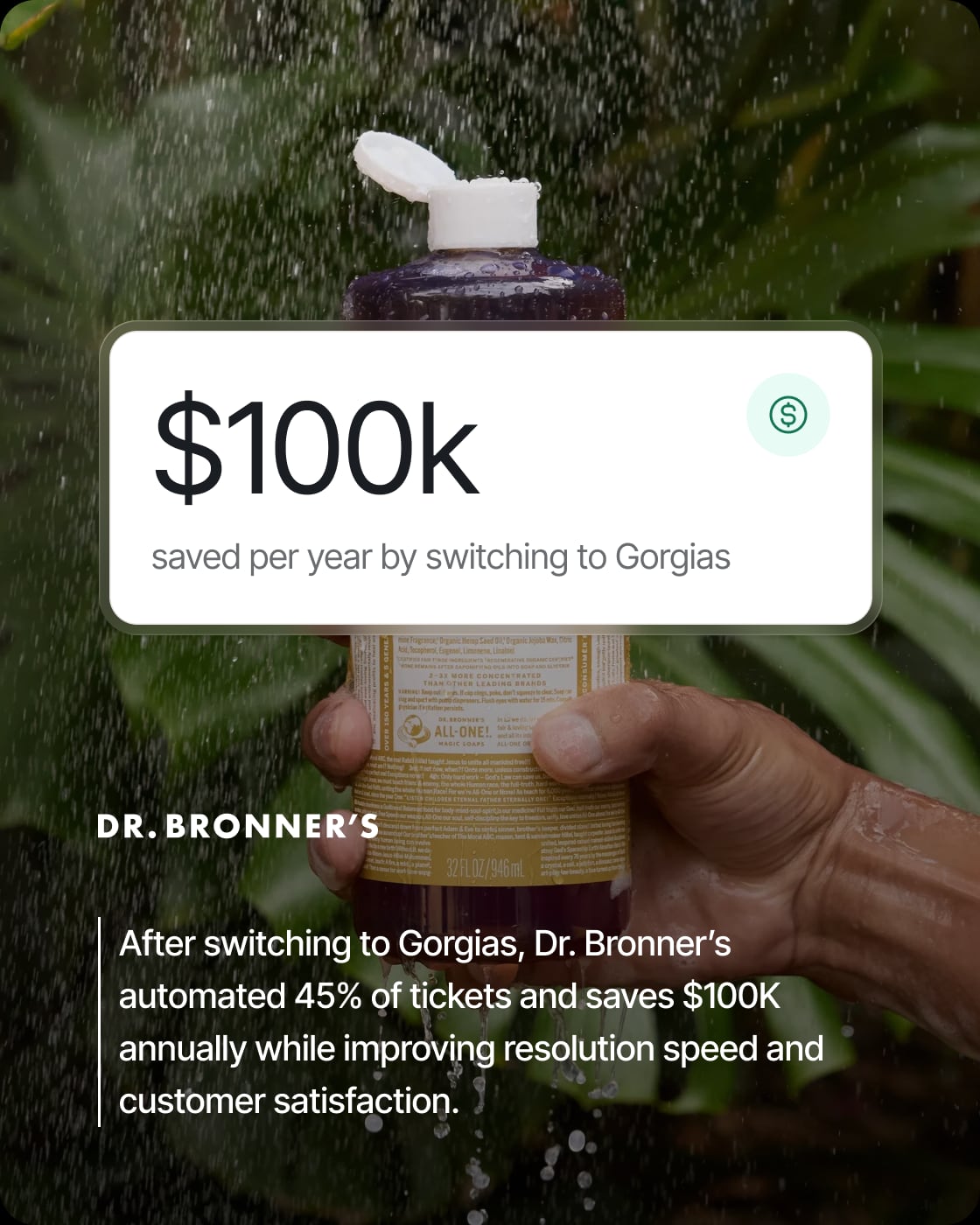
Dr. Bronner's, a Gorgias customer brand.
AI Capabilities: Fin vs Gorgias AI Agent
Intercom's Fin AI Agent is built to resolve complex support queries across industries. It learns from your help center content and past interactions, delivering context-aware answers in chat, email, and in-app messaging. Intercom also provides Copilot as an AI assistant for human agents, helping them draft faster, more consistent responses.
Gorgias's AI Agent is optimized for ecommerce workflows. It can automatically resolve up to 60% of emails, update orders, manage subscriptions, and perform actions in connected apps. Gorgias emphasizes "resolutions, not just replies" — meaning its AI doesn't just answer questions, it executes actions like processing refunds or updating shipping details.
The key distinction: Intercom's AI is broader and more adaptable across industries, while Gorgias's AI is more specialized for ecommerce actions out of the box. If you're a SaaS company with complex product questions, Intercom's Fin is the stronger fit. If you're a Shopify store drowning in order-status tickets, Gorgias's pre-built ecommerce actions save significant setup time.
Ecommerce Integrations and Actions
This is where Gorgias has a clear advantage for online retailers. Gorgias offers pre-built third-party actions for tools like Loop Returns, Loyalty Lion, Yotpo, Recharge, Smile.io, and Attentive. Its AI Agent can update Shopify orders directly, embed customer data in responses, and trigger actions from the ticket view.
Intercom, by contrast, requires you to build many ecommerce-specific actions yourself using APIs. While Intercom integrates with major platforms, it doesn't ship with the same depth of native ecommerce actions. For a SaaS business, this flexibility is a feature. For a Shopify store, it means more setup work before you can automate order management.
Pricing Models: Per Seat vs Per Ticket
Intercom uses outcome-based pricing with three tiers: Essential, Advanced, and Expert. Pricing scales with the number of seats you need, and AI resolutions are priced separately. This model works well for growing teams that want predictable per-agent costs, but it can become expensive as your team expands.
Gorgias uses ticket-volume-based pricing, with entry pricing starting at $10 per month and AI resolutions priced at $0.50–$1 per resolution. There's no per-seat charge, and unlimited users are included. For ecommerce brands with seasonal spikes, this model aligns costs with actual support volume — but high ticket volumes can add up quickly.
For a deeper look at how AI chatbot pricing works across platforms, see this guide to AI chatbot pricing with live chat included.
Channels and Communication Style
Intercom takes a messenger-first approach, prioritizing real-time, conversational support through live chat, in-app messaging, email, and phone. Its outbound messaging capabilities let you proactively reach customers with onboarding sequences, feature announcements, and targeted campaigns.
Gorgias centralizes email, live chat, social media, SMS, and voice into one inbox. Its social media integration is particularly strong for ecommerce, letting you respond to Facebook, Instagram, and WhatsApp comments and DMs from within the platform.
Reporting and Analytics
Intercom's AI Insights provides analytics that go beyond basic KPIs, surfacing conversation trends and automation opportunities. The platform tracks standard metrics like first response time, resolution time, and CSAT.
Gorgias focuses on revenue analytics, showing how support conversations drive sales. It tracks revenue generated from support, ticket intent trends, and conversion impact. For ecommerce teams, this revenue attribution is a differentiator. For SaaS teams, Intercom's broader engagement analytics are more useful.
When Intercom Is the Better Choice
Intercom is the stronger option when:
- You run a SaaS or technology business. Intercom's in-app messaging, proactive engagement, and product-focused support tools are built for software companies.
- You need multi-channel support beyond ecommerce. Intercom handles live chat, email, in-app messaging, and phone in one platform.
- You want AI that adapts to complex queries. Fin learns from your help center and past conversations, making it effective for nuanced product questions.
- You're scaling a support team. Intercom's Copilot assistant and workflow automation help smaller teams handle growing volumes without proportional headcount increases.
- You value proactive engagement. Intercom's outbound messaging lets you reach customers before they contact support.
For a broader comparison of Intercom against other platforms, see Intercom vs Gladly: Which Support Platform Wins in 2026?.
When Gorgias Is the Better Choice
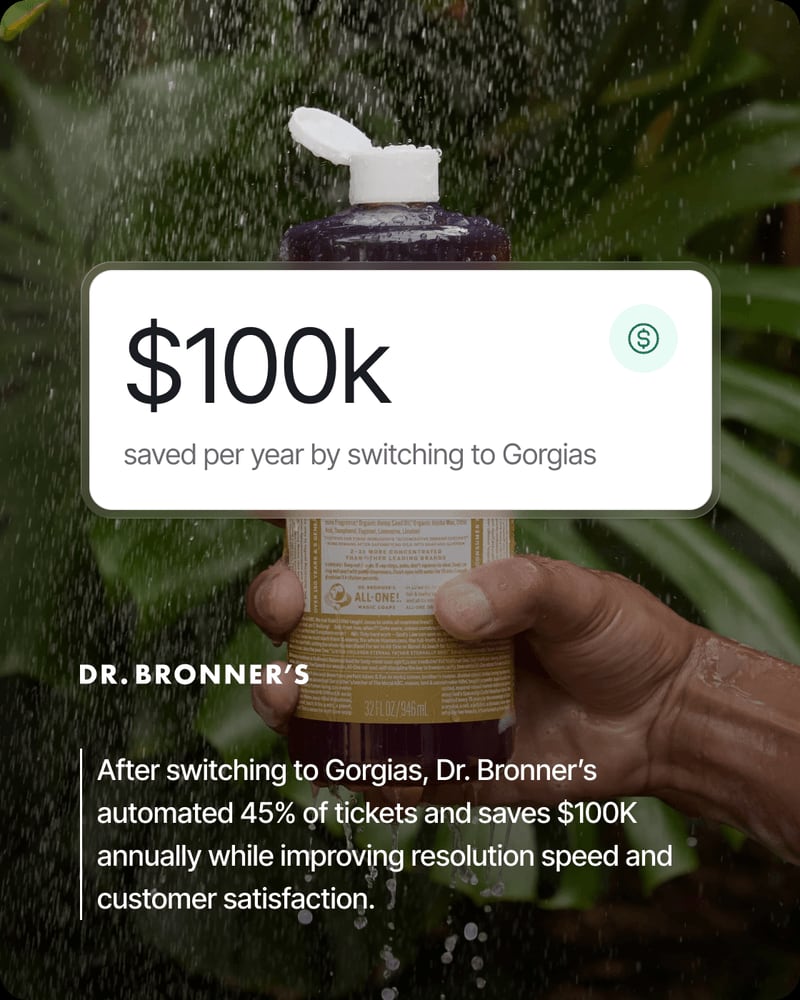
Dr. Bronner's, a Gorgias customer brand.
Gorgias is the stronger option when:
- You run a Shopify, BigCommerce, or Magento store. Gorgias's native integrations pull in real-time order and customer data without extra setup.
- Support is a revenue channel. Gorgias tracks conversions from support conversations and enables upsells, cross-sells, and discount offers during interactions.
- You want pre-built ecommerce actions. Gorgias ships with one-click integrations for returns, loyalty, subscriptions, and marketing tools.
- Your support volume fluctuates seasonally. Ticket-based pricing aligns costs with actual volume, which helps during Black Friday and holiday spikes.
- You need AI on every plan. Gorgias includes its AI Agent on all pricing tiers, making automation accessible from day one.
Feature Comparison Table
| Feature | Intercom | Gorgias |
|---|---|---|
| AI Agent | Fin AI Agent | AI Agent (ecommerce-focused) |
| AI assistant for agents | Copilot | Limited |
| Pre-built ecommerce actions | Requires API setup | One-click integrations |
| Revenue analytics | Not native | Yes |
| Proactive outbound messaging | Yes | Limited |
| In-app messaging | Yes | No |
| Social media support | Limited | Facebook, Instagram, WhatsApp |
| Help Center / self-service | Yes | Yes |
| Phone support | Yes | Yes |
| Pricing model | Per seat + per resolution | Per ticket + per resolution |
| Free trial | Yes | Yes |
Real-World Scenarios
Scenario 1: Scaling SaaS Startup
A B2B SaaS company with 15 support agents needs to automate repetitive product questions while maintaining a personal touch for enterprise customers. Intercom wins here. Fin's ability to learn from technical documentation, combined with Copilot's agent assistance and proactive in-app messaging, makes it the better fit for software support.
Scenario 2: Growing Shopify Brand
A DTC apparel brand on Shopify receives 2,000 tickets per month, mostly order status, returns, and sizing questions. Gorgias wins here. Its AI Agent can automatically resolve order-status inquiries, process returns through Loop, and recommend sizes using real-time product data — all without API development.
Scenario 3: Hybrid Business
A subscription box company sells physical products but also offers a companion app. They need both ecommerce actions and product support. This is a closer call. If ecommerce support dominates ticket volume, Gorgias is the practical choice. If app support and proactive engagement matter more, Intercom's broader platform is worth the extra setup.
Pricing Deep Dive
Intercom pricing:
- Essential, Advanced, and Expert plans with per-seat pricing
- AI resolutions priced separately per resolution
- Outcome-based pricing means you pay for results, not just seats
- Free trial available
Gorgias pricing:
- Entry helpdesk pricing from $10/month
- AI resolutions at $0.50–$1 per resolution
- Unlimited users included
- Pricing scales with ticket volume, not headcount
For teams evaluating multiple AI support platforms, this Intercom vs Yuma AI comparison explores how different AI resolution models stack up.
Limitations to Consider
Intercom's limitations:
- Ecommerce actions require custom API development
- Pricing can become expensive as team size grows
- Some users find the interface overwhelming
- Revenue attribution for support conversations isn't native
Gorgias's limitations:
- Limited outside ecommerce use cases
- Basic chatbot capabilities for non-ecommerce queries
- Less robust proactive engagement tools
- Fewer options for SaaS-style in-app messaging
Related reading
- Talkdesk Review 2026: AI Contact Center Tested - In-depth Talkdesk review covering AI agents, omnichannel support, pricing signals, setup, limitations, and who should buy it in 2026.
Sources and further reading
- What's the difference between Gorgias and Intercom? - Gorgias is built for ecommerce. Intercom is built for SaaS. Intercom falls short for ecommerce brands on Shopify, lacking essential integrations and powerful AI ...
- Gorgias vs Intercom: 2026 Mega Comparison (+Better Options) - Gorgias or Intercom for your business? Compare features, pricing, and use cases in this head-to-head matchup. Plus, explore top alternatives!
- Gorgias vs Intercom vs Zendesk - Choose The Right Alternative - Gorgias vs Intercom vs Zendesk - Explore our focussed comparison to help choose the right software.
Frequently Asked Questions
Is Intercom or Gorgias better for Shopify stores?
Gorgias is generally better for Shopify stores. It offers native Shopify integration with pre-built actions for order management, refunds, and discounts directly from the helpdesk. Intercom can integrate with Shopify but requires more custom setup for ecommerce-specific workflows.
Does Intercom have an AI agent?
Yes. Intercom's AI agent is called Fin. It learns from your help center and past conversations to resolve customer questions automatically. Intercom also offers Copilot, an AI assistant for human agents.
Does Gorgias work for non-ecommerce businesses?
Gorgias can technically work for non-ecommerce businesses, but its features, integrations, and pricing are optimized for online stores. SaaS and technology companies will find Intercom's broader platform more suitable.
Which platform is more affordable?
It depends on your usage pattern. Gorgias's ticket-based pricing is often more affordable for ecommerce brands with seasonal volume spikes, while Intercom's per-seat pricing can be more predictable for stable teams. Both charge separately for AI resolutions.
Can I switch from Intercom to Gorgias?
Yes, both platforms offer migration support. Gorgias provides onboarding and implementation assistance, and Intercom offers a solution partner program. The complexity of migration depends on your existing integrations and data volume.
Final Verdict
Choose Intercom if you're a SaaS, technology, or multi-industry business that needs broad AI automation, proactive engagement, and a platform that scales with your product. Intercom's Fin AI Agent, Copilot assistant, and AI Insights make it the stronger general-purpose customer service platform.
Choose Gorgias if you're an ecommerce brand that wants to turn support into a revenue channel. Its deep Shopify integration, pre-built ecommerce actions, and revenue analytics are purpose-built for online retail.
The decision ultimately comes down to your business model. Both platforms are excellent at what they do — but they do very different things. If you're still weighing options, this Intercom vs WotNot vs ClearFeed comparison explores additional alternatives across AI capabilities and pricing models.