Intercom vs Ultimate AI vs Freshdesk: 2026 AI Support Comparison
Intercom vs Ultimate AI vs Freshdesk: Which AI Support Platform Fits Your Team?
Customer service platforms in 2026 are no longer judged by their inboxes. They are judged by how much of the conversation their AI can resolve without a human, and at what cost. Intercom, Ultimate AI, and Freshdesk approach that problem from three genuinely different directions: a natively integrated AI-first helpdesk, a deployable automation layer, and a broad, affordable ticketing suite with AI on top.
This comparison breaks down where each platform is strong, where the trade-offs sit, and which one matches your support model. It is written for teams choosing a platform this quarter, not for feature-list collectors.
The Three Platforms at a Glance
First viewport screenshot of AI Agents for Customer Service | Zendesk.
Intercom is an AI-first customer service platform built around Fin, its AI Agent, which is natively integrated into the helpdesk rather than bolted on. It combines a shared inbox, live chat, email, in-app messaging, phone support, a Help Center, and the Copilot assistant for human agents. Intercom reports more than 30,000 brands using the platform and offers Essential, Advanced, and Expert plans with a free trial.
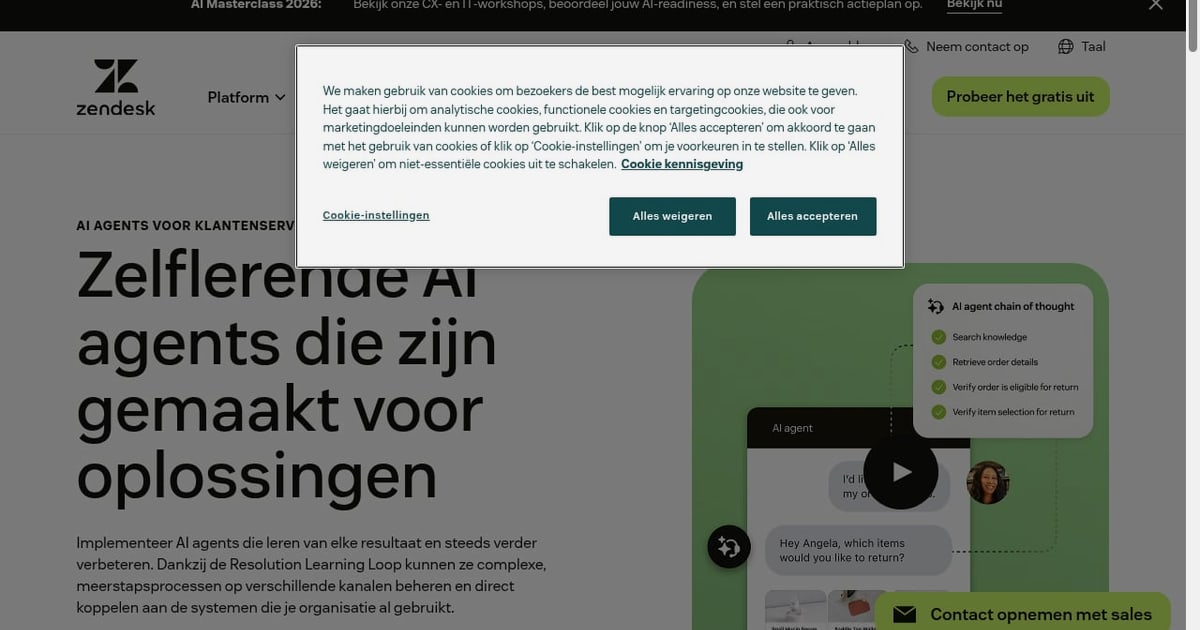
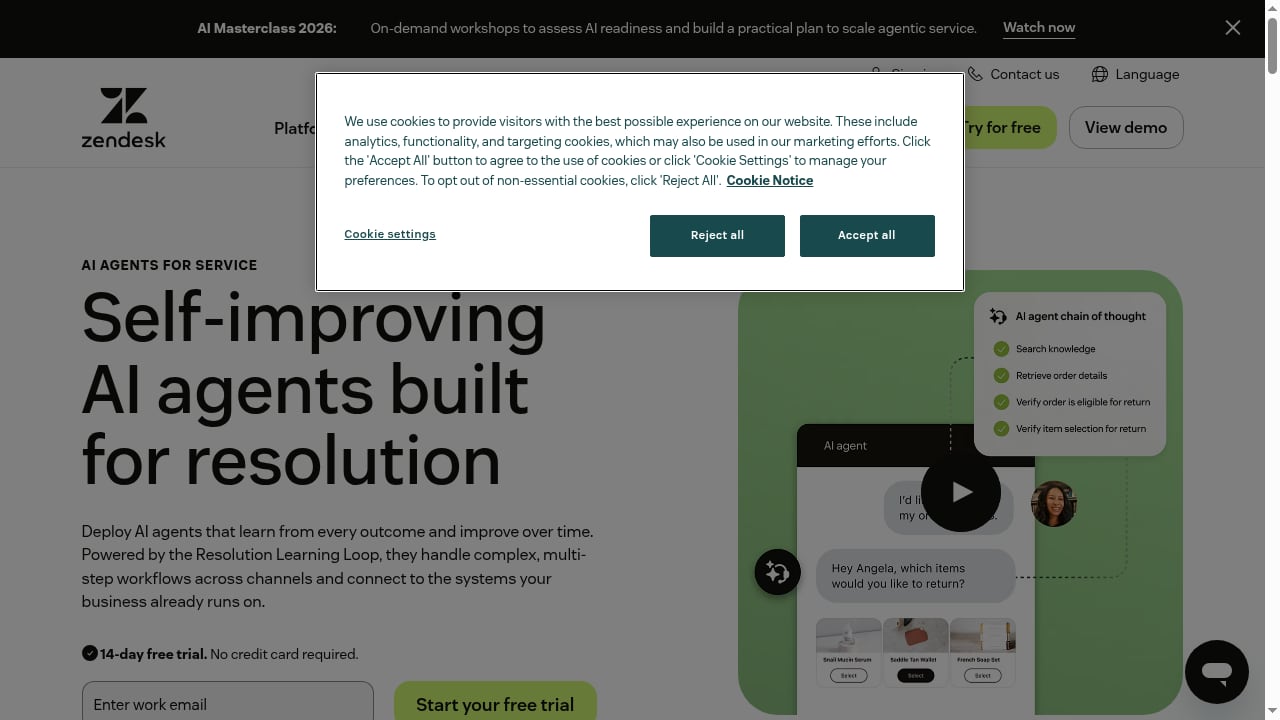
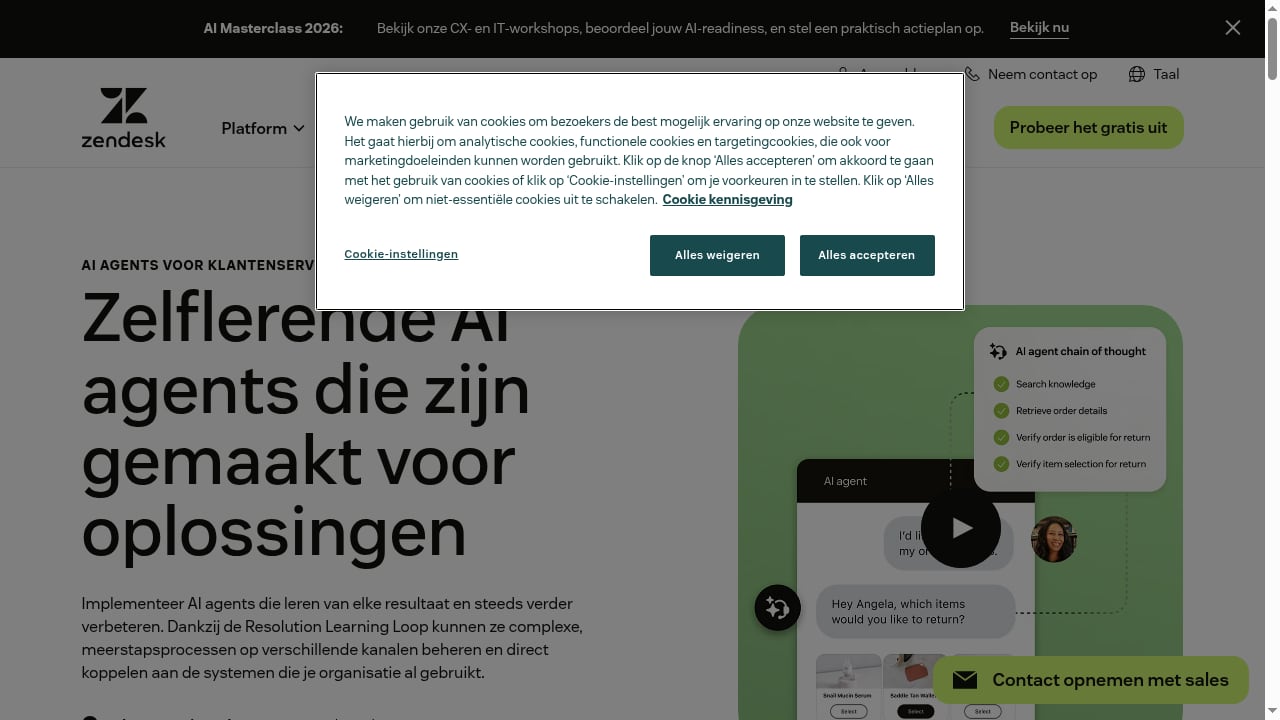
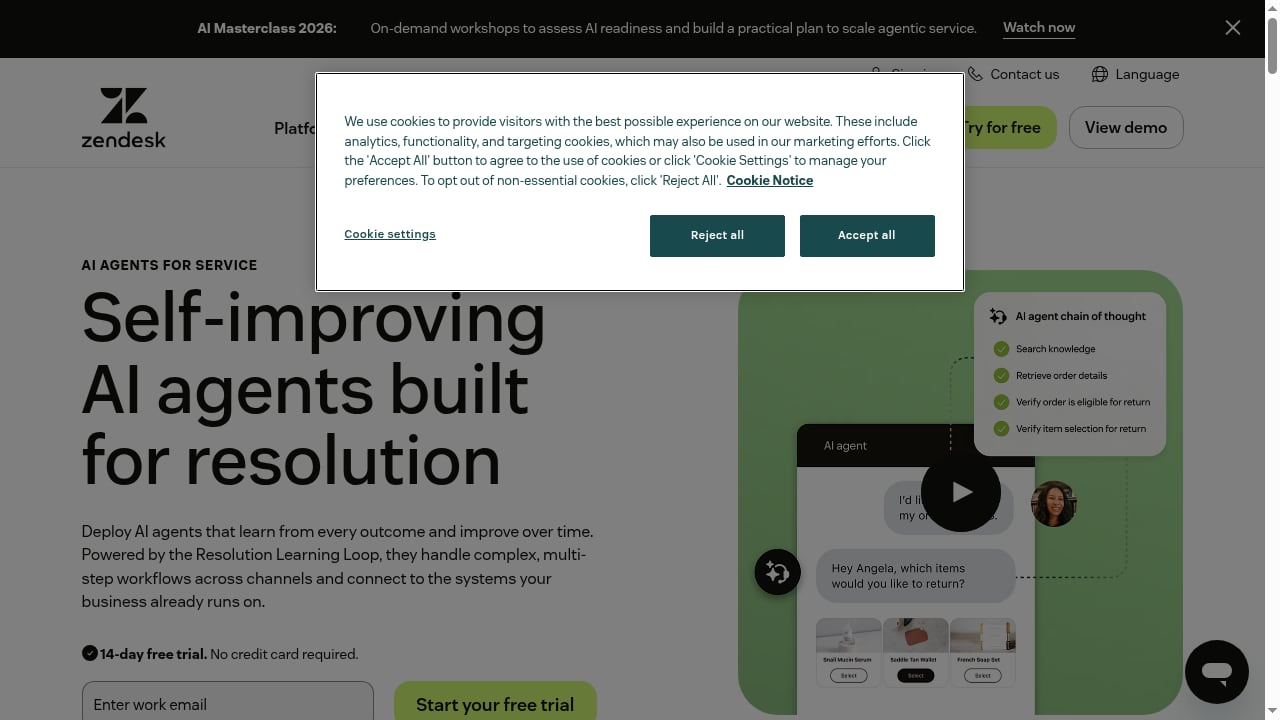
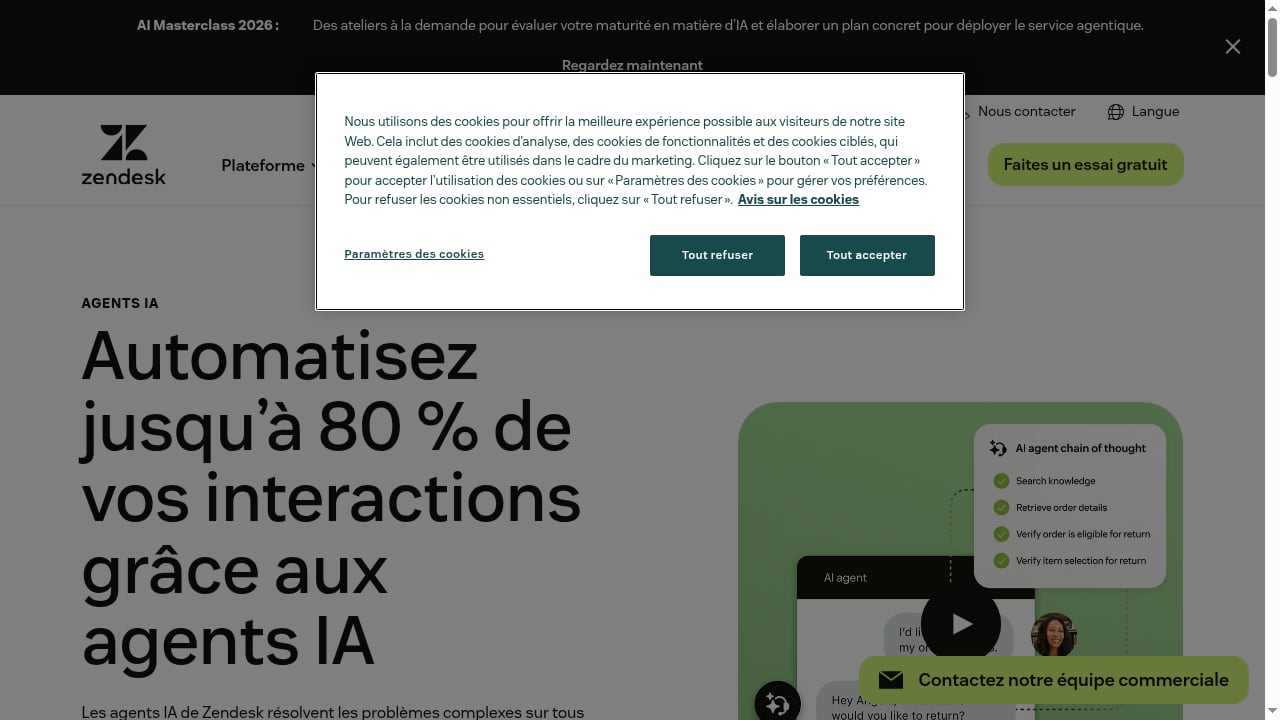
Ultimate AI is a customer service automation platform that deploys self-improving AI agents. Its Resolution Learning Loop means agents learn from every outcome and improve over time, and the platform claims resolution of up to 80% of customer interactions. Crucially, Ultimate AI can be deployed directly into an existing service platform, such as Zendesk, without a migration. It offers a 14-day free trial with no credit card required.
Freshdesk is an AI-powered customer service platform from Freshworks that combines ready-to-use AI, people, and workflows. It covers ticketing, omnichannel support across email, phone, chat, and social, self-service portals, and AI-driven automation. Freshdesk is trusted by over 74,000 customers and emphasizes fast setup and a guided path to AI adoption.
AI Resolution: Native Agent vs Deployable Layer vs Assistive AI
First viewport screenshot of AI Agents for Customer Service | Zendesk.
This is the criterion that separates the three most sharply.
Intercom's Fin is designed to resolve conversations end to end. It reads your Help Center and past conversations, answers in natural language, and escalates only when it cannot resolve. Because Fin is native to the platform, there is no integration layer to maintain between the AI and the inbox, and AI Insights feeds resolution data back into reporting. For conversational, chat-first support, this is the strongest out-of-the-box setup among the three.
Ultimate AI takes a different but compelling approach. Its agents are built to handle complex, multi-step workflows and improve through the Resolution Learning Loop, and the platform integrates with existing business systems. Its standout strength is deployment flexibility: if your service operations already run on Zendesk or a similar platform, Ultimate AI can sit inside that environment rather than forcing a migration. For teams with deep investment in an existing helpdesk, that is a real advantage.
Freshdesk's AI is best understood as assistive and workflow-oriented. Freddy AI supports agents with suggested replies, ticket classification, and automation, and Freshdesk provides a guided adoption path so teams can add AI gradually. For structured, email-heavy ticketing, that model fits well and keeps costs predictable.
Pricing Models: Per Seat, Per Resolution, and Per Agent
First viewport screenshot of AI Agents for Customer Service | Zendesk.
Pricing is where these platforms diverge most, and where the wrong choice gets expensive.
Intercom uses outcome-based pricing. Plans start with a per-seat component, and Fin is priced per resolution, so cost scales with automated volume rather than headcount. That structure rewards teams that lean hard on AI: a small team can resolve a large conversation volume without staffing for it. It does mean you should model your expected resolution count before committing.
Freshdesk uses flat per-agent pricing, which makes budgeting straightforward for larger support teams. AI capabilities are tied to higher plan tiers, so the effective cost depends on how much AI you actually need. For SLA-driven teams with predictable headcount, this is the easier model to forecast.
Ultimate AI is positioned as an automation layer, so its cost sits alongside whatever you already pay for your service platform. If you are keeping your current helpdesk, that can be more economical than switching platforms entirely.
Channels, Setup, and Time to Value
Intercom covers live chat, email, in-app messaging, phone, and self-service through an integrated Help Center, with outbound messaging for proactive engagement. Setup typically takes weeks rather than days because the platform is designed to be configured around your AI and automation strategy.
Freshdesk is known for fast implementation. Teams can be running in days, which matters if you need to modernize support quickly without a heavy configuration project.
Ultimate AI's time to value depends on your existing stack. Because it deploys into your current service platform, rollout can be faster than a full migration, but it also means your outcomes are partly shaped by the host platform's capabilities.
Which Platform Should You Choose?
First viewport screenshot of AI Agents for Customer Service | Zendesk.
Choose Intercom if your support is conversational and high-volume, you want the AI Agent natively integrated with the helpdesk, and you are comfortable with outcome-based pricing tied to resolutions. It is the strongest fit for SaaS and product-led teams where in-app chat and proactive messaging drive engagement. For a closer look at how Intercom compares with other platforms in this space, see our breakdown of Intercom vs Pylon vs Chatwoot and Intercom vs HelpCrunch.
Choose Ultimate AI if you already run a service platform you do not want to replace, and you want a self-improving automation layer that resolves multi-step requests inside that environment. Its no-migration deployment and 14-day trial lower the risk of testing it.
Choose Freshdesk if you need affordable, structured ticketing across email, phone, and chat, with predictable per-agent costs and a gradual path into AI. It is a sensible default for teams that think in tickets and SLAs.
If your goal is round-the-clock automated coverage, our guide to 24/7 customer service automation covers what to automate and how to measure whether it pays off.
Related reading
- Intercom vs OTRS: AI-First Support vs ITSM (2026) - Intercom vs OTRS compared for 2026: AI Agent Fin vs ITSM ticketing, channels, automation, pricing, and which platform fits your support team.
- Front Review 2026: AI Customer Service Platform Tested - Evidence-based Front review for 2026: shared inboxes, AI Autopilot and Copilot, pricing signals, setup, limitations, and who should buy it.
- ClearFeed Download Guide: Setup, Pricing, and AI Support Fit - ClearFeed download options explained: Slack app, Microsoft Teams package, and web portal setup, plus pricing, AI agent limits, and when to choose Intercom.
Sources and further reading
- Freshdesk vs Intercom for AI Customer Service (2026) - Freshdesk vs Intercom compared on AI features, pricing, and fit for small business support. See which is better for ticket volume vs conversational, AI-first support.
- Zendesk vs Freshdesk vs Intercom : r/Software_Finder - Reddit - Mar 21, 2026 ... Zendesk is the default safe pick but you'll feel the bill once ticket volume grows. Per-ticket pricing is rough too, you're basically paying ...
- Zendesk vs Freshdesk vs Intercom. Where AI Automation Performs Best? - Compare Zendesk, Freshdesk, and Intercom for AI-driven customer support — pricing, setup time, automation style, and which fits enterprise, SMB, or SaaS teams.
Frequently Asked Questions
Is Intercom or Freshdesk better for AI customer service?
It depends on your support model. Intercom's Fin is built to resolve conversations autonomously and is natively integrated with the helpdesk, which suits chat-first, high-volume support. Freshdesk's AI is more assistive and workflow-oriented, which suits structured, email-heavy ticketing with predictable per-agent costs.
Can Ultimate AI work with my existing helpdesk?
Yes. Ultimate AI is designed to deploy directly into a company's current service platform, such as Zendesk, without requiring migration. That makes it an option for teams that want automation without switching helpdesks.
How does Intercom's pricing differ from Freshdesk's?
Intercom combines a per-seat plan with per-resolution pricing for Fin, so costs scale with automated conversation volume. Freshdesk uses flat per-agent pricing, so costs scale with team size instead.
Which platform is fastest to set up?
Freshdesk is generally the fastest to implement, often within days. Intercom typically takes weeks because it is configured around your AI and automation strategy. Ultimate AI's timeline depends on the platform it deploys into.
Does Intercom include a free trial?
Yes, Intercom offers a free trial. Ultimate AI offers a 14-day free trial with no credit card required, and Freshdesk offers a free tier for very small teams.
Conclusion
Intercom, Ultimate AI, and Freshdesk are not variations of the same product. Intercom is an AI-first platform where the AI Agent is part of the helpdesk itself. Ultimate AI is an automation layer that improves your existing service platform without a migration. Freshdesk is an affordable, structured ticketing suite with a clear path into AI.
Match the platform to your support model: conversational and AI-led points to Intercom, existing-stack automation points to Ultimate AI, and predictable ticket-based support points to Freshdesk. Model your resolution volume against pricing before you commit, and the decision becomes much clearer.